Choose a TV based on both your viewing distance and how you want to play back family videos: the right screen won’t help if your files don’t work. OLED is worth comparing for watching in darker conditions and for seating away from the centre. If you often watch in daylight, compare LCD and mini-LED models too, and check the viewing angle, connections and energy consumption of each model.
Who is this guide for?
Family with a video archive
You have videos on a phone, computer or storage device and want to know in advance how to play them on your TV. The apps available don’t, by themselves, tell you whether your own files are supported; the Consumers’ Association describes playing them via a computer connected over HDMI as one possible option.
Family with several viewing positions
You watch together from the sofa and the chairs beside it. So, consider the screen size and picture quality from seats away from the centre too.
Viewer in a room with changing light
You use the same home cinema during the day and in the evening, and want to assess reflections, brightness and dark scenes in your own lighting conditions.
What should you consider when choosing?
OLED TV
Good for: dimly lit rooms and viewers who want to watch dark scenes from an angled seat too.
Bear in mind: check the brightness, reflections and playback method of the exact model too.
LCD TV with mini-LED or local dimming
Good for: rooms that regularly get daylight, where you also want good contrast for film nights.
Bear in mind: viewing angles and picture quality vary by model; check the picture from the seats furthest to the side.
Standard LCD LED TV
Good for: anyone mainly looking for the right size and the connections they need.
Bear in mind: a larger screen or higher resolution won’t automatically make lower-resolution recordings more detailed.
| What to consider |
What to look for |
Who is this important for? |
| Playing your own videos |
Make a note of where the files are stored and check the playback method and supported file formats for the exact model. A computer connected via HDMI can be an alternative. |
If I mainly want to watch existing family recordings, I want to be sure those specific files will play. Around 31% of consumers say playing their own videos is their main concern. |
| Screen size and viewing distance |
Measure from your usual seats and check that the TV will fit in the available space too. The Consumers’ Association suggests a viewing distance of around 2.4 times the screen diagonal as a comfortable starting point. |
If you watch TV together from fixed seats, you’ll want a size that suits the distance and the space available. For around 25% of consumers, screen size is the top priority. |
| Viewing angle and room lighting |
Compare the same model from the seat furthest to the side and check for reflections in the lighting you usually watch in. The Consumers’ Association explains that OLED can generally offer a wider viewing angle and deeper blacks, while LCD can often be brighter. |
If we watch together during the day and in the evening, I want to know whether the picture will remain comfortable for everyone. Around 25% of consumers prioritise incoming light and seats away from the centre. |
| Connections and energy use |
Count the devices you want to connect and, if necessary, check whether HDMI-ARC or eARC will work with your sound system. Compare the energy label and consumption per 1,000 hours. |
If you want to get a clear picture of the connections you need and running costs first, look for a TV that suits your devices and viewing setup. This is the main concern for around 19% of consumers. |
Pitfalls to avoid
-
Assuming a smart TV or USB port will play all your old videos
A streaming app or USB port doesn’t prove that your own video files are supported. Apps and local files are different playback options.
Check the file type and playback method for the exact model. Alternatively, check in advance whether playing videos via a computer and HDMI will work with your setup.
-
Choosing the biggest TV or one with the sharpest specifications without checking your recordings
Viewing distance plays a part in choosing a comfortable screen size. A 4K label won’t automatically add detail to a lower-resolution recording.
Measure your viewing distance and check a representative family video before choosing a screen size.
-
Assuming very similar model names refer to the same TV
The Philips 55OLED810/12 is an OLED model; the designation 55MLED810 refers to a mini-LED model. So these model codes don’t refer to the same screen type.
Check the full model code and screen type, not just the numbers in the series name.
Brands worth considering
These brands and models offer useful points of comparison for screen technology and playback options. Their inclusion is not an endorsement of the brand as a whole or a guarantee of availability.
LG
The OLED evo C6 range is an OLED option to compare if contrast matters to you; the OLED55C68LA is a specific 55-inch model.
- LG Netherlands lists OLED technology and webOS for the OLED55C68LA.
- A smart TV or its range of apps doesn’t automatically tell you whether it can play your own video files. Check the format and playback method for the exact model.
TCL
The C6K range includes the 55C6K, a mini-LED LCD model to compare with OLED in rooms with changing light.
- TCL Netherlands lists QD-Mini LED and local dimming for this range.
- Compare the viewing angle and picture from your seats furthest to the side; screen technology alone doesn’t determine how your own videos will play.
Sony
The BRAVIA 5 is a mini-LED option; the K-55XR5 is an example to check for model-specific USB playback and connection details.
- Sony Netherlands lists support for FAT16, FAT32, exFAT and NTFS, four HDMI inputs and eARC for the K-55XR5.
- These details apply to the K-55XR5. Check the full model code; don’t assume they also apply to another BRAVIA 5 variant without checking.
Philips
The 55OLED810/12 combines OLED with Ambilight, making it worth comparing if you’d like lighting around the screen too.
- Philips lists OLED and Ambilight for the 55OLED810/12.
- The product description doesn’t prove that every type of personal video file is supported. Also, don’t confuse OLED810 with MLED810: they use different screen technologies.
TVs at Joybuy
This selection includes OLED models, LCD models with mini-LED and a standard LCD LED option, so you can compare screen technology and size for your home cinema. The right size depends in part on your viewing distance; check the capabilities of the exact model to play your own videos.
 No image available
LG OLED83C67LA, 83-inch OLED evo AI C6 4K Smart TV
An OLED model to compare for film nights; measure your viewing distance and available space before choosing 83 inches.
The product name lists 4K, 120Hz, VRR up to 165Hz, Dolby Vision, webOS, and G-SYNC and FreeSync Premium compatibility.
View at Joybuy
 No image available
LG OLED65C68LA, 65-inch OLED evo AI C6 4K Smart TV
An OLED model to compare with other screen technologies; measure the distance from your usual seats to assess the size.
The product name lists 4K, 120Hz, VRR up to 165Hz, Dolby Vision, Dolby Atmos, webOS 26, and G-SYNC and FreeSync Premium compatibility.
View at Joybuy
No image available
LG OLED55C68LA, 55-inch OLED evo AI C6 4K Smart TV
A 55-inch OLED option to compare for family videos; check that this size suits your viewing distance and seating.
The product name lists 4K, 120Hz native, VRR up to 165Hz, Dolby Vision, Dolby Atmos, webOS 26, and G-SYNC and FreeSync Premium compatibility.
View at Joybuy
 No image available
Philips 55PUS8001, 55-inch F 4K TV
An LCD LED option to compare if you’re looking for a 55-inch TV; check the playback method for your own files on the exact model.
The product name lists 55 inches, F and 4K.
View at Joybuy
 No image available
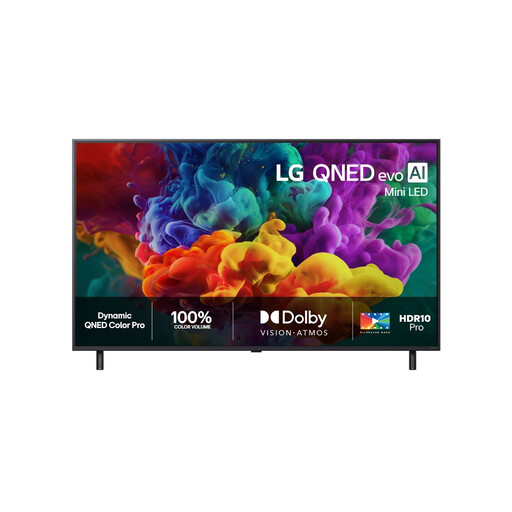
LG QNED85B6B QNED evo Mini LED 4K Smart TV
A mini-LED LCD model to compare with OLED; assess the viewing angle and reflections in your own room.
The product name lists QNED evo Mini LED and 4K.
View at Joybuy
Frequently asked questions
Can you play family videos from a USB stick or computer?
A computer can send a picture to a TV via HDMI. To play videos directly from USB, check whether the file system and video format are supported on the exact model; Sony, for example, lists this information for the K-55XR5.
Is built-in casting enough for videos stored only on your phone or computer?
Not necessarily. The Consumers’ Association distinguishes between streaming through supported apps and playing locally stored videos. Check which method works with your files, or see whether a suitable external playback option will work for you.
How do you set up the picture for a family night?
At home, start with the Home setting rather than the often brighter Shop setting. Check a familiar recording with both light and dark areas in your usual room lighting, then adjust the brightness to suit.
What do the energy label and statutory guarantee mean for a TV in the Netherlands?
The European Commission explains the energy label scale for electronic displays; compare energy consumption for suitable models too. According to ACM ConsuWijzer, the retailer remains responsible if a product used normally doesn’t deliver what you could reasonably expect. This doesn’t automatically mean a TV has a fixed statutory guarantee period of two years.
What cooling-off period applies to a TV bought online, and what can you do with your old set?
According to ACM ConsuWijzer, a new TV bought through a webshop generally comes with a 14-day cooling-off period from delivery. The Dutch Government also explains that private buyers can return an old, similar appliance to the retailer free of charge, including when buying online; arrange the practical handover at delivery.


