If you mainly watch TV in a dark room and deep blacks matter to you, OLED models are worth comparing. Mini-LED LCD and other LCD TVs are also worth considering if you’re factoring in things like channel logos that remain on screen for long periods, screen size and energy consumption. The Consumentenbond lists deeper blacks and a wider viewing angle as general characteristics of OLED, but picture quality varies by model. So compare how each TV displays regular broadcasts, too, and choose a screen size that suits your viewing distance.
Who is this choice relevant to?
Evening viewer who wants deep blacks
If you mainly watch TV in a dark room, black areas that look grey may stand out. The Consumentenbond lists deeper blacks and a wider viewing angle as general characteristics of OLED TVs; compare the picture quality of the models you’re considering.
Viewer who values natural-looking colours
If you want food and regular TV broadcasts to look natural, pay attention to colour reproduction and picture processing. RTINGS.com discusses SDR colour accuracy before calibration and upscaling for lower-resolution content.
Viewer who watches from a set position
If you sit further away from the screen or want subtitles to be easy to read, choose a screen size to suit your viewing distance. Also check that the TV will fit on your unit.
Buying concerns and things to consider
OLED
Good for: anyone who mainly watches in the dark and values deep blacks or a wide viewing angle.
Consider: in its tests, the Consumentenbond found a small chance of noticeable image retention with normal, varied viewing, but could not rule it out; the test referred to older models.
Mini-LED LCD
Good for: anyone who wants to compare an LCD TV with locally controlled backlighting, for example if they often watch the same channel for long periods.
Consider: don’t assume from the technology name alone how its black levels and viewing angle compare with those of a specific OLED model.
Other LCD or QLED TVs
Good for: anyone who also wants to include standard LCD or QLED models when weighing up screen size and purchase cost.
Consider: the Consumentenbond stresses that picture quality varies by model; compare the TVs you’re considering in dim lighting.
| Buying concern |
What to look for |
Who is this most relevant to? |
| Contrast in a dark room |
Compare black levels and viewing angle on the specific model; the Consumentenbond lists deeper blacks on OLED TVs as a general characteristic. |
If I mainly watch in the evening, I want dark scenes to look genuinely dark, not grey. Around 36% of consumers in this viewing context give contrast and black levels top priority. |
| Colours and regular broadcasts |
Check SDR colour accuracy before calibration and how lower-resolution content is processed; RTINGS.com discusses both aspects. |
If you want food to look natural, also consider how regular broadcasts are displayed. Around 29% of consumers prioritise picture quality for this type of content. |
| Screen size and readability |
Measure your viewing distance and check the TV’s dimensions, including the stand. The Consumentenbond suggests about 2.4 times the screen diagonal as a starting point for viewing distance. |
If I want to read subtitles clearly from my usual seat, I’ll choose a screen size to suit. Around 21% of consumers particularly value screen size and readability. |
| Long viewing sessions and energy use |
Consider channel logos that remain visible for long periods, and compare the energy label and stated consumption of the exact models. |
If you often watch the same channel for a long time, you may want to factor in image retention and electricity use. Around 14% of consumers put long-term use and associated costs first. |
Pitfalls to avoid when choosing
-
Choosing based only on OLED, QLED or mini-LED
The technology name alone doesn’t tell you what a broadcast will look like. The Consumentenbond points out that picture quality varies by model.
Compare colour reproduction, contrast and how regular broadcasts are processed on the TVs you’re considering.
-
Treating an old image-retention test as a prediction for every OLED model
The Consumentenbond reported image retention on older OLED models it tested, but did not establish a general time limit. So that test does not determine the risk for a particular current model.
Consider how often you leave one channel with a fixed logo on for a long time, without assuming the test results apply to every model.
-
Comparing only screen size or purchase price
The right size depends partly on your viewing distance and the space available on your TV unit. The Consumentenbond says screen size has a significant effect on energy consumption.
Measure your viewing distance and the space available, then compare the energy label and installation requirements for the specific offer.
The cost of a wall bracket, if needed, and electricity consumption can also affect your overall spending.
Brands to compare
LG
The LG OLED55C68LA is a 55-inch OLED model to include when comparing TVs for a dark room.
- LG lists Brightness Booster and an alpha 11 AI Processor Gen3 for this model.
- These manufacturer claims alone don’t prove an advantage for watching cookery programmes; assess the picture quality of the specific model.
Philips
Philips says the Philips 55OLED760/12 combines an OLED screen with Ambilight.
- Philips lists a 55-inch screen, 4K, 120 Hz and Dolby Vision for this model.
- Whether the Ambilight glow is comfortable in a dark room depends on your preference.
Sony
The Sony BRAVIA 5 K55XR52BP.CEI is a 55-inch mini-LED LCD model with Google TV.
- Sony lists an XR processor and mini-LED technology for this model.
- These specifications alone don’t determine how the TV compares with a specific OLED model in a dark room.
Joybuy products
Below are LG OLED TVs in a range of screen sizes for viewers weighing up OLED for rooms with little ambient light.
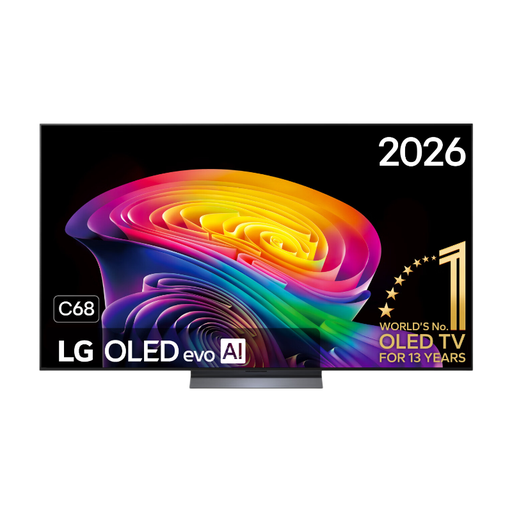 Image unavailable
LG OLED65C68LA OLED evo AI C6 4K Smart TV
A 65-inch option for anyone considering OLED for watching cookery programmes in a dark room. This model is a 4K OLED evo TV.
View at Joybuy
Image unavailable
LG OLED55C68LA OLED evo AI C6 4K Smart TV
A 55-inch model to compare if you’re considering OLED for a room with little ambient light. Its stated features include 4K and OLED evo.
View at Joybuy
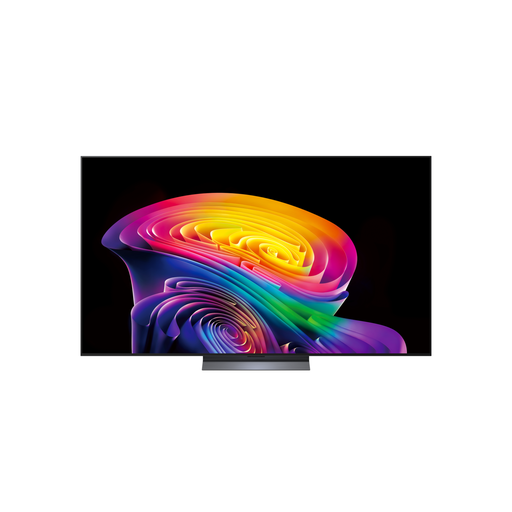 Image unavailable
LG OLED42C68LA 4K Ultra HD OLED Smart TV
A 42-inch OLED option for anyone who wants to choose a screen size to suit their usual viewing position. This model is a 4K Ultra HD TV.
View at Joybuy
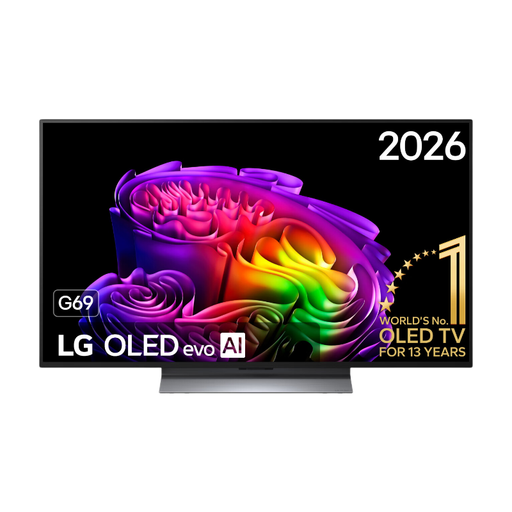 Image unavailable
LG OLED48G69LS OLED evo AI G6 4K Smart TV
A 48-inch model for anyone weighing up OLED and screen size together. Its stated features include 4K and OLED evo.
View at Joybuy
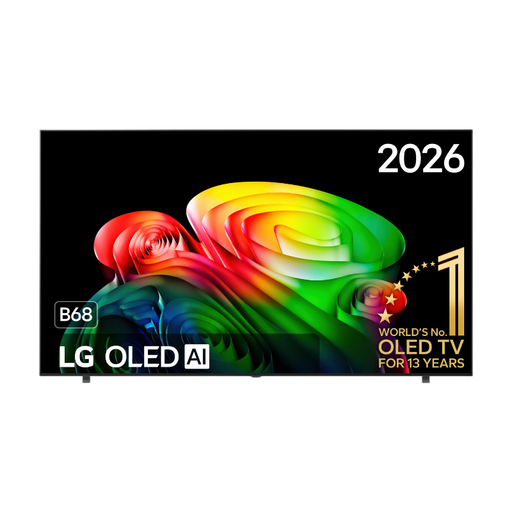 Image unavailable
LG OLED77B68LA 4K OLED Smart TV
A 77-inch option for anyone considering a large screen as well as OLED. This model is a 4K OLED TV.
View at Joybuy
Frequently asked questions
How do you work out what TV size to choose before ordering?
Measure the distance from your eyes in your usual seat to the TV. Divide that distance in centimetres by 2.4 to get an initial estimate of the screen diagonal in centimetres, as suggested by the Consumentenbond. Compare nearby sizes, too, and check the dimensions including the stand.
Should you consider channel logos when buying an OLED TV?
Yes, factor in logos that stay on screen for long periods if you often watch the same channel for a long time. The Consumentenbond reported image retention on older OLED models it tested, but that test doesn’t estimate the risk for a specific current model.
What should you look for when watching regular cookery programmes?
Compare how natural colours and regular broadcasts look on the exact models you’re considering. RTINGS.com covers SDR colour accuracy before calibration and upscaling for lower-resolution content; extra sharpening doesn’t necessarily produce the most natural picture.
How do you compare TV energy consumption?
Compare the energy label and stated consumption of the exact models. The Consumentenbond says screen size has a significant effect on energy consumption; you’ll also need to factor in your own viewing habits and electricity tariff to calculate your personal costs.
Does the statutory guarantee in the Netherlands always end after two years?
No. According to ACM ConsuWijzer, the statutory guarantee does not have a fixed two-year duration: what you can reasonably expect from a product depends on factors including normal use. If a product breaks down too soon, contact the retailer for an appropriate solution.


