
Portfolio presenter with an audience
You show design details to people who may not be sitting directly in front of the screen. Readability and visibility from different seats are therefore important considerations.


Start by measuring your viewing distance and available space. Then choose a screen on which your portfolio is easy to read from the seats you intend to use. A compact OLED TV may suit changing viewing positions and varied content, while a matte art TV or compact LED TV may be a better fit if glare is a problem or you often display the same image for long periods. Before buying, test how your own files look on the screen and how you plan to connect them.
You show design details to people who may not be sitting directly in front of the screen. Readability and visibility from different seats are therefore important considerations.
You want visitors to be able to see your work without the TV being too wide for the wall or furniture. Viewing distance and the TV’s external dimensions need to be checked separately.
You display your work in a well-lit living room and want to minimise distracting reflections. The screen finish and where you place the TV can both make a difference.
Start with your viewing distance and the space available. Then check how your files look, how the screen handles reflections and how you plan to display your images.
| What to consider | What should you check? | Who is this important for? |
|---|---|---|
| Readability and files | View small text, fine lines, and light and dark images from the seats you plan to use. Also check the laptop or phone connection and how files display on the exact model. | When I show design details to others, I want them to be easy to read from their seats. Around 40% of consumers give showing details and their own files the highest priority. |
| Size and placement | Measure your viewing distance and the available width and depth separately, including the stand. The Consumentenbond suggests a viewing distance of around 2.4 times the screen diagonal as a comfortable starting point. | If the TV needs to fit in a narrow living room, I want to weigh the viewing size against the space the TV actually takes up. Around 30% of consumers prioritise available space and viewing distance. |
| Reflections | Assess the screen in the lighting you usually present in, and from seats to the side. An anti-reflective finish alone does not prove colour accuracy. | When daylight falls on the screen, I want to view my designs clearly without reflections disrupting the presentation. Around 20% of consumers make reducing reflections their top priority. |
| Images displayed for long periods | Consider whether you regularly change images or leave the same slide on screen for a long time. If you often display static content for extended periods, compare LED or LCD models too, and check the terms for the exact TV. | If the same portfolio slide often stays on screen for a long time, I want to consider the panel type and how I use it together. Around 10% of consumers prioritise images displayed for long periods. |
The screen size won’t tell you whether the TV, stand and connections will fit in the space available.
Measure both the viewing distance and the available width, and check the exact model’s external dimensions, including the stand.
An unsuitable stand or wall set-up may mean you need to find another position or mounting solution.
RTINGS describes permanent image retention under extreme, prolonged static use. This does not predict what will happen to a specific model during normal use.
Vary the images you display, and compare LED or LCD models too if you often leave static content on screen for long periods.
A finish that reduces reflections does not prove that colours and details will be suitable as a reference image in your living room.
View your own designs in the room’s actual lighting and from the seats your audience will use.
According to ACM ConsuWijzer, the legal guarantee in the Netherlands depends on what you could reasonably expect from the product. It does not automatically end when the manufacturer’s warranty expires.
Check any additional cover against its own terms, and distinguish between a commercial warranty and your legal guarantee.
An additional warranty product may cost extra, so consider what cover it actually provides.
The Dutch-market OLED42C68LA is a 42-inch OLED option for a compact set-up.
The Dutch-market 43-inch The Frame QE43LS03HEUXXN is an art TV option for anyone who wants to display their own photos and is considering a wall-mounted set-up.
The Dutch-market 43PUS8001/12 is a 43-inch LED option with a photo feature listed by Philips.
These Joybuy TVs offer compact 4K options to compare with your viewing distance, available space and preferred display technology.
 No image available
A compact OLED option to compare if your viewing positions vary. Bear your usage habits in mind if you display static images for long periods.
42 inch, 4K Ultra HD, OLED, Dolby Vision, HDR10, HDMI 2.1.
 No image available
A 43-inch option to compare with your viewing distance and check against the space available.
QLED, 4K UHD, HDR10+, Dolby Vision, HDMI 2.1.
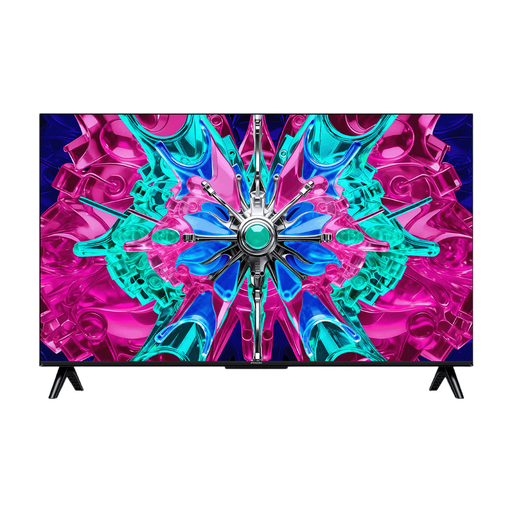 No image available
The 43-inch diagonal gives you a specific size to compare with your available width and viewing distance.
4K LED, 50Hz.
 No image available
Compare the 43-inch screen size with your set-up and check that the connections you need are compatible with your presentation source.
4K QLED, 120Hz.
 No image available
A 43-inch model to assess against your available space and preferred viewing distance.
4K Ultra HD, QLED, HDR10, VRR, ALLM.
First, measure the distance from your eyes to the screen and the space available for the TV. The Consumentenbond suggests around 2.4 times the screen diagonal as a starting point for viewing distance, not a hard-and-fast rule. Then check the model’s external dimensions and stand.
Philips lists Moments for sharing photos from a phone on the 43PUS8001/12; Samsung lists the transfer of personal photos from a smartphone or USB for the QE43LS03HEUXXN. Test the exact model to make sure your files and full presentation work as you want them to.
Check the dimensions, which mounting options are compatible with the model, and whether there is enough space for cables. Samsung describes the relevant The Frame as mounting almost flush to the wall, but that does not mean every wall or cable route will work without adjustments.
According to ACM ConsuWijzer, when you buy a new TV online, you will generally have a statutory cooling-off period of up to 14 days after delivery. The seller is also responsible under the legal guarantee if, during normal use, the product does not meet what you could reasonably expect from it; a manufacturer’s warranty does not replace this right.
Compare the EU energy label and the model information in EPREL for the exact TV. The scale for TVs runs from A to G, so compare the details for the models themselves.