
Viewers with window light reflecting on the screen
You’re planning a documentary night while high windows reflect in or near the screen. So compare reflections and brightness for the exact model.


For a documentary night with daylight coming through high windows, a TV is a good fit only if both direct reflections and the brightness of the exact model suit the room. Mini-LED with local dimming is one option for rooms with lots of daylight. OLED is still worth considering if dark scenes matter later in the evening and the specific model handles reflections well enough. Then check the picture from the seats furthest to the side and measure your viewing distance before choosing a screen size.
You’re planning a documentary night while high windows reflect in or near the screen. So compare reflections and brightness for the exact model.
Your guests may be sitting at an angle to the TV. So check the picture from the seats at the side, not just from the middle.
You want to watch during the day and still make out dark scenes later in the evening. Compare reflections, brightness and contrast for each model.
Start with direct reflections and brightness, then check the picture from the seats furthest to the side, and finally measure your viewing distance. This helps you compare the features that matter most for this documentary night.
| What to consider | What should you check? | Who is this important for? |
|---|---|---|
| Window reflections | Compare tests of the exact model for direct reflections and brightness. Also check whether your planned position puts the TV directly opposite the windows. RTINGS treats reflections and brightness as separate considerations. | If high windows are reflected directly in the screen, I want to reduce the distraction without simply turning up the brightness. Around 36% of consumers say reflections are their main concern when buying. |
| Viewing angle | Check the horizontal viewing angle of the exact model and assess the picture from the seats furthest to the side. RTINGS highlights viewing angle as a consideration for wide seating arrangements. | If guests are sitting away from the middle, I want the picture to look good from those seats too. Around 29% of consumers give viewing angle their highest priority. |
| Documentary picture and sound | Compare bright and dark scenes, and check that your playback device and any soundbar work well with the TV. The Consumentenbond points out that picture processing also affects picture quality. | If I watch during the day and later in the evening, I want to follow dark scenes and make out dialogue with the group. Around 21% of consumers put picture quality and clear dialogue first. |
| Screen size and energy use | Measure your viewing distance and available space, including the TV stand. The Consumentenbond suggests around 2.4 times the screen diagonal as a starting point for viewing distance. Also compare the EU energy label for the exact screen size. | If I’m choosing a TV for several seats, I want the screen to suit the viewing distance and be able to compare energy use. Around 14% of consumers prioritise screen size and running costs. |
A bright screen doesn’t prove that direct reflections from high windows will be reduced enough.
Compare reflections and brightness for the exact model, and see whether a different position or window covering could help.
Running a TV at high brightness often can increase its energy use.
Guests sitting at the side may see different colours, brightness or contrast from someone sitting directly in front of the TV.
Check the horizontal viewing angle of the exact model and look at the screen from the seats furthest to the side.
A larger screen won’t automatically suit every viewing distance or available space for furniture.
Measure the distance from the seats and the space available, including the stand. Use the Consumentenbond’s suggestion of around 2.4 times the screen diagonal as a starting point, not a hard-and-fast rule.
A larger screen or a higher brightness setting can increase energy use, so compare the labels for the exact screen sizes.
The connections need to work with your existing equipment. A commercial warranty is also not the same as your statutory rights.
Check the connections on the TV and soundbar before buying. ACM ConsuWijzer explains that if a product develops a fault despite normal use, the retailer must put it right free of charge. Consider any paid warranty extension separately.
A different connection may mean you need different equipment. An additional paid warranty is not the same as a statutory guarantee.
The BRAVIA 9 II is worth considering if reflections and daylight are major concerns. RTINGS’ assessment applies to the model it tested, not automatically to other Sony TVs.
Samsung lists the OLED S95H among its models with a Glare Free coating. That makes this version worth comparing if window reflections are a key concern.
TCL describes the C8K series as a QD-Mini-LED option with local dimming, worth comparing for a bright room.
The OLED G5 may be worth considering if your viewing session moves from daylight to dark scenes. LG describes the series as having self-lit pixels and improved brightness.
According to Philips, the 65MLED950/12 combines QD-Mini-LED with Ambilight, making it worth comparing if atmosphere matters during group viewing too.
These TV options fit the Mini-LED route with local dimming. For each screen size, compare the listed features with your viewing distance, window position and seating arrangement.
 No image available
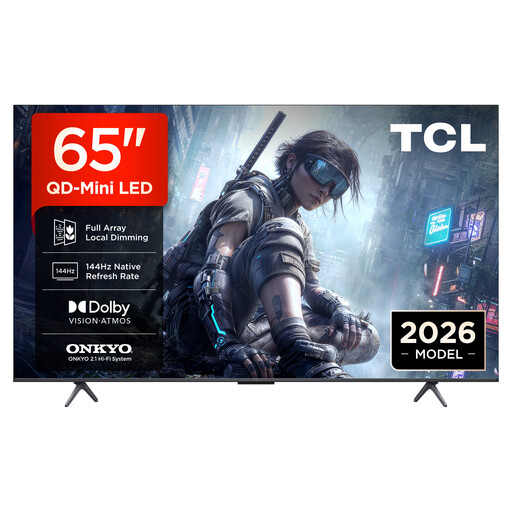
The 65-inch screen size is worth comparing if you’re looking for a Mini-LED TV with local dimming.
QD-Mini LED dimming, 4K, Dolby Vision, HDR10+, 144 Hz VRR and Onkyo 2.1 audio.
 No image available
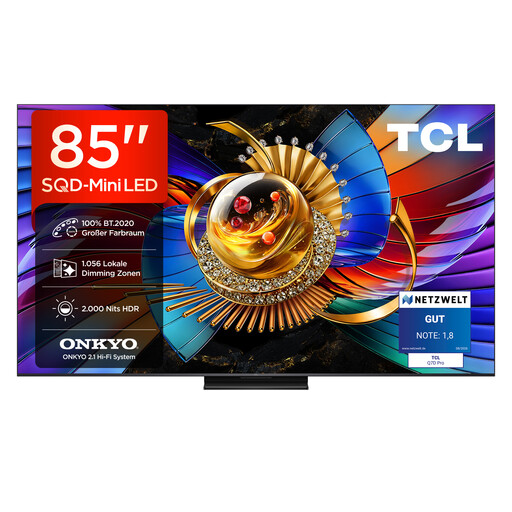
Compare this 85-inch model with your available space and the viewing distance from the seats furthest to the side.
4K SQD-Mini LED, 1,056 local dimming zones, 2,000 nits HDR, anti-reflection, 144 Hz, Dolby Vision IQ and Dolby Atmos.
 No image available
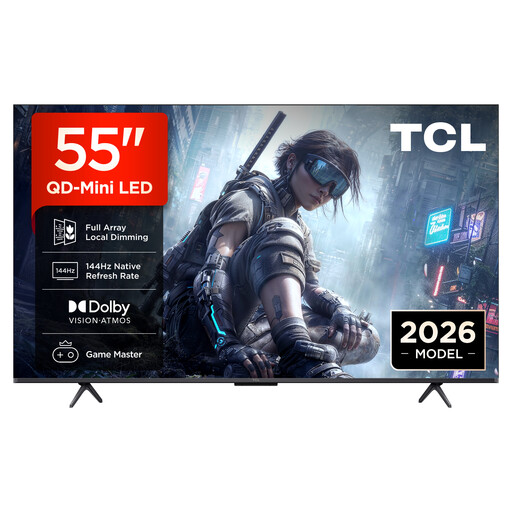
The 55-inch screen size is worth comparing with your viewing distance and the space available for the TV.
QD-Mini LED dimming, 4K, Dolby Vision, HDR10+, 144 Hz VRR and HVA panel.
 No image available
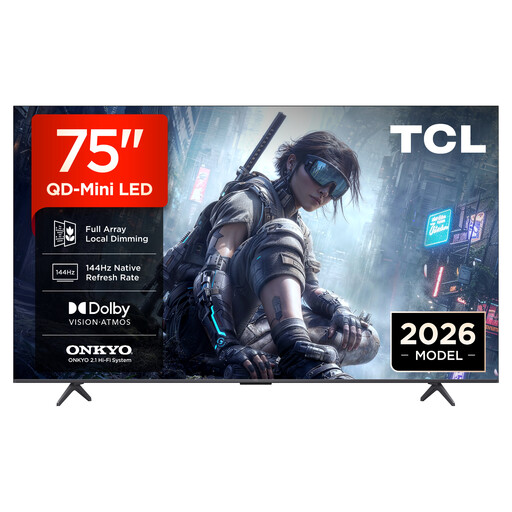
Compare the 75-inch screen with your measured viewing distance and the available width, including the stand.
QD-Mini LED dimming, 4K, Dolby Vision, HDR10+, 144 Hz VRR, HVA panel and Onkyo 2.1 audio.
 No image available
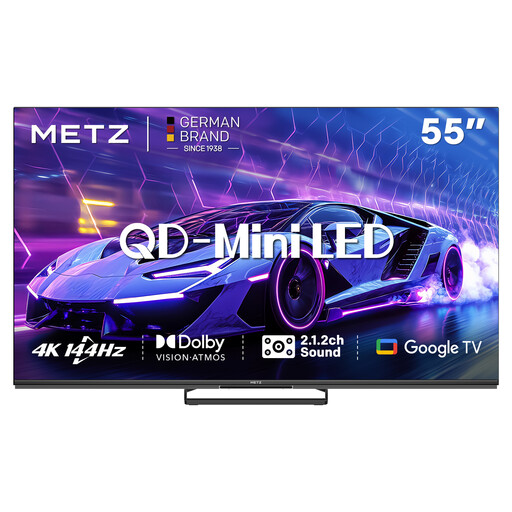
This 55-inch model is worth comparing if you’re looking for QD-Mini LED with local dimming.
4K, 144 Hz, HDR10+, Full Array Local Dimming and an integrated 2.1.2 sound system.
Not necessarily. Compare a test of direct reflections and the brightness of the exact model, and see whether you can position the TV outside the window’s direct line of sight.
Measure from the seats to where you plan to position the screen, and check the width including the stand. The Consumentenbond suggests around 2.4 times the screen diagonal as a starting point for viewing distance. Compare nearby screen sizes too before making your choice.
If possible, place the TV where less daylight falls directly on the screen, and adjust the brightness to suit your viewing conditions. Milieu Centraal points out that a brighter screen uses more electricity. Turning up the brightness won’t automatically get rid of distracting direct reflections.
Compare the EU energy labels for the exact models, including the figures for SDR and HDR. Your personal energy costs will also depend on how long you watch and your electricity tariff.
No. ACM ConsuWijzer distinguishes between a commercial warranty and your statutory guarantee. If a TV develops a fault despite normal use, the retailer is responsible for providing an appropriate solution free of charge. A commercial warranty period doesn’t replace this.