
Viewer with limited space for a screen
Wants a screen that’s comfortable to watch from their seat and fits on their unit or wall. The Dutch Consumers’ Association (Consumentenbond) explains how viewing distance can help you choose a screen size.


Start by measuring the distance from your eyes to the screen and the available width of your unit or wall: a bigger screen isn’t automatically more comfortable to watch. If you mainly watch dark scenes in the evening, compare contrast and picture quality from your usual seats. In daylight, pay particular attention to reflections and brightness. Assess sound and energy use separately, as screen technology alone doesn’t determine either.
Wants a screen that’s comfortable to watch from their seat and fits on their unit or wall. The Dutch Consumers’ Association (Consumentenbond) explains how viewing distance can help you choose a screen size.
Wants to see dark details clearly and takes into account the seats from which the TV will be watched.
Often watches during the day and wants to account for reflections from windows or lamps when choosing where to put the TV and which model to buy.
A good fit if: your measured viewing distance and available width suit a compact size, and dark scenes are important to you.
Bear in mind: OLED doesn’t automatically prevent reflections; check the viewing angle from your seats too.
A good fit if: daytime viewing is a priority and a TV in your chosen size fits in the room.
Bear in mind: local dimming and viewing angles vary by model; compare measurements for the exact TV.
A good fit if: size and purchase price matter more to you than how dark scenes are displayed.
Bear in mind: the terms ‘LED’ and ‘QLED’ alone don’t tell you how contrast and viewing angles will look from your seat.
| What to consider | What should you check? | Who is this important for? |
|---|---|---|
| Size and placement | Measure the viewing distance and the available width and height, including the stand. Use the Consumentenbond’s viewing-distance method as a starting point, not a hard-and-fast rule. | I want a TV that’s comfortable to watch and fits the space available. Around 36% of consumers prioritise finding the right size. |
| Contrast and viewing angle | Compare contrast and viewing-angle measurements for the exact model, and assess the picture from the seats you’ll actually use. | If I mainly watch dark scenes in the evening, I want to follow the details from my seat. Around 29% of consumers prioritise dark scenes. |
| Daytime reflections | Check reflection measurements for the exact model and consider where windows and lamps are in relation to the screen. | I often watch during the day and want to know whether light sources will reflect on the screen. Around 21% of consumers prioritise daylight viewing. |
| Dialogue and energy use | Compare sound ratings for the exact model. Check the energy label for the figures in kWh per 1,000 hours, listed separately for standard picture and HDR. | If being able to follow dialogue clearly matters most to me, I’ll also check the built-in audio. Around 14% of consumers prioritise clear dialogue. |
Viewing distance and the TV’s full dimensions, including its stand, both affect whether it will fit in a narrow living room.
Measure the distance from your seat and the space available before choosing a size. Use the Consumentenbond’s viewing-distance method as a guide.
Reflections depend partly on the light sources in the room and the screen itself. The picture can also look different when viewed from an angle.
Compare reflection and viewing-angle measurements for the exact model, and consider where you’ll place it at home.
ACM ConsuWijzer explains that in the Netherlands, the legal guarantee depends on what you can reasonably expect from the product. It doesn’t automatically have a fixed term of exactly two years.
Keep your proof of purchase and contact the retailer if you think the product has developed a fault prematurely.
The Dutch OLED48C56LB is a 48-inch OLED option for a compact viewing space.
The Dutch 48OLED810/12 combines a 48-inch OLED screen with Ambilight.
The Dutch 50C6K is a 50-inch QD mini-LED LCD model to compare for a room with daylight.
The Dutch QE48S90FAEXXN is a 48-inch OLED option to consider within the same compact size category.
The 55-inch BRAVIA 8 is a larger OLED alternative if your measured viewing distance and available width allow for it.
These Joybuy TVs are options to compare for a compact living room and watching period dramas. Check their dimensions against your own viewing distance and available space.
 No image available
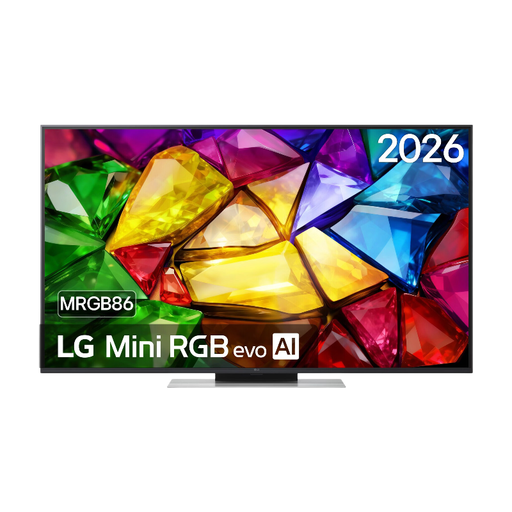
Check whether the 50-inch size suits your viewing distance and the space available.
The product information lists 4K, Mini RGB LED, Dolby Vision, HDR10 and Filmmaker Mode.
 No image available
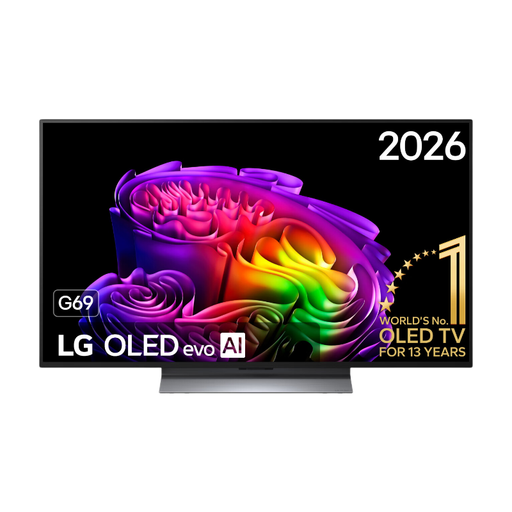
A 48-inch OLED option to consider if you have limited space for a screen and dark scenes matter to you.
The product description lists 4K OLED, pixel dimming, Dolby Vision, HDR10 and Filmmaker Mode.
 No image available
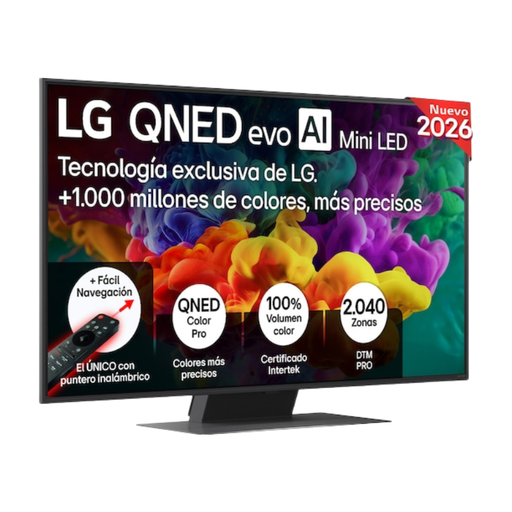
Consider whether the 50-inch size suits your available width and viewing distance.
The product description lists 4K, QNED Mini LED and Dolby Vision. The stated 2,040 dimming zones are a product specification from that description, not an independent measurement.
 No image available
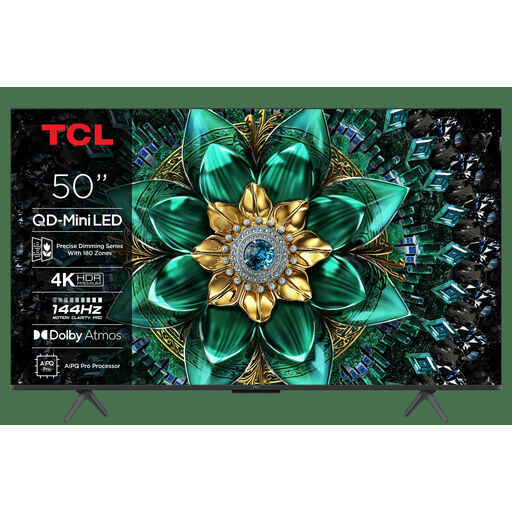
Compare the 50-inch size with your viewing distance and available space before deciding.
The product description lists 4K QD-Mini LED, Dolby Vision, an HVA panel and 144 Hz.
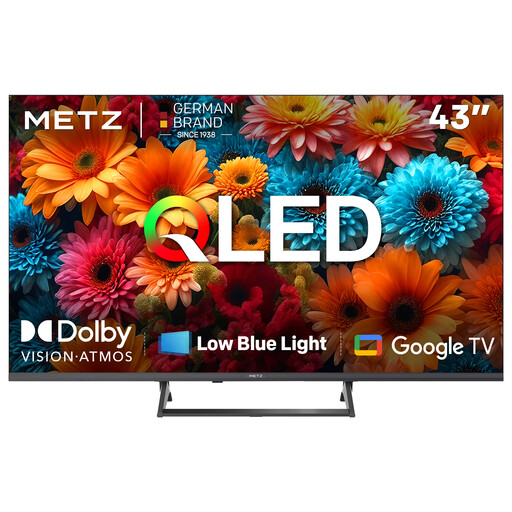 No image available
The 43-inch size is worth comparing if space is limited.
The product information lists QLED, 4K UHD, HDR10+, Dolby Vision and Dolby Atmos.
Measure from your eyes, while sitting in your usual spot, to where you plan to put the screen. The Consumentenbond uses viewing distance divided by around 2.4 as a starting point for the diagonal in centimetres. Also measure the available width and the TV’s dimensions, including its stand. This is a guide to help you choose, not a required size.
Compare the horizontal viewing angle of the exact TV and assess the picture from the seats you use. Also check whether a window or lamp reflects directly on the screen; a wide viewing angle won’t automatically solve reflections.
Compare the figures on the TV’s energy label in kWh per 1,000 hours on the same basis, with standard picture and HDR listed separately. You’ll also need to know how long you watch TV and your electricity tariff to estimate your personal costs.
According to ACM ConsuWijzer, the retailer is responsible for providing a solution if a product used normally develops a fault too soon; the legal guarantee doesn’t automatically have a fixed end date of two years. For a new television ordered online, ACM generally gives you 14 days from delivery to change your mind.
Yes. The Dutch government lists televisions among the appliances that must have an energy label. The label provides product information; it doesn’t require you as the buyer to choose a particular rating.