Who is this buying guide for?

Watching with window light on the screen

You watch during the day in a room where tall windows may reflect on the screen. A clearly visible picture matters, and you may also be able to move the TV or reduce the light. Consumentenbond looks at brightness and use in bright rooms; RTINGS rates TVs for bright rooms.

Following fast choreography

You want to follow steps and camera cuts clearly, so you compare the motion handling of specific models as well as their brightness. RTINGS rates TVs for sport and fast-moving images.

Watching with a group spread across the room

You watch together from different angles and want colour and brightness to remain clear away from the central seat. Consumentenbond and RTINGS discuss viewing angle as a factor to consider when seating is spread out.

What should you look for when choosing?

Bright Mini LED or LCD TV

A good fit when: the room is very bright during the day and brightness is your priority. Also compare reflection handling and motion on the specific model.

Trade-off: black levels and viewing angles vary by model, and Mini LED doesn’t guarantee that reflections from a window will disappear.

OLED with tested anti-reflection

A good fit when: you care about wide seating and dark scenes as well as daylight. Compare the reflection handling and brightness tested on the specific model.

Trade-off: performance in bright light depends on the model. Long periods of static images, such as a fixed channel logo, remain a consideration because of image retention.

LCD or QLED TV with manageable daylight

A good fit when: you can position the TV out of direct reflections or reduce the light, and want to compare other LCD or QLED models too.

Trade-off: the technology name alone doesn’t tell you enough about contrast, viewing angle or smooth motion. Assess the model you’re considering.

Factor to consider What should you check? Who should give this more weight?
Daylight and reflections Compare reflection tests and brightness for the same model. Check whether a tall window is directly opposite the screen. If I watch during the day and a window is in or near my line of sight, I want to assess reflections and visibility together. Around 36% of consumers put reflections first.
Fast dance moves Compare motion ratings for the exact model with content similar to what you usually watch. I want to follow the steps and camera cuts clearly, so I look at how it handles similar TV footage. Around 29% of consumers give motion the highest priority.
Off-centre seating Compare measured viewing angles. An LCD TV that looks good straight on may not look the same from the side. If we watch from different seats, I want to know how colour and brightness hold up away from the central position. Around 21% of consumers put wide seating first.
Screen size and power consumption Measure your viewing distance and available space, then compare the EU energy label and consumption per 1,000 hours of suitable models. I want a screen size that suits my viewing distance and also consider power consumption when watching regularly. Around 14% of consumers give screen size and running costs the highest priority.

Common buying mistakes

  • Focusing only on brightness or ‘anti-glare’

    A visible window reflected on the screen is not the same issue as a room that is generally bright. Comparing brightness alone won’t tell you how distracting a reflection will be in your set-up.

    Assess brightness and reflection handling separately for the model you’re considering, and think about where you’ll place the screen.

  • Assuming a high refresh rate guarantees smooth TV pictures

    The manufacturer’s quoted refresh rate doesn’t, by itself, describe how the TV processes your dance show.

    Compare motion ratings for the exact model and, if possible, watch similar source material.

  • Assuming OLED burn-in is either certain or impossible

    Consumentenbond described image retention under prolonged, unusual conditions. This doesn’t predict what will happen with every current model.

    Break up long periods of static images and weigh this consideration against how you watch TV.

  • Assuming the manufacturer’s warranty covers all your legal rights

    In the Netherlands, your statutory protection depends on what you could reasonably expect from the product. These rights are not the same as a manufacturer’s warranty.

    If you think a product may be faulty, contact the retailer and check the manufacturer’s warranty separately.

Brands to compare

Sony

The BRAVIA 9 II is an RGB LED range available in the Netherlands to compare if a bright picture and reflection handling matter to you.

  • RTINGS rated the BRAVIA 9 II it tested positively for use in a bright room. This rating doesn’t automatically apply to other BRAVIA models or regional versions.
  • Check that the model and version you’re looking at match the variant covered by any review.

Samsung

The S95H sold in the Netherlands is an OLED option to compare for reflections, brightness and viewing angle.

  • Samsung lists a Glare Free screen for the S95H. RTINGS assessed the S95H it tested for sport, reflections and wide viewing angles.
  • This information applies to the version mentioned and doesn’t prove that every Samsung OLED has the same features.

LG

The OLED evo G6 range available in the Netherlands is an OLED alternative to compare for reflections and viewing angle.

  • LG lists Reflection Free Premium for the G6 version shown.
  • This is a claim from LG, not an independent measurement of every size or variant. Compare a test of the model you’re considering.

Philips

The 65MLED910/12 available in the Netherlands combines QD Mini LED with Ambilight, which may be worth considering if you value this lighting feature.

  • Philips lists QD Mini LED and Ambilight for the 65MLED910/12.
  • This product information doesn’t independently compare reflections from windows or the handling of fast dance moves.

TCL

The C7K range offers QD Mini LED in several sizes, which you can compare by version.

  • TCL lists a native refresh rate of 144 Hz for the 55C7K shown.
  • TCL notes that its own test results may depend on different testing conditions. The quoted refresh rate alone doesn’t determine how a TV broadcast will look.

Joybuy products

These Joybuy products are Mini LED TVs to compare for a bright viewing space. Check reflections, motion handling and screen size for each model.
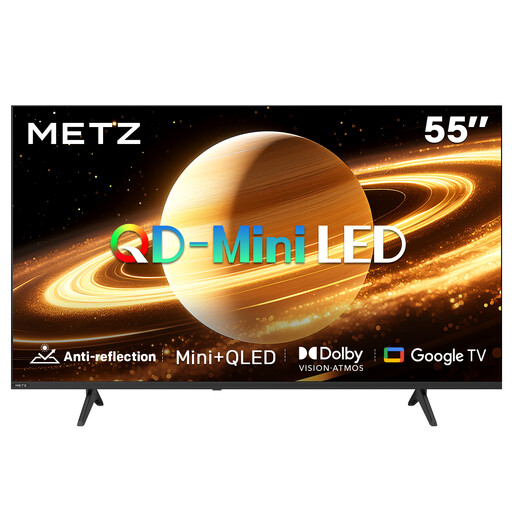
METZ 55MNH7000Z 55-inch QD Mini LED TV

METZ 55MNH7000Z 55-inch QD Mini LED TV

The product title describes a matte screen. Compare how it handles reflections in the position where you plan to watch.

55 inches (140 cm); QD Mini LED; 60 Hz; Dolby Vision and Dolby Atmos; HDMI 2.1; Google TV.

Joybuy
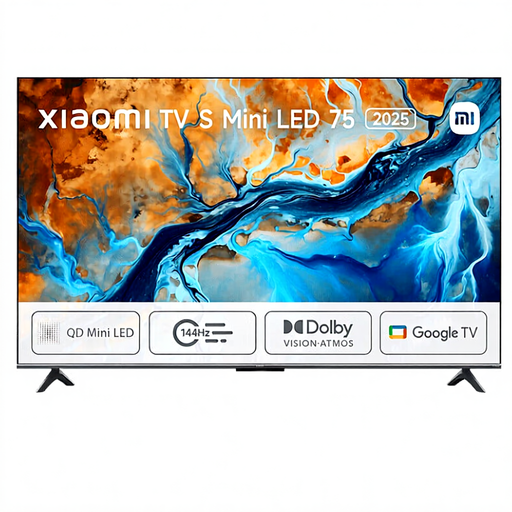
Xiaomi TV S 2025 75-inch Mini LED TV

Xiaomi TV S 2025 75-inch Mini LED TV

The Mini LED version is worth comparing for a bright room. Check how it handles motion from your usual TV source.

75 inches; 4K HDR; 144 Hz; Dolby Atmos.

Joybuy
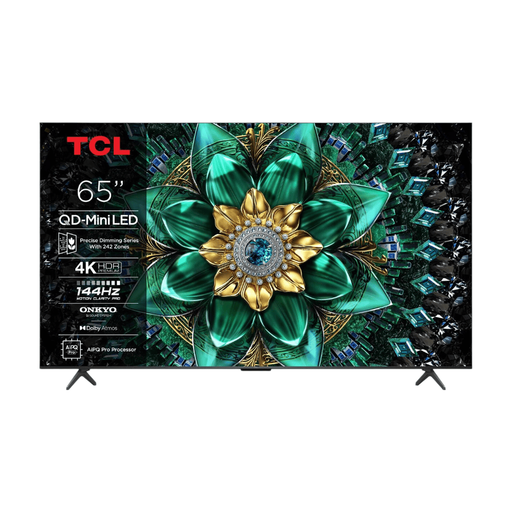
TCL 65Q6C 65-inch QD Mini LED TV

TCL 65Q6C 65-inch QD Mini LED TV

The stated brightness makes this model worth comparing for daylight viewing. Assess visibility and reflections on the version you’re considering.

65 inches; 4K HDR; stated brightness of 1000 nits; energy rating F.

Joybuy
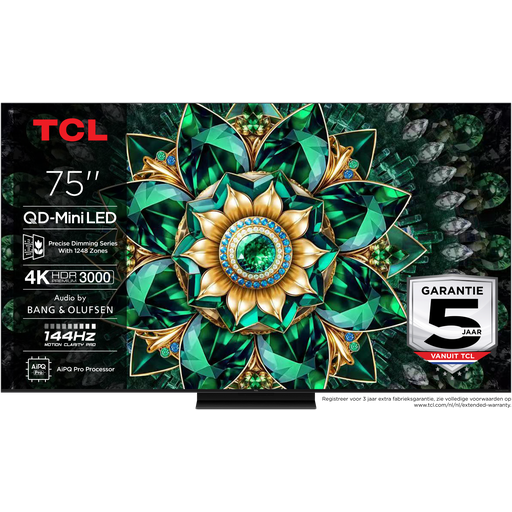
TCL 75Q7C 75-inch 4K Mini LED TV

TCL 75Q7C 75-inch 4K Mini LED TV

This 75-inch version is an option to weigh up against your viewing distance. Compare how each model handles fast-moving images.

4K; 144 Hz.

Joybuy
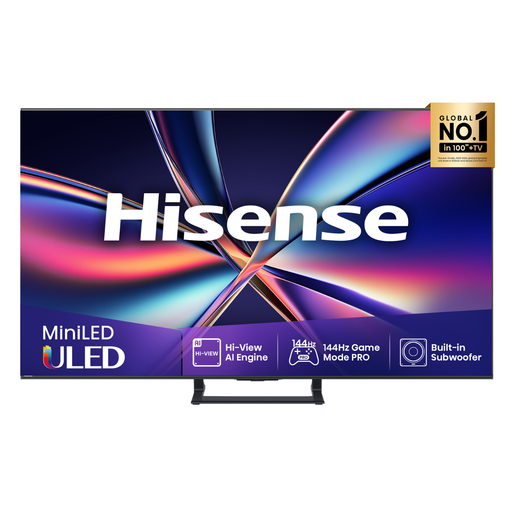
Hisense 75E8Q 75-inch 4K Mini LED TV

Hisense 75E8Q 75-inch 4K Mini LED TV

This 75-inch version is worth comparing if you’re considering a large screen. Check the viewing angle if you’ll be watching from different seats.

4K; 144 Hz.

Joybuy

Frequently asked questions

Does 4K automatically make a dance competition look sharper?

No. Extra screen pixels can’t add detail that isn’t in the broadcast. Check the source you’re watching and assess the TV’s picture processing too, as Consumentenbond advises.

What picture settings can you adjust after installation?

Try the picture settings with a scene you know well, then adjust the brightness to suit the light at the time you usually watch. Higher brightness can increase power consumption; Milieu Centraal advises comparing consumption per 1,000 hours.

How do you compare the power consumption of TVs?

For the screen size you’re considering, compare the consumption per 1,000 hours shown on the energy label. Actual consumption also depends on how long you watch and your brightness settings, as Milieu Centraal explains.

What are your rights when buying a TV online in the Netherlands?

For an online purchase, ACM ConsuWijzer says you generally have 14 days to change your mind after delivery, with some exceptions. If a product is faulty, you also have statutory rights against the retailer. In the Netherlands, TVs don’t automatically have a fixed two-year statutory end date.

Are there energy requirements for televisions?

Yes. According to the European Commission, televisions are covered by EU energy labelling and ecodesign rules. You can compare model information in EPREL; for a specific product, also check the energy label for the version you’re looking at.
