What should you look for?
Start with the seating and available space, then assess the light and speech clarity. Finally, compare energy consumption in light of your household’s viewing habits.
| Factor to consider |
What should you check? |
Who might find this most relevant? |
| Picture quality from different seats |
Assess the exact model from the furthest seats; viewing-angle measurements can help you compare options. |
If I watch from the sofa and the dining table, I want to be able to follow the picture from an angle too. Around 28% of consumers prioritise a picture that’s clear from different seats. |
| Screen size and available space |
Measure your viewing distance and the space for the TV. In its own research, the Consumentenbond gives a viewing distance of around 2.4 times the screen diagonal as a comfortable starting point. |
In a small shared living room, I want to match the screen size to the viewing distance and available space. Around 22% of consumers prioritise a screen size that suits the room. |
| Visibility in daylight |
Note the position of windows and lamps. RTINGS.com recommends assessing reflection handling separately from brightness. |
If there are windows or lamps opposite the screen, I want to follow cooking programmes during the day without having to put up with reflections. Around 17% of consumers prioritise visibility in daylight and under artificial lighting. |
| Speech and shared use |
Compare speech-clarity and ease-of-use tests; check that the apps you want are available on the exact model. |
When we watch a programme together, I want to hear the spoken instructions clearly and find the TV easy to use. Around 17% of consumers prioritise speech clarity and shared use. |
| Energy consumption when sharing |
Compare the energy label figures in kWh per 1000 hours, taking viewing time, screen size and settings into account. The European Commission describes the label classes as ranging from A to G. |
If we share the TV and its energy costs, I want to compare models with our viewing hours in mind. Around 16% of consumers prioritise energy consumption when sharing. |
TVs on Joybuy for this viewing space
The TVs below range from 43 to 50 inches and list LED, QLED or QD-Mini LED technology in their product names. Check that each screen size suits your viewing distance, and assess the viewing angle, reflections and speech clarity for the exact model.
 No image available
TCL 50Q6C QD-Mini LED 4K TV
The 50-inch screen is worth considering if your viewing distance and available space can accommodate this size.
Product features: QD-Mini LED, 4K and energy class E.
View at Joybuy
 No image available
Hisense 43A6S 43-inch 4K UHD smart TV
The 43-inch screen gives you a specific size to match to your viewing distance and the space available at home.
Product features: 4K UHD, 60 Hz, Dolby Vision and VIDAA.
View at Joybuy
 No image available
METZ 43MQF7500Z 43-inch QLED 4K UHD TV
The 43-inch screen is one option to compare with your viewing distance and where you plan to put the TV.
Product features: QLED, 4K UHD, Google TV, HDR10+, Dolby Vision and Dolby Atmos.
View at Joybuy
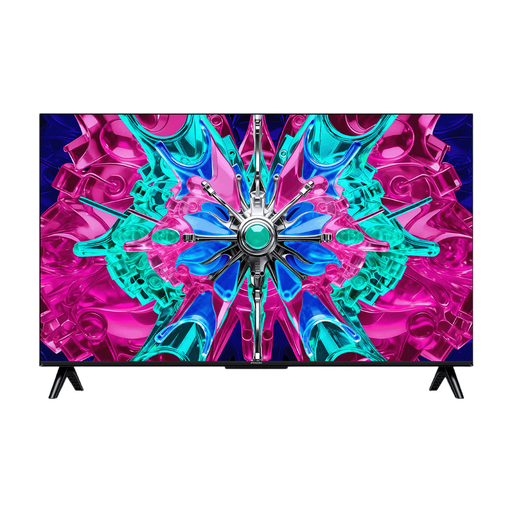 No image available
iFFALCON U65A 43-inch 4K LED smart TV
The 43-inch screen can be weighed against the seating and available space in your shared room.
Product features: 4K LED, 50 Hz and smart TV.
View at Joybuy
 No image available
Hisense 43E7S 43-inch QLED 4K UHD TV
The 43-inch screen makes this model an option to compare with the distance from your seats.
Product features: QLED, 4K UHD, HDR10+ and VIDAA.
View at Joybuy
Frequently asked questions
How do you choose a TV size without knowing the living room?
Measure the distance from your seat to where you plan to put the TV, and check how much space is available too. In its own research, the Consumentenbond suggests dividing the viewing distance by 2.4 as a starting estimate for the screen diagonal, with both measurements in the same units.
Does a TV for cooking programmes have to be 4K?
No, not necessarily. You also need a suitable signal to see extra detail; the Consumentenbond recommends looking beyond pixel count when assessing picture and sound quality. Check the broadcast or service you actually use.
What can you check yourself after setting up the TV?
Watch a familiar scene with both dark and bright areas, and adjust the picture settings if needed. The Consumentenbond recommends using this kind of scene as a starting point. Also check from your usual seats that the picture is clear and speech is easy to follow.
How do you compare TV energy consumption?
Compare the stated consumption in kWh per 1000 hours, taking viewing time, screen size and settings into account. According to the European Commission, the EU energy label for electronic displays ranges from A to G.
What are your rights when buying a TV online in the Netherlands?
For online purchases from a business, you generally have a 14-day cooling-off period, according to the Dutch government. Statutory consumer rights also apply: if the TV doesn’t perform as you could reasonably expect under normal use, you can contact the seller, as advised by ACM ConsuWijzer.


