
Concert film fan who cares about sound
You want to enjoy the music, so you assess the TV alongside any external audio you might use, rather than judging it on picture quality alone.


Start with where you’ll be watching from. If you’ll be viewing from an angle in the kitchen, viewing angles matter. In a bright kitchen-diner, brightness and reflections need extra consideration. Then listen to concert footage on the specific TV model and check the connections if you might add external audio. OLED and Mini LED have different picture characteristics, but neither is automatically the right choice for every room.
You want to enjoy the music, so you assess the TV alongside any external audio you might use, rather than judging it on picture quality alone.
You often watch the screen from an angle, so how clearly you can see it from the kitchen matters more than how it looks straight on.
You often watch with daylight or the kitchen lights on, so you’ll need to assess brightness and reflections in your room.
Choose between OLED and LCD or Mini LED based on where you watch and the light in the room. Then assess the sound separately on the specific TV you’re considering.
Best for mainly watching in controlled lighting, when deep blacks and viewing from an angle matter.
Keep in mind compare the specific model’s brightness and reflections in strong daylight. Image retention can also be a consideration if you leave a still image on screen for a long time.
Best for a bright living space where daytime visibility is a priority; according to the Dutch Consumers' Association (Consumentenbond), LCD TVs can often be very bright.
Keep in mind check the viewing angle from your usual spot in the kitchen. Mini LED is a type of LCD backlighting and, on its own, tells you nothing about sound or reflections.
Best for when music playback is a deciding factor and the built-in speakers don’t sound good enough when you listen.
Keep in mind you’ll need space for extra audio equipment. Check for HDMI-ARC/eARC on both the TV and the sound system. An optical connection may be an alternative.
| What to consider | What should you check? | Who should pay particular attention? |
|---|---|---|
| Sound for concert films | Listen using concert footage you know well. Then check for HDMI-ARC/eARC or, where suitable, an optical output on both the TV and the sound system. | If music is my main priority, I want to know whether the sound suits the concert films I watch and whether external audio is easy to connect. Around 36% of consumers put music playback first. |
| Viewing from the kitchen | Compare the same scenes from directly in front and from your usual spot in the kitchen; assess the viewing angle on the specific models you’re considering. | If I watch from an angle in the kitchen, I want to be able to follow the picture clearly from there. Around 29% of consumers prioritise being able to see the screen from the kitchen. |
| Picture in bright conditions | Compare brightness and reflections with lighting similar to that in your own room, and watch some dark scenes too. | If I watch during the day or with the kitchen lights on, I want to see dark concert footage clearly without distracting reflections. Around 21% of consumers prioritise visibility in a bright room. |
| Size and placement | Measure the viewing distance and the available space. Check the installation instructions and keep ventilation openings clear. | If the TV needs to fit the space I have, I want to weigh up its size, viewing distance and mounting position in advance. Around 14% of consumers put size and practical placement first. |
The Dutch Consumers' Association (Consumentenbond) notes that OLED generally offers a wider viewing angle and deeper blacks than LCD, although performance and features vary by model. So assess the TV from both viewing positions. If the screen is close to the kitchen, follow the installation instructions for your chosen model and allow for ventilation, splashes and cooking heat.
The picture may look different from your usual spot in the kitchen. The showroom’s lighting and reflections may also be unlike those at home.
Watch the same scenes from an angle too, under lighting similar to that in your kitchen-diner.
Support for an audio format doesn’t tell you how the built-in speakers will reproduce concert footage in your room.
Listen to the specific TV and, if necessary, check the connections for external audio.
OLED generally has advantages for blacks and viewing angles; an LCD TV can be a practical choice in a bright room. Features vary by model.
Let your viewing positions and the amount of light in the room guide your choice, and compare specific TVs.
The LG OLED55C55LA is an OLED model to include in your comparison if viewing angles and black levels matter to you.
The TCL 55C6K is a Mini LED LCD model to compare for a living space where the amount of light matters.
The Sony K-55XR5 is a Mini LED LCD model to compare if you want to connect external audio.
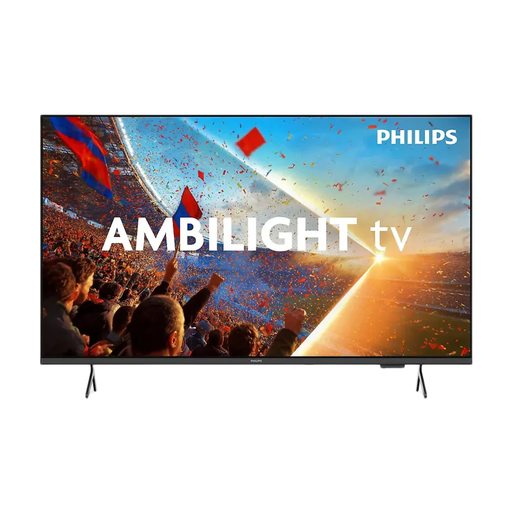
The Philips 55OLED810/12 is an OLED model with Ambilight to compare if the viewing environment is also a factor.
This selection includes 4K TVs with OLED and QD-Mini LED screens in a range of sizes. Compare the sound, viewing positions, lighting conditions and available space for each model.
 No image available
A 55-inch 4K TV to consider if you’re looking for a large screen for concert films.
The product information lists three-sided Ambilight, a light sensor, eARC and Dolby Atmos. It also mentions 2 × 10 W RMS speakers, which doesn’t tell you how good the sound is. The description advises protecting the TV from splashes and leaving enough space for ventilation.
 No image available
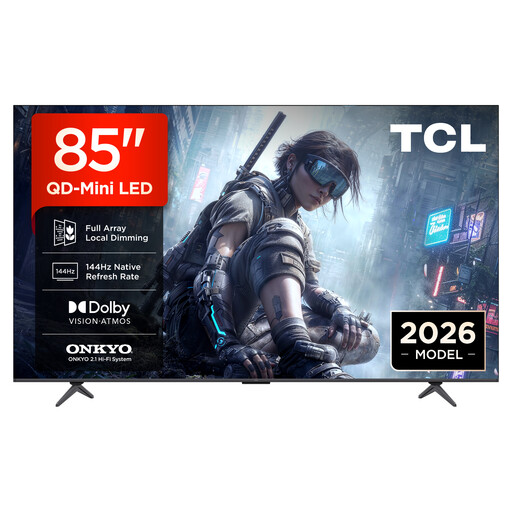
This 85-inch 4K QD-Mini LED TV calls for careful consideration of viewing distance and available space.
The title lists 144 Hz and Onkyo 2.1 sound, but that doesn’t prove how concert films will sound in your room. The product description calls for at least 10 cm of clearance and advises against placing the TV near heat sources or in damp environments.
 No image available
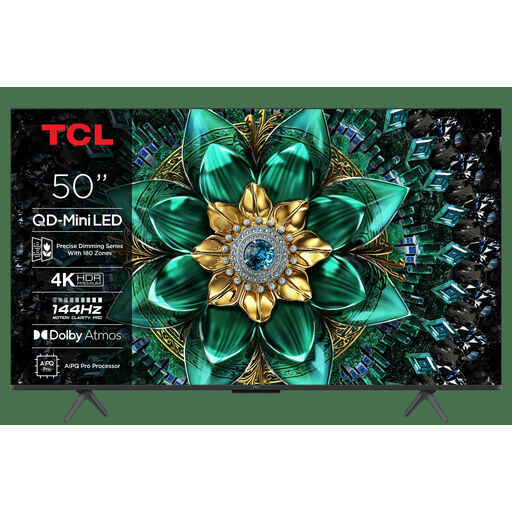
The 50-inch screen size is worth considering if you’re looking to use the TV in a compact space.
The title lists QD-Mini LED, 4K and an Onkyo 2.1 audio system, but this doesn’t tell you how music will sound in your room. The product description calls for at least 10 cm of clearance and advises against placing the TV near heat sources or in damp environments.
 No image available
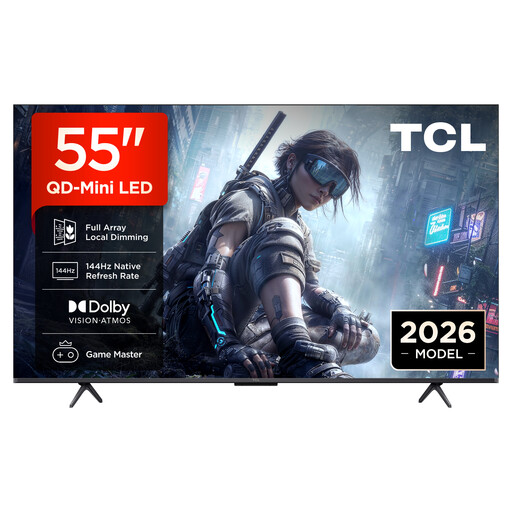
This 55-inch 4K QD-Mini LED model is an option to compare with TVs in other screen sizes.
The title lists 144 Hz VRR and Dolby Atmos support; the product description mentions 2.0 audio. These details don’t tell you how good the sound is. The description calls for space around the TV for ventilation and advises against placing it near heat sources or in damp environments.
 No image available
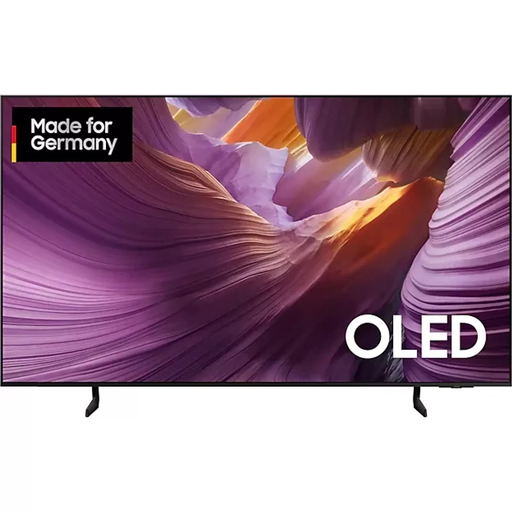
This 55-inch OLED 4K TV is worth comparing if OLED suits your viewing positions.
The product description lists four HDMI ports and a 2-channel speaker system; the latter doesn’t tell you how concert films will sound. Leave space for ventilation and keep the TV away from moisture.
No. First, listen to the exact TV model with content you know well. If you then want to connect external audio, check that both the TV and sound system support HDMI-ARC/eARC; an optical connection may be an alternative.
That depends on the location and the instructions for your chosen model. Keep ventilation openings clear and consider splashes and cooking heat when deciding where to install it. Follow the manufacturer’s installation instructions.
Compare the European energy labels and, ideally, choose models with similar screen sizes. The label distinguishes between energy use for SDR and HDR viewing. You can scan the QR code to find more information about the model in EPREL.
According to ACM ConsuWijzer, when you buy a new TV online you generally have up to 14 days after delivery to change your mind. If the product is faulty, the seller is responsible for the statutory guarantee; a manufacturer’s guarantee does not replace those rights.