When choosing a TV for a community garden film night with several viewers, start with the seating: compare the viewing angle from the seats at either end and match the screen size to the viewing distance, rather than simply opting for a large screen. The Dutch Consumers' Association generally describes OLED TVs as having a wider viewing angle, but viewing angles and reflections vary between models. Then choose according to the ambient light and check that the film file and any external audio equipment will work with the exact model. For outdoor use, choose a model specifically rated for it.
Who is this TV guide for?
Organising a screening for a wide audience
If you’re arranging seats side by side, assess the viewing angle of the exact model from the seats at either end. The Dutch Consumers' Association recommends checking this when several people are watching together.
Organising an afternoon screening in bright conditions
If there are windows or lots of ambient light, weigh up reflections against viewing angle and screen size. Compare how the specific model handles reflections in the room where you plan to show the film.
Screening a film file of your own
If you want to play the film from a USB stick, laptop or mobile phone, check the connections and playback support of the exact model. Also think about how to make dialogue clear for the whole group.
What should you look for when choosing?
First, measure the seating area and viewing distance. Then compare the viewing angle, screen size, reflections and playback options of specific models.
| What to consider |
What to look for when buying |
Who is this most important for? |
| Viewing angle |
Compare the viewing angle of the exact model and check the picture from the outer seats you have planned. |
If I arrange seats side by side, I want viewers at the sides to be able to follow the picture clearly. Around 28% of consumers give viewing angle the highest priority. |
| Size and viewing distance |
Measure the distance from the seats and check that the screen will fit in the intended position. The Dutch Consumers' Association suggests around 2.4 times the screen diagonal as a starting point for a comfortable viewing distance. |
When the group sits further from the screen, I want viewers at the back to be able to make out the details too. Around 22% of consumers prioritise a screen size that suits the planned viewing distance. |
| Light and reflections |
Compare how the exact model handles reflections and its brightness in a room with windows or lamps; weigh this up against the viewing angle too. |
For an afternoon screening in a bright room, I want to minimise glare without overlooking the seats at the sides. Around 17% of consumers give visibility in ambient light the highest priority. |
| Playing the film |
Choose your preferred option, such as USB or a laptop connected via HDMI. For USB playback, check which storage formats and video and audio codecs the exact model supports. |
If I want to play the film from my own USB stick or laptop, I want to know in advance whether that playback option will work. Around 17% of consumers prioritise connectivity and compatibility with their own film. |
| Clear dialogue |
Compare reviews of speech clarity and check the audio output if you want to use external audio equipment. |
For a film with dialogue, I want the group to be able to hear the voices from the planned seating positions. Around 16% of consumers give speech clarity the highest priority. |
Common pitfalls when choosing
-
Comparing screen diagonals alone
A bigger picture won’t automatically prevent a loss of picture quality at the sides or distracting reflections.
Plan the seating first, then compare screen size, viewing angle and reflections for each model.
-
Assuming every TV with USB plays every film file
Support for file systems and video and audio codecs varies by model.
Try your own file using your chosen playback option before the event.
You may need to use a different playback option or convert the file.
-
Assuming OLED or Mini LED is right for every situation
The general characteristics of a display technology don’t tell you how the exact model will handle side seating and reflections.
Compare the model information against the seating and ambient light in your room.
-
Leaving a static pause screen on an OLED TV for a long time
The Dutch Consumers' Association describes image retention and possible burn-in if a picture remains static for a long time; this is not the same as watching an ordinary film.
Don’t leave a static image on screen during longer breaks, and follow the instructions for your chosen model.
Brands and models to compare
LG
LG’s range in the Netherlands includes the 65-inch OLED evo C5 line, including the OLED65C56LB.
- The Dutch Consumers' Association generally describes OLED TVs as having a wider viewing angle.
- That general characteristic isn’t a measurement of this specific TV’s viewing angle or reflections; assess these from the seating positions you have planned.
Samsung
Samsung offers the 65-inch QN90F Mini LED TV for indoor use, as well as a separate The Terrace range for outdoor use.
- Samsung describes the QN90F screen as anti-reflective.
- This is a manufacturer claim, not a comparison with every alternative. Samsung lists an IP56 rating for The Terrace LST7D; this specification does not apply to the QN90F.
TCL
The TCL 65C7K available in the Netherlands is a 65-inch QD-MiniLED model worth comparing for a bright room.
- TCL specifies QD-MiniLED and a CrystGlow HVA panel for the 65C7K.
- A brightness specification alone doesn’t tell you how the picture looks from the side seats. Don’t confuse this model with a version bearing a different number.
Sony
The Sony K-65XR5 is a 65-inch Mini LED option. Sony publishes information about its connections and USB playback.
- Sony specifies four HDMI inputs and lists the USB file systems and codecs supported by the K-65XR5.
- That list doesn’t confirm that every video file will play or that the viewing angle will suit every setup.
Philips
Philips lists the 65OLED810/12 as a 65-inch OLED Ambilight model.
- The model name and screen size give you a specific version to include in your comparison.
- Assess viewing angle, reflections and sound separately for your planned seating and room.
Joybuy TVs for a shared film screening
These Joybuy models offer a range of screen sizes and stated picture and connectivity features to weigh up for a shared film screening.
 No image available
50NU800B6LC 50-inch 4K UHD TV
The 50-inch size gives you a specific measurement to weigh up against the viewing distance and the space available for the TV.
The product description mentions a 4K UHD screen and an anti-reflective screen. Compare how it handles reflections in your own room.
View at Joybuy
 No image available
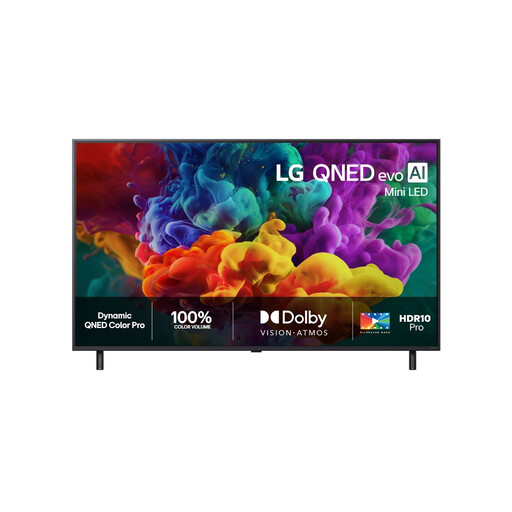
LG QNED85B6B 86-inch 4K QNED Mini LED Smart TV
The stated 86-inch screen size lets you check whether the TV will suit the viewing distance and available space.
The product description mentions 2.040 dimming zones, Dolby audio features and a 20 W audio system. These details are no substitute for assessing how clear the sound is from the seats.
View at Joybuy
 No image available
Hisense 65A6S 65-inch 4K UHD Smart TV
The 65-inch screen and stated viewing angle are specifications to assess for your planned seating; the viewing angle is a product specification, not an independent measurement.
The product description mentions Dolby Vision, HDMI connections and AirPlay 2. According to the description, the TV is intended for indoor use in domestic settings only.
View at Joybuy
 No image available
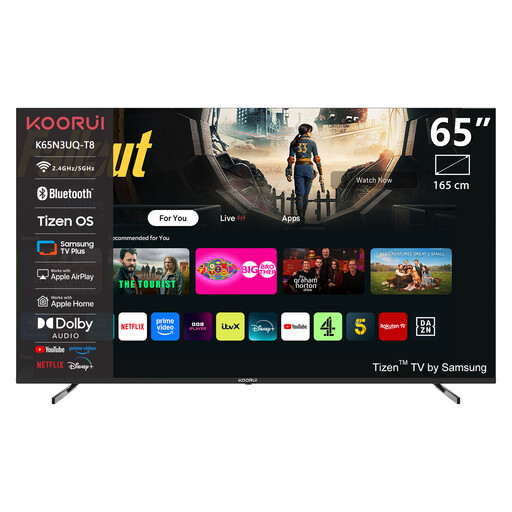
KOORUI K65N3UQ-T8 65-inch 4K UHD QLED Smart TV
The stated 65-inch size is a measurement to compare with your planned viewing distance and seating.
The product name mentions Tizen OS and Dolby Audio; the product description also lists a LAN connection.
View at Joybuy
 No image available
TCL 65T8D 65-inch QLED QD-Mini LED 4K TV
The stated 65-inch screen size helps you weigh up the viewing distance and available space.
The product description mentions QD-Mini LED dimming, HDMI 2.1, Google TV and a 2.1-channel audio system. Check that the available connections and sound output suit your setup.
View at Joybuy
Frequently asked questions
How do you choose a screen size when people are sitting at different distances?
Measure the planned seating distances and pay particular attention to viewers at the back. The Dutch Consumers' Association suggests around 2.4 times the screen diagonal as a starting point for a comfortable viewing distance; also check that everyone can see well enough from their own seat.
Can you play the community garden film directly from a USB stick?
A USB port doesn’t guarantee that your file will work. Check which storage formats and video and audio codecs the exact model supports. Connecting a laptop via HDMI is another playback option.
What can you do if the dialogue in the film is hard to hear?
Compare reviews of speech clarity and listen from the planned seating positions. If you’re considering external audio, check which audio output the TV has and whether it works with your audio equipment.
Is a standard living-room TV suitable for an outdoor screening?
Don’t assume so: check whether the exact TV is rated for the intended outdoor location. For example, Samsung lists an IP56 rating for the The Terrace LST7D model sold in the Netherlands; that model specification says nothing about ordinary indoor TVs.
Can you show and share the film with your garden association?
That depends on the content and how it is shown. Auteursrecht.nl states that permission from the rights holders is needed to show copyright-protected works outside a strictly domestic setting. If an organisation films identifiable people or shares the footage, it must also take the relevant privacy rules into account, as explained by the Dutch Data Protection Authority (Autoriteit Persoonsgegevens).


