
Daytime viewers
If you mainly watch during the day, compare how bright the picture is and how much light from windows or lamps you can see reflected on the screen. The Consumentenbond lists brightness and reflections as important considerations.


Choose a TV based on reflections, readability from your seat and how the picture looks from the side. A bright LCD or Mini LED TV is a sensible choice if you mainly watch during the day; OLED is also worth considering if viewing angles and contrast matter more to you. The Consumentenbond outlines the general differences between these technologies, but you should assess the performance of each specific model separately.
If you mainly watch during the day, compare how bright the picture is and how much light from windows or lamps you can see reflected on the screen. The Consumentenbond lists brightness and reflections as important considerations.
If not everyone sits directly in front of the TV, check that quiz text and faces remain clearly visible from the seats at either end. The Consumentenbond lists viewing angle as one of the features you can assess when choosing a TV.
If you mainly watch standard TV broadcasts, weigh screen size and readability against features you’ll actually use. The benefits of 4K also depend on the broadcast.
The Consumentenbond highlights brightness, reflections, viewing angle and viewing distance as factors to consider. Assess each TV from your usual seat and in lighting similar to the conditions you normally watch in.
Best for: daytime viewing when brightness is an important consideration.
Trade-off: the technology name alone doesn’t tell you how a specific model performs when it comes to reflections or viewing angles.
Best for: anyone who also watches from an angle on the sofa and values contrast.
Trade-off: according to the Consumentenbond, LCD TVs can often be bright, so check how an OLED model performs in your lighting conditions too.
| What to consider | What should you check? | Who should pay particular attention? |
|---|---|---|
| Daylight and reflections | Compare the brightness and reflections of the specific model in similar lighting. | If I watch during the day, I want to be able to read quiz questions without reflections from a window or lamp getting in the way. Around 36% of consumers put daylight and reflections first. |
| Readability and screen size | Measure your viewing distance and check how text looks from that distance; take the broadcast resolution into account. | I want to read questions from my usual seat and choose a screen size that suits that distance. Around 29% of consumers prioritise readability and screen size. |
| Viewing angle | Check the picture from the seat at either end and compare the specific model. | If we watch together, I want text and faces to remain easy to follow from the side too. Around 21% of consumers say being able to watch from different seats is their main concern. |
| Features and running costs | Compare the energy label and product information sheet for the exact model; don’t assume every broadcast will show visible 4K detail. | I mainly watch standard quiz broadcasts and want to choose features that suit the way I use my TV. Around 14% of consumers prioritise purchase and running costs. |
QLED and Mini LED describe screen technology, but they don’t tell you how much of a window or lamp will be reflected in a specific screen.
Check claims about screen treatment against the exact model code, and assess reflections from your usual seat in typical daylight.
Readability also depends on screen size and viewing distance. Higher resolution only provides extra detail from the source if the broadcast includes it.
Measure the distance between your sofa and TV, then check how quiz text looks from there before choosing a screen size.
According to the Dutch government, the Netherlands has no fixed statutory warranty period. An additional warranty is separate from your right to a product that is fit for purpose.
Check exactly what an additional service covers, and keep your purchase details in case you need to contact the seller.
The Samsung QN90F is a 55-inch Neo QLED 4K Mini LED model, offering an LCD option to compare if you watch during the day.
The LG OLED55G55LW is a specific 55-inch OLED option for anyone who also takes viewing angle and contrast into account.
According to the manufacturer, the Philips 55MLED910/12 combines QD MiniLED with Ambilight.
The TCL 55C6K is a QD-Mini LED model with an HVA panel, providing another LCD option to compare.
According to Sony Netherlands, the 55-inch version of the Sony BRAVIA 5 is a Mini LED TV with Google TV and an XR processor.
This selection includes LCD options with QD-Mini LED or QLED. Compare the stated size and features with your viewing distance, and check any claims about reflections for the specific model.
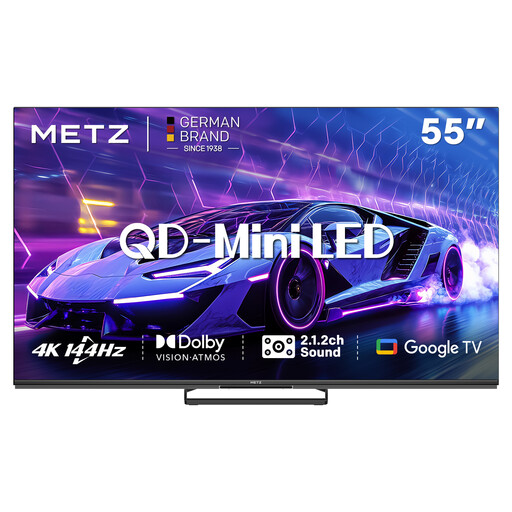 Image unavailable
A QD-Mini LED model to compare as an LCD option for daytime viewing; the technology name alone doesn’t tell you how bright the picture is or how much reflection remains visible.
The product name lists 55 inches, 144 Hz, 4K HDR10+ and Google TV. Assess the screen size from your usual viewing distance.
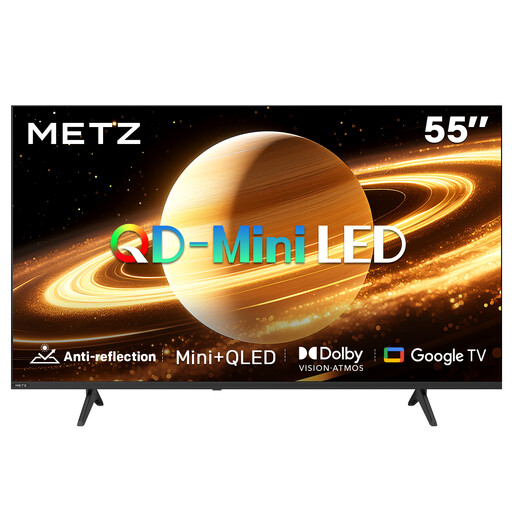 Image unavailable
This 55-inch QD-MiniLED TV is an option to compare with your seating distance and lighting conditions.
The product description says that its matte screen reduces glare and reflections; assess the effect from your usual viewing position. The product name lists 60 Hz, Dolby Vision & Atmos, HDMI 2.1 and Google TV.
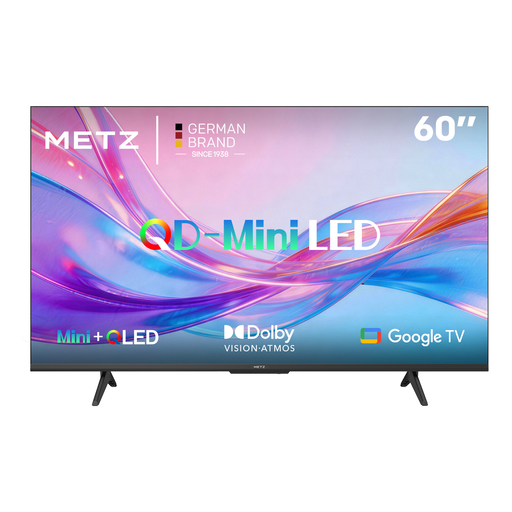 Image unavailable
This QD-MiniLED TV is an LCD option to compare; the screen technology alone doesn’t tell you how the picture will look in your bright living room.
The product name lists 60 inches, 60 Hz, Dolby Vision & Atmos, HDR10+, VRR and Google TV. Check that the screen size suits your viewing distance.
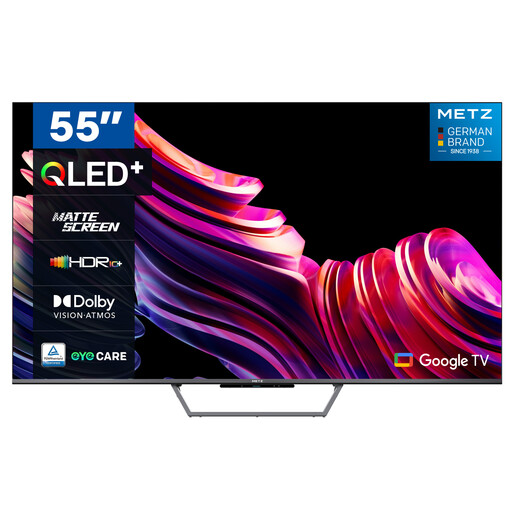 Image unavailable
A 55-inch QLED+ model to compare for screen size and screen treatment when watching quizzes during the day.
The product description says that the matte screen reduces glare and reflections; this is not an independent measurement. The product name lists 4K UHD and Google TV.
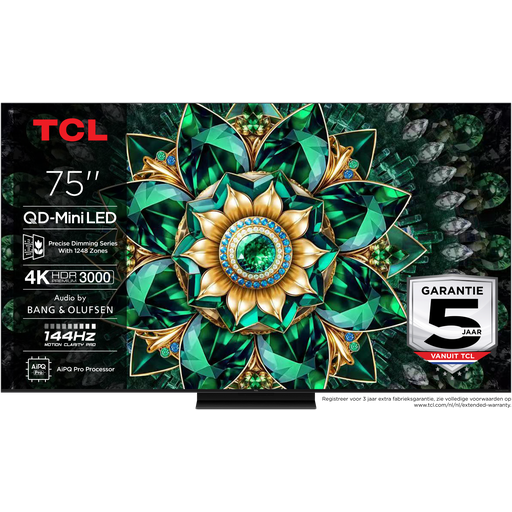 Image unavailable
This 75-inch Mini LED TV is an LCD option to compare if you’re considering a large screen; check the size against your viewing distance.
The product name lists 4K and 144 Hz. The Mini LED label alone doesn’t tell you how the TV handles reflections or how easy quiz text will be to see in your room.
Check the picture and reflections from your usual seats, ideally in similar lighting. Then adjust the picture with the lighting you normally use; the Consumentenbond also recommends paying attention to detail in both bright and dark areas.
Yes. For extra 4K detail, the broadcast itself must be available in 4K. The Consumentenbond notes that standard TV programmes are not necessarily broadcast in 4K.
According to the Dutch government, the free old-for-new scheme applies to private purchases of a similar appliance, including online purchases. Arrange the practical handover with the seller or delivery service.
No. According to the Dutch government, the Netherlands has no fixed statutory warranty period: you are entitled to a product that is fit for purpose, and the seller is your point of contact if something goes wrong. An additional manufacturer’s or paid warranty does not replace that right.
Televisions are covered by European ecodesign and energy labelling rules. Compare the energy label and product information sheet for the exact model; this information does not oblige you as a consumer to choose a particular energy class.