For a bright living room, an LCD or mini-LED TV with good reflection handling is an obvious choice, but brightness alone isn’t enough. An OLED could be a good fit if deep blacks and viewing from different angles matter to you, provided reflections are manageable from your usual viewing position. So compare the performance of the exact model with the light in your room.
Who is this advice for?
Daytime viewer with lots of light from windows
If windows or lamps might be reflected on the screen, compare both reflection handling and the brightness of the exact model. RTINGS treats reflection handling as a separate consideration from brightness.
Family with seats to the side
If you watch together from different seats, it’s worth checking how colours and contrast look from the seats at either end. The Consumentenbond notes that OLED TVs offer a wider viewing angle.
Film fan who also watches in the evening
If dark scenes matter to you, compare the contrast of the specific model and take the room’s lighting into account. The Consumentenbond describes deep blacks as a feature of OLED TVs.
What should you look for when buying?
Mini-LED or another LCD TV
A good fit if: you mostly watch during the day and windows or lamps might shine on the screen; compare independent tests of the exact model.
Trade-off: according to the Consumentenbond, LCD TVs can often be bright, but viewing angles and black levels vary between models.
OLED TV
A good fit if: deep blacks and viewing from angled seats are high priorities.
Trade-off: don’t assume every OLED model offers the same brightness or reflection handling; check the screen in the lighting conditions you expect to use it in.
Standard QLED or LCD TV
A good fit if: the TV’s position or your window coverings keep reflections to a manageable level, and you can choose based on the exact model and screen size.
Trade-off: the QLED name alone doesn’t guarantee good performance in a bright room.
| Consideration |
What to look for |
Who should prioritise this? |
| Reflections during the day |
Compare the exact model’s reflection handling and brightness; consider where windows and lamps are positioned in relation to the screen. |
If a window or lamp is reflected on screen, I want to reduce distractions without relying on brightness alone; around 36% of consumers make reflections and daytime visibility their top priority. |
| Colour and contrast |
Compare tests or specifications clearly identified as manufacturer claims for colour and dark scenes; performance varies by model. |
If vivid animated colours and dark film scenes matter to me, I want to consider both; around 29% of consumers put colour and contrast first. |
| Viewing angle and screen size |
Check the picture from the seat furthest to the side and measure the distance between the sofa and the intended screen position. |
When watching together, I also want a clear view from the side and a screen size that suits the viewing distance; around 21% of consumers prioritise this combination. |
| Power consumption |
Compare the EU energy labels for the exact models, including the separate HDR information mentioned by the European Commission. |
If running costs are a major factor for me, I compare the power consumption of models that suit my preferred screen size; around 14% of consumers make running costs their top priority. |
Common pitfalls
-
Focusing only on peak brightness
Reflections from a window can still be visible, even on a bright TV. Brightness and reflection handling are separate features.
Compare reflection tests for the exact model and consider where the TV will sit in relation to windows and lamps.
-
Assuming QLED, mini-LED and OLED are equivalent screen types
QLED and mini-LED refer to variations or components of LCD TVs, while OLED uses self-emissive pixels. The technology name alone doesn’t predict picture quality.
Compare specific models for brightness, viewing angle and dark scenes rather than relying on the screen type alone.
-
Assuming the manufacturer’s warranty is the same as your full statutory protection
A manufacturer’s warranty is not the same as your statutory right to a product that meets the required standard.
Check what any extra cover includes, and contact the retailer if something goes wrong.
Brands to compare
Sony
The BRAVIA 9 II is a premium option to compare if light from windows and colour are key priorities in a bright room.
- In its September 2026 test of the BRAVIA 9 II, RTINGS reported strong reflection handling and brightness; this test finding applies to this model.
- Check the exact model and version you want; test results for one TV don’t automatically apply to all Sony TVs.
Samsung
The 65-inch QN90F is a mini-LED option featuring Samsung’s Glare Free technology.
- Samsung describes Glare Free as technology for watching in bright conditions.
- This is a manufacturer claim, not an independent measurement; compare the exact model and check the picture formats and viewing angle you need.
TCL
The 65 Q7D Pro is an SQD mini-LED option whose manufacturer specifications you can compare with those of other models.
- For this model, TCL lists 646 dimming zones and up to HDR 2.000 nits, depending on the test environment and standards used.
- These manufacturer specifications alone don’t tell you how much window reflection you’ll see from your viewing position.
Philips
According to Philips, the 65MLED910/12 combines QD mini-LED with Ambilight.
- Ambilight is lighting at the back of the TV.
- Ambilight doesn’t remove the need to check for reflections on the screen; consider claims about the viewing experience as manufacturer claims.
Joybuy product picks
This selection is mainly made up of OLED TVs for anyone considering dark film scenes, plus one 32-inch QLED TV. Check how the exact model handles reflections in daylight; the technology name alone won’t tell you how distracting window reflections will be in your room.
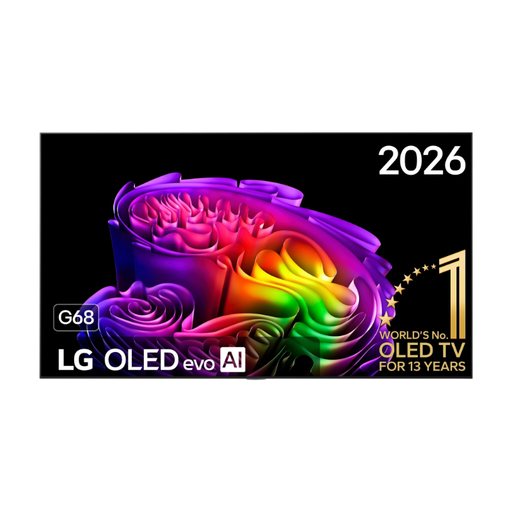 Image unavailable
LG OLED77G68LW
An OLED TV to compare if deep blacks matter when watching films; if you watch in bright daylight, check how this exact model handles reflections.
4K OLED with pixel dimming; Dolby Vision, HDR10 and HLG; native 120 Hz with VRR up to 165 Hz.
View at Joybuy
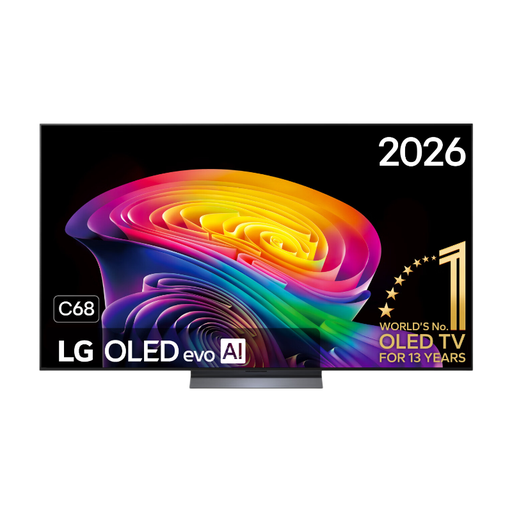 Image unavailable
LG OLED65C68LA 65-inch OLED evo AI C6 4K Smart TV
A 65-inch OLED option to compare if dark scenes and black levels matter; check how it handles reflections in your own room, too.
4K OLED evo with self-emissive pixels; native 120 Hz with VRR up to 165 Hz; Dolby Vision.
View at Joybuy
Image unavailable
LG OLED55C68LA 55-inch OLED evo AI C6 4K Smart TV
A 55-inch OLED option to compare if deep blacks matter; check how this model handles reflections in the light conditions at home.
4K OLED evo; native 120 Hz with VRR up to 165 Hz; Dolby Vision.
View at Joybuy
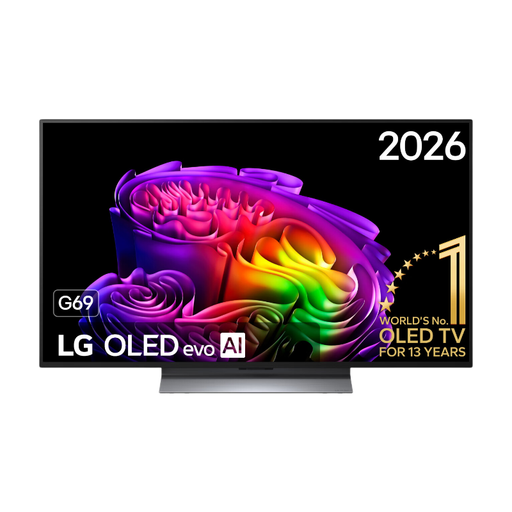 Image unavailable
LG OLED48G69LS 48-inch OLED evo AI G6 4K Smart TV
A 48-inch OLED option to compare if dark scenes matter; in daylight, check for reflections from the spot where you plan to put the TV.
4K OLED with pixel dimming; native 120 Hz with VRR up to 165 Hz; Dolby Vision.
View at Joybuy
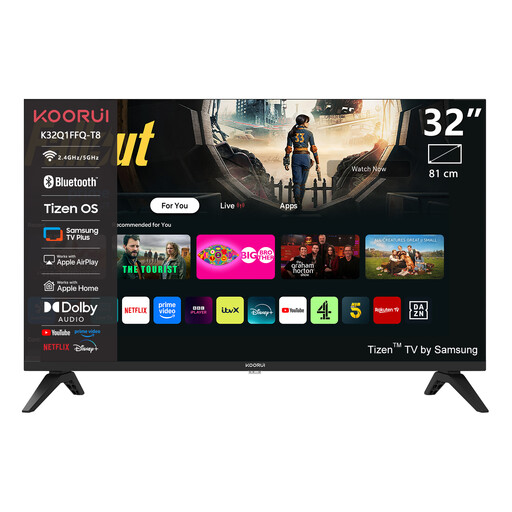 Image unavailable
KOORUI K32Q1FFQ-T8 32-inch Full HD QLED Smart TV
A compact 32-inch QLED option to compare if this size suits your viewing position; the QLED label alone doesn’t tell you how the screen handles window reflections.
Full HD resolution; QLED; HDR10; Tizen OS.
View at Joybuy
Frequently asked questions
Is a high brightness claim enough if there’s a window opposite the TV?
No. RTINGS treats brightness and reflection handling as separate considerations for a bright room. Compare information on direct and indirect reflections for the exact model.
Is OLED suitable for a bright living room?
It can be, but check how the specific OLED model handles reflections from your viewing position. The Consumentenbond lists deep blacks and a wider viewing angle as features of OLED TVs; don’t assume every model offers the same brightness or reflection handling.
How do I work out the screen size before positioning the TV?
Measure the distance between the sofa and the intended screen position, and check that the TV will physically fit there. Based on its own research, the Consumentenbond suggests a distance of around 2.4 times the screen diagonal as a guideline many people find comfortable, not a fixed rule.
How do I compare the power consumption of two TVs?
Compare the EU energy labels for the exact models, and check the separate HDR information too. Your viewing hours and electricity tariff will also affect the final cost.
Am I automatically entitled to exactly two years of statutory cover in the Netherlands?
No. According to the Dutch government, the Netherlands has no fixed statutory warranty period; you’re entitled to a product that meets the required standard, and its expected lifespan depends on the circumstances. If there’s a problem, contact the retailer.
Can I return a TV bought online?
According to the Dutch government, distance purchases are often covered by a 14-day cooling-off period. Check the terms that apply to your purchase and distinguish this cooling-off period from any additional returns service.


