
Daytime viewers
You often watch with the curtains open and want both bright and dark scenes to remain visible. RTINGS points out that both brightness and reflection handling matter.


For watching music films during the day, brightness isn’t the only thing that matters. Compare how well the specific TV model handles reflections, too: a bright screen won’t necessarily prevent glare. Then consider the sound for vocals and music, contrast in dark scenes and viewing angles. According to RTINGS and the Consumers’ Association, both mini-LED and OLED can be suitable, depending on your room and the model.
You often watch with the curtains open and want both bright and dark scenes to remain visible. RTINGS points out that both brightness and reflection handling matter.
You focus mainly on vocals, instruments and dialogue, and want to know whether the built-in speakers are up to the job. The Consumers’ Association highlights the wide variation in TV sound quality.
You also use the same TV for dark scenes, or watch with others from different seats. The Consumers’ Association notes that black levels and viewing angles vary between screen technologies.
First compare picture quality in the light conditions of your living room, then assess sound, film contrast and screen size. RTINGS stresses the importance of both brightness and reflection handling, while the Consumers’ Association also points to differences in sound, black levels and viewing angles.
| What to consider | What to look for | Who should prioritise this? |
|---|---|---|
| Visibility in daylight | Compare reflection handling and measured SDR brightness for the exact model. Brightness alone doesn’t tell you how distracting a reflection from a window will be. | If I watch during the day, I want light sources to interfere with the picture as little as possible. Around 36% of consumers prioritise visibility in daylight. |
| Vocals, dialogue and music | Assess the sound quality of the exact model. If you’re using external audio, check that the connections are compatible with both devices. | If vocals and dialogue need to be easy to understand, I want to assess the sound rather than rely on the audio format alone. Around 29% of consumers put sound first. |
| Film contrast and viewing angles | Compare black levels in dark scenes and picture quality from seats away from the centre. | If I also watch films with the lights dimmed or sit off-centre, I look at black levels and viewing angles. Around 21% of consumers prioritise these film-viewing features. |
| Screen size and running costs | Measure your viewing distance and available space. For suitable models, compare the energy label’s consumption figures for SDR and HDR per 1,000 hours. | If the TV needs to suit my sofa and available space, I also want to be able to compare its electricity consumption. Around 14% of consumers prioritise screen size and running costs. |
Brightness and reflection handling are different things. A bright screen won’t automatically stop daylight from reflecting visibly on the screen.
Compare both features for the full model code, and consider the direction of the daylight at the spot where you plan to put the TV.
The Consumers’ Association highlights major differences in sound quality between TVs. Support for an audio format doesn’t, by itself, tell you how vocals and music will sound.
Assess vocals, dialogue and music on the specific TV, or check which connection will work with your existing audio system.
Consumption varies depending on how you use and set up the TV. The European Commission’s energy label gives separate consumption figures for SDR and HDR.
For screen sizes that suit your living room, compare consumption in kWh per 1,000 hours for both SDR and HDR.
A different model code or screen size may mean that key specifications don’t match those of the version that was tested.
Check the full model code, variant and screen size before applying test results to a TV you’re considering.
The BRAVIA 9 II is an RGB LED option worth comparing for a bright living room. RTINGS ranked the BRAVIA 9 II at the top of its list for bright rooms, updated on 16 September 2026; that assessment applies to the model tested.
The OLED G5 range is an option if you want a bright living room TV that also works well for watching films in lower light. RTINGS describes the LG G5 it tested as an OLED that can overcome glare in a well-lit room.
The QN90F is a mini-LED option to compare by screen size for daylight visibility, reflections and sound.
The C8K is a QD mini-LED range; TCL lists audio by Bang & Olufsen.
According to Philips, the 65MLED910/12 combines mini-LED with Ambilight for anyone who wants ambient lighting around the screen, too.
This selection includes OLED TVs and a QD mini-LED TV for watching music films. Compare screen size, picture technology and built-in audio with your living room and viewing habits.
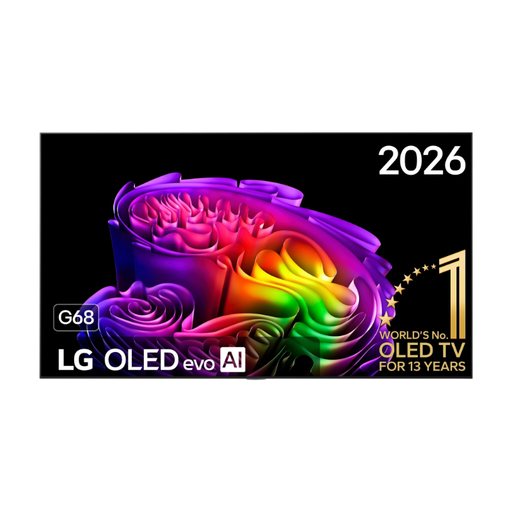 No image available
Could be a good fit if you’re looking for OLED picture quality and built-in audio; compare reflections for this exact model in daylight.
OLED; 4.2-channel system; 60 W audio output; Dolby Atmos.
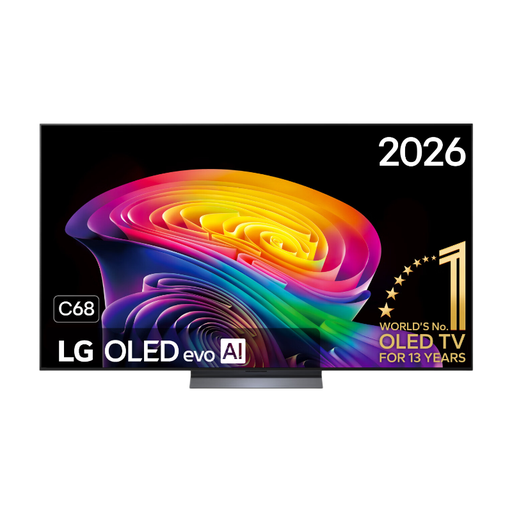 No image available
Could be a good fit if you’re looking for a 65-inch OLED TV with built-in audio; check how this version handles reflections in daylight.
4K; α11 AI Processor 4K Gen3; 120 Hz; VRR up to 165 Hz; Dolby Vision; Dolby Atmos; webOS 26.
No image available
Could be a good fit if you’re looking for a 55-inch OLED TV with built-in audio; compare the picture with the lighting in your living room.
4K; α11 AI Processor 4K Gen3; 120 Hz native; VRR up to 165 Hz; Dolby Vision; Dolby Atmos; webOS 26.
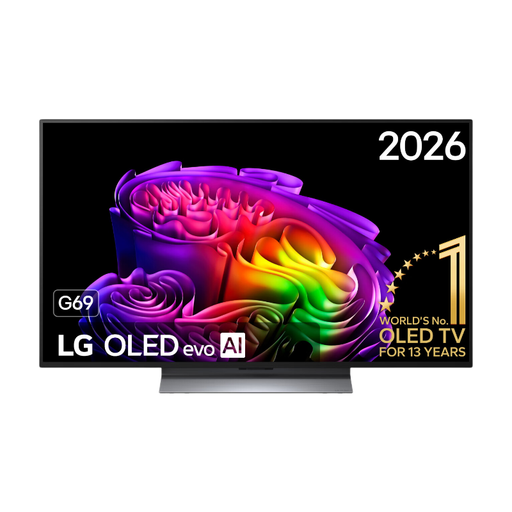 No image available
Could be a good fit if a 48-inch OLED TV suits your available space; check that the screen size also works for your viewing distance.
4K; α11 Gen3 AI Processor; 120 Hz native; VRR 165 Hz; Dolby Vision; Dolby Atmos; webOS 26.
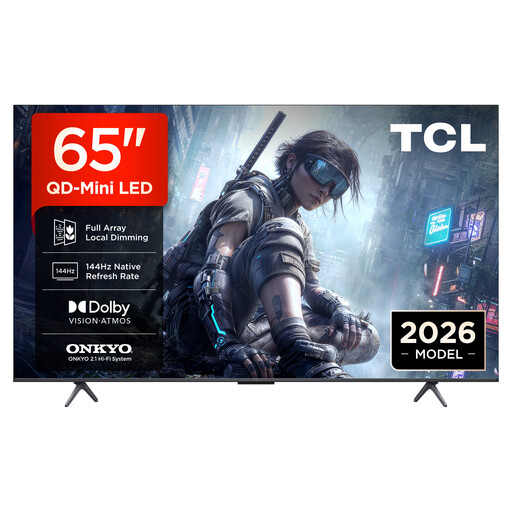 No image available
Could be a good fit if you’re comparing a mini-LED TV with built-in audio against OLED models; assess reflections and sound for the exact version.
QD mini-LED dimming; Dolby Vision; HDR10+; 144 Hz VRR; Onkyo 2.1 audio; Dolby Atmos.
No. Alongside brightness, compare how well the model handles reflections and see whether you can position the TV to keep direct daylight off the screen.
Measure the distance between your sofa and the planned screen position. The Consumers’ Association suggests around 2.4 times the screen’s diagonal as a guide that some viewers may find comfortable; your room and personal preference are still what matter most.
Not necessarily: sound quality varies between TVs. If vocals or music don’t sound good on the model you choose, compare a soundbar or your existing audio system, and check that the connection is compatible.
Compare the energy labels and the figures in kWh per 1,000 hours for SDR and HDR on TVs of similar screen sizes. Your own consumption will depend on factors including viewing time and settings.
Yes. According to ACM ConsuWijzer, Dutch statutory guarantees are separate from the manufacturer’s warranty. If a product used normally breaks down sooner than you could reasonably expect, the seller is responsible for providing an appropriate solution; there is no single fixed statutory guarantee period for every TV.