
Film fan who watches during the day
You watch short films with windows or lamps that may be reflected on the screen. So look at both the anti-reflection treatment and brightness: RTINGS.com emphasises that both matter in a bright room.


When comparing TVs for watching short films during the day, look at both the screen’s anti-reflection treatment and the brightness of specific models: high brightness alone won’t prevent distracting reflections. Mini-LED LCD is worth considering if you often watch during the day; OLED may suit you if you can control the light coming into the room and place more value on deep blacks or viewing from different seats. Choose a screen size to suit your seating position, then compare the energy labels.
You watch short films with windows or lamps that may be reflected on the screen. So look at both the anti-reflection treatment and brightness: RTINGS.com emphasises that both matter in a bright room.
You want to see dark scenes and black tones clearly, and you can control some of the light coming into the room. The Consumers’ Association lists deeper blacks and wider viewing angles as potential OLED benefits; compare these features with how visible the screen is from your viewing position, too.
You want to choose a screen size that suits your viewing distance first, then compare the energy use of that size. Milieu Centraal recommends checking the energy label for consumption per 1,000 hours, among other things.
A good fit if: you often watch during the day and want to compare a model for both brightness and reflections.
Trade-off: the mini-LED label alone doesn’t tell you how well a specific TV performs; compare the exact model and its test results.
A good fit if: you can control the light coming into the room and value contrast, deep blacks or viewing from different seats.
Trade-off: OLED isn’t automatically the best choice if there’s a bright window; compare reflections and brightness on the specific model.
A good fit if: screen size or purchase price is a priority, and a specific model is clear enough from your viewing position.
Trade-off: QLED is a type of LCD and doesn’t guarantee the same brightness, anti-reflection treatment or black levels as another model.
| What to consider | What to look for when buying | Who is this important for? |
|---|---|---|
| Visibility and reflections | Look at independent tests of reflections and SDR brightness for the exact model; also consider the position of windows and lamps. | If I watch films during the day with a window opposite the TV, I want reflections to distract from the picture as little as possible. Around 36% of consumers give visibility in daylight and reflections top priority. |
| Contrast and film viewing | Compare the contrast and reflections of the same model; check that both the TV and your film source support the HDR format you want. | When watching dark film scenes, I want to see black tones clearly without overlooking the effect of light in the room. Around 29% of consumers prioritise contrast and film viewing. |
| Screen size and seating position | Measure the distance from the sofa to the TV and check how much space you have; consider the viewing angle if you often sit off to one side. The Consumers’ Association recommends a viewing distance of around 2.4 times the screen’s diagonal, based on its own research. | If my sofa is in a fixed position, I want a screen size that suits it and is easy to view from my seat. Around 21% of consumers give screen size and seating position top priority. |
| Running costs | For the same screen size, compare the energy label and consumption in kWh per 1,000 hours; take your viewing hours and settings into account. | If I want to weigh up the purchase price and electricity costs, I want to consider energy use alongside visibility in my room. Around 14% of consumers prioritise running costs. |
A bright window can still be visible during dark film scenes, even if the TV can get very bright. Brightness and anti-reflection treatment are different features.
For the exact model, compare separate measurements of SDR brightness and reflections.
QLED is a type of LCD, and screen treatments vary by model. Samsung lists specific models in its Glare Free overview; don’t assume a TV has this feature based only on its brand name or another product range.
Check the full model number and the reflection performance of that exact model.
A larger screen diagonal won’t automatically suit every viewing distance and may use more electricity.
First measure the distance to your sofa, then compare suitable screen sizes and their energy labels.
A limited manufacturer’s warranty doesn’t automatically end your statutory rights against the seller in the Netherlands.
Read what additional cover actually includes before paying for it.
An extended warranty product may cost extra.
Hisense Netherlands describes the 65E8Q as a 65-inch 4K mini-LED TV with VIDAA, Dolby Vision and Filmmaker Mode.
Sony Netherlands describes the BRAVIA 5 as a mini-LED range; the K55XR52BP.CEI is the 55-inch model listed.
LG Netherlands describes the OLED55C5ELB as a 55-inch 4K OLED with pixel dimming, Dolby Vision and Filmmaker Mode.
TCL Netherlands describes the C8K as a QD mini-LED range and lists a 75-inch model.
Samsung Netherlands describes the QN90F as a 55-inch Neo QLED 4K mini-LED TV and also lists separate Glare Free models.
This selection includes mini-LED TVs and a QLED LCD model to compare for watching films in a bright living room. Compare the screen size and stated features with your own seating position and the light coming into the room.
 No image available
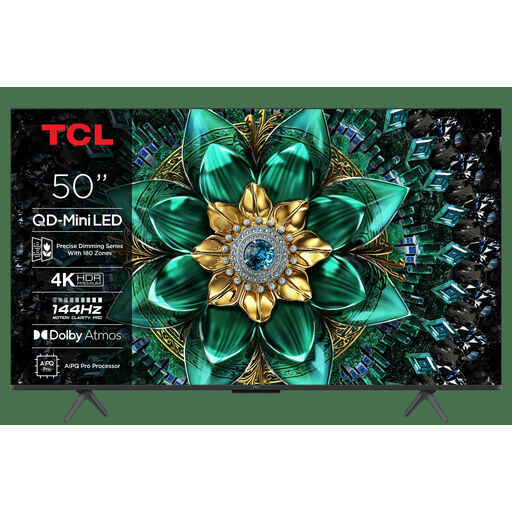
A 50-inch model to compare if you’re looking for a more compact screen for watching films in your living room.
50 inch; QD mini-LED; 4K; stated brightness: 1,000 nits; Google TV; Dolby Vision IQ; energy class E.
 No image available
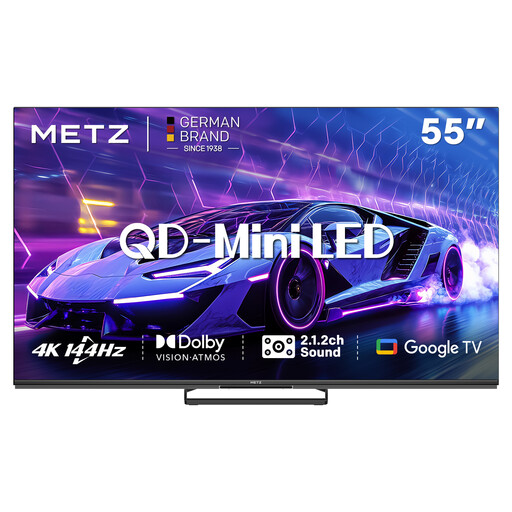
A 55-inch model to compare with other sizes; check that it suits your viewing distance.
55 inch; QD mini-LED; 4K; 144 Hz; Google TV; HDR10+; Dolby Vision Atmos.
 No image available
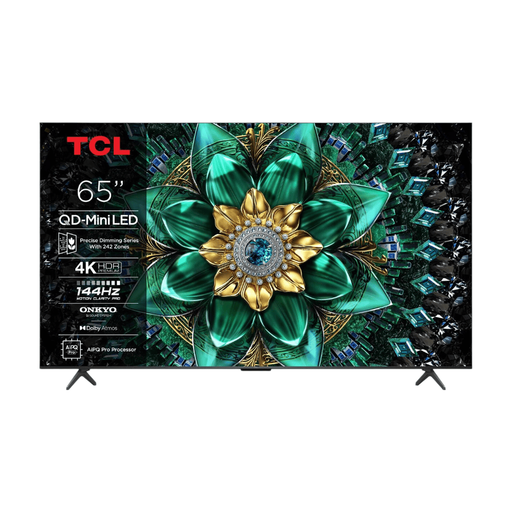
A 65-inch model to consider if that screen size suits the distance to your sofa and the space available.
65 inch; QD mini-LED; 4K; stated brightness: 1,000 nits; energy class F.
 No image available
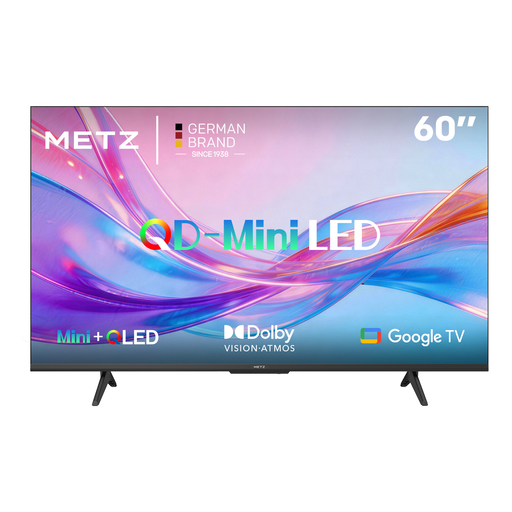
A 60-inch model to weigh up against your viewing distance and the space where you plan to put the TV.
60 inch; QD mini-LED; 60 Hz; Full Array Local Dimming; Dolby Vision; HDR10+; Google TV.
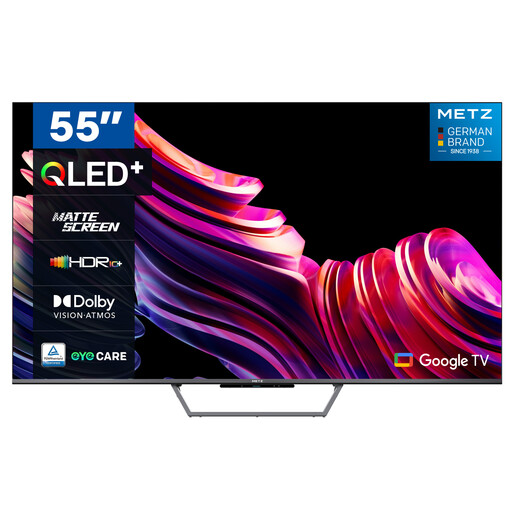 No image available
A QLED LCD alternative to compare if you’d also like to look beyond mini-LED models.
55 inch; QLED+; 4K UHD; Google TV; the product name lists a matte screen and an ambient light sensor.
No. Compare reflections and brightness for the specific model from your viewing position. Mini-LED LCD is worth exploring if you often watch during the day; OLED may suit you if you can control the light coming into the room and place more value on contrast or viewing angles.
Start with the lighting you usually have at home and try a film mode. Check a familiar scene and adjust the picture so that light and dark details remain visible to you; the Consumers’ Association recommends assessing picture settings under your usual room lighting.
Compare the energy label and stated consumption per 1,000 hours for the screen sizes you’re considering. Your actual costs also depend on viewing hours, settings and your electricity tariff; a higher brightness setting may increase consumption.
The energy label lets you compare the stated consumption of specific TVs. The European Commission gives a scale from A to G for electronic displays; it’s best to compare models with the same screen size and check their consumption per 1,000 hours.
For a distance purchase, the Dutch government says you usually have 14 days to change your mind in many cases. Check the terms that apply to your purchase; according to that guidance, an online purchase from a private seller doesn’t count as a distance purchase.