Who is this buying guide for?

Watching during the day in a bright room

You watch travel programmes with windows or lamps that may reflect on the screen, and want to know whether the picture will remain clear from your usual seat. The Consumentenbond highlights reflections and viewing angle as factors to consider when choosing a TV.

Seeing landscapes and details clearly

You pay attention to contrast, colour and detail in both sunny and dark scenes. The Consumentenbond points out that picture processing also affects picture quality, so assess claims against the specific model.

Finding the right screen size

You want to match the screen size to the distance from your sofa and the space available. The Consumentenbond suggests dividing the viewing distance by 2.4 as a starting point for the diagonal in centimetres, rather than a rule you have to follow.

What should you look for when choosing?

Mini-LED LCD

Suitable for: anyone considering an LCD model for daytime viewing who wants to factor in local contrast control. Compare reflections and viewing angle across the full model specification.

Trade-off: LCD uses a backlight, which can make true black difficult to achieve. Local dimming can improve contrast, but it does not, by itself, tell you how the screen will perform in your room.

OLED

Suitable for: anyone who values contrast and detail in dark scenes and finds the reflections on the specific screen acceptable in their living room.

Trade-off: check energy consumption at the settings you use, too. A brightness claim for one OLED model is not a comparison with all mini-LED TVs.

Factor to consider What to look for when buying Who should consider this?
Visibility in daylight Watch a scene in similar lighting from your usual seat and compare reflections on the specific models. The Consumentenbond measures reflections for each TV. If I watch during the day from my usual seat, I want to follow the picture without distracting reflections; around 36% of consumers give daylight visibility their highest priority.
Screen size and viewing distance Measure the distance from your eyes to where the screen will be, and check its width and placement, too. The Consumentenbond suggests dividing the viewing distance by 2.4 as a starting point for the diagonal in centimetres. If I want the TV to suit the distance from my sofa and the space available, I weigh screen size against placement; around 29% of consumers give finding the right screen size their highest priority.
Detail and viewing angle Compare familiar bright and dark scenes, and view the screen from your other seats as well. The Consumentenbond notes that picture processing and viewing angle can vary between TVs. If I want to see landscapes and details clearly from my usual seats, I pay attention to contrast and viewing angle; around 21% of consumers give picture detail and viewing angle their highest priority.
Energy consumption Compare the EU energy label and the separate SDR and HDR information for the exact model. The European Commission uses a scale from A to G for electronic displays. If I want to factor in energy consumption after buying, I compare the information for the exact model; around 14% of consumers give energy consumption their highest priority.

What to watch out for when buying

  • Assuming an anti-reflection claim applies to every model from a brand

    Samsung lists Glare Free for specific models; this does not automatically apply to the QE55QN90F.

    Check the full model code and look for reflection information that relates to that specific version.

  • Treating mini-LED or OLED as a complete measure of picture quality

    Screen technology alone does not tell you how a specific TV handles reflections, viewing angle and picture processing.

    Compare specific models using familiar bright and dark scenes, and view them from the angles you use at home.

  • Choosing a larger screen or brighter setting without considering energy consumption

    Screen size and picture settings can affect energy consumption.

    Compare the energy label for the exact model and assess the picture using the settings you actually plan to use.

Brands and models to consider

Samsung

The QE55QN90F is a 55-inch 4K mini-LED LCD model to consider if you’re looking at an LCD TV for daytime viewing.

  • The Consumentenbond confirms the screen type, size and connections for the QE55QN90F.
  • A general Glare Free listing from Samsung does not prove that this specific model has the coating; check the full model specification and reflection information.

LG

The OLED65G56LS and 65QNED86B6B are different 65-inch models that let you compare OLED and mini-LED LCD on a model-by-model basis.

  • According to LG’s own comparison, the OLED65G56LS offers a brighter picture than conventional OLED TVs. LG lists mini-LED with Precision Dimming for the 65QNED86B6B.
  • These manufacturer claims are not independent, directly comparable measurements of reflections or energy consumption.

Philips

According to Philips, the 65MLED950/12 combines QD MiniLED with Ambilight, making it worth considering if you also want to factor in lighting behind the screen.

  • Philips lists Dolby Vision and Dolby Atmos for this model and describes Ambilight as an ambient lighting feature.
  • Ambilight does not tell you how reflective the screen itself is; also check whether 65 inches will suit your viewing distance and available space.

TVs at Joybuy

This Joybuy selection includes OLED, QD MiniLED and LED TVs in 55- and 65-inch sizes, so you can compare screen types, sizes and features for a bright living room. Always assess reflections from your own seat; a model name alone does not tell you how clearly you’ll see the screen from there.
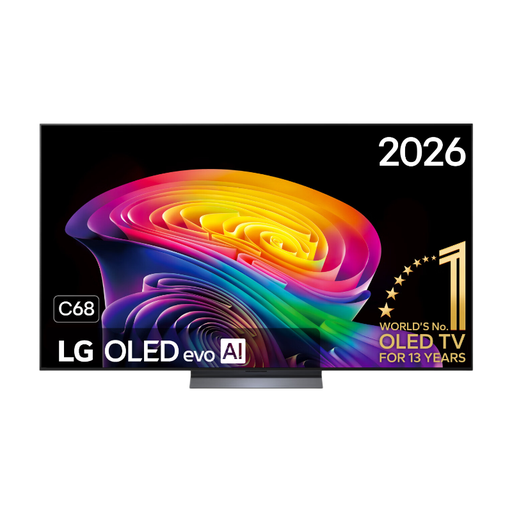
LG OLED55C68LA C6 OLED evo 55-inch 4K Smart TV

LG OLED55C68LA C6 OLED evo 55-inch 4K Smart TV

A 55-inch OLED option to compare if contrast and detail in dark scenes matter to you when watching travel programmes.

The product name lists OLED evo, 4K and Dolby Vision.

View at Joybuy
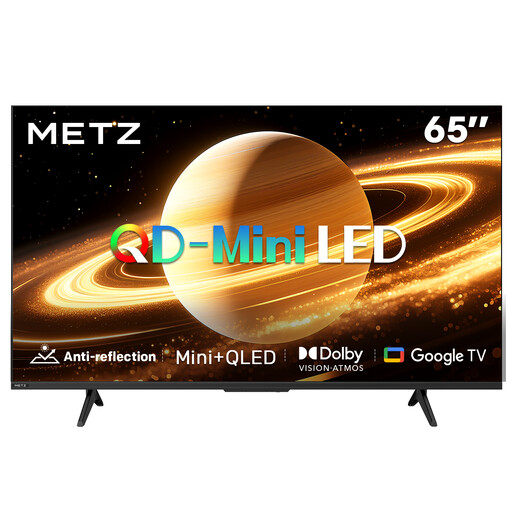
METZ 65MNH7000Z 65-inch QD-MiniLED 2026 with Matte Screen Ultra

METZ 65MNH7000Z 65-inch QD-MiniLED 2026, Matte Screen Ultra

A 65-inch QD-MiniLED model to consider if you want to compare a larger screen and this screen type.

The product name lists Matte Screen Ultra, 60 Hz, Dolby Vision and Dolby Atmos.

View at Joybuy
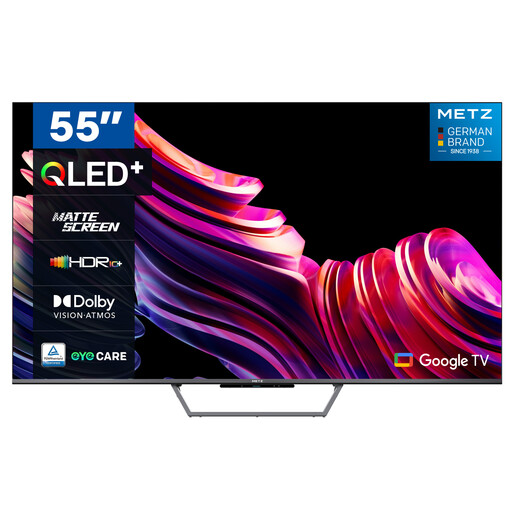
METZ 55MQE7600Y 55-inch QLED+ 4K UHD Smart TV

METZ 55MQE7600Y 55-inch QLED+ 4K UHD Smart TV

A 55-inch 4K model to compare if screen size and the listed features are important to you.

The product name lists a matte screen, Google TV and an automatic ambient light sensor.

View at Joybuy
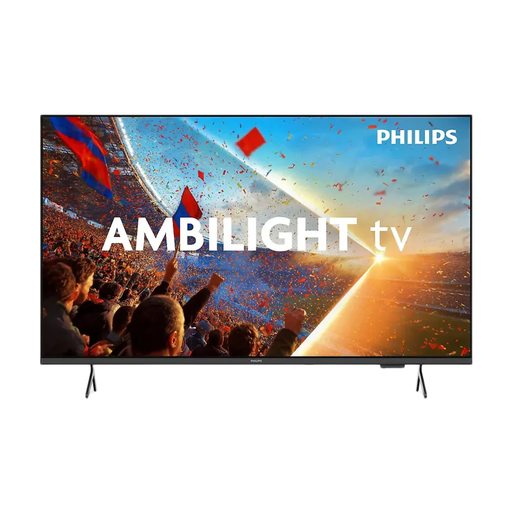
Philips 55PUS8001 55-inch 4K LED TV

Philips 55PUS8001 55-inch 4K LED TV

A 55-inch 4K LED option to consider if you want to factor in Ambilight as an extra ambient lighting feature.

The product information lists HDR10, HDR10+, three-sided Ambilight and a sensor that adjusts screen brightness to the ambient light.

The product information lists energy class F for both SDR and HDR.

View at Joybuy
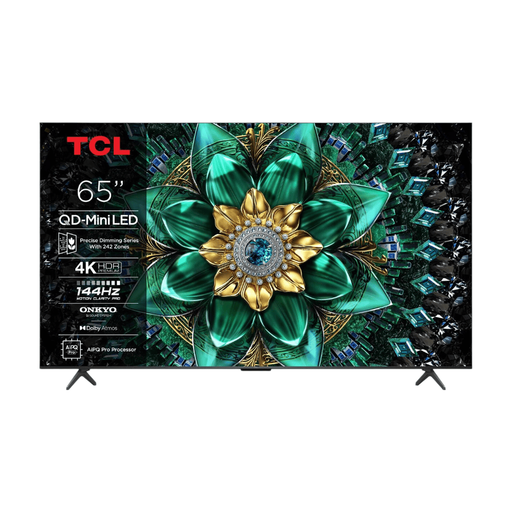
TCL 65Q6C 65-inch QD-Mini LED 4K TV

TCL 65Q6C 65-inch QD-Mini LED 4K TV

A 65-inch QD-Mini LED model to compare if you want to factor in local dimming and a larger screen.

The product information lists 242 dimming zones, HDR support and full-array local dimming.

The product information lists energy class F for SDR and G for HDR.

View at Joybuy

Frequently asked questions

How do I choose a screen size if I don’t yet know my viewing distance?

First, measure the distance from your eyes on the sofa to where you plan to put the screen. The Consumentenbond suggests dividing the viewing distance by 2.4 as a starting point for the diagonal in centimetres; also consider nearby sizes, as this is not a rule you have to follow.

How should I adjust the picture for daytime viewing?

Watch a familiar scene in the lighting you usually use, then adjust the brightness and contrast so that both bright and dark details remain visible. The Consumentenbond notes that customised picture settings can sometimes use more energy.

Which energy label should I compare?

Compare the energy class and the separate SDR and HDR information for the exact model. The European Commission uses a scale from A to G for electronic displays; consumption also depends on how you use the TV and its settings.

Am I automatically entitled to exactly two years’ legal guarantee on a TV in the Netherlands?

No. The Dutch government states that there is no fixed statutory guarantee period in the Netherlands: you are entitled to a product that works properly for as long as you can reasonably expect it to. If there is a fault, contact the seller; the manufacturer’s guarantee is separate.

Can I return a TV bought online if the reflections are disappointing at home?

For online consumer purchases, you generally have a 14-day cooling-off period from delivery. Check the returns policy and any return costs disclosed in advance; don’t use the TV beyond what is necessary to assess the product.
