
Fan of smooth dance footage
You regularly watch ballet recordings and want to assess camera movements and dancers clearly. The recording and playback source both matter; in its tests, RTINGS distinguishes between video sources including 24p and 25p.


First, measure your viewing distance and the available space, then choose a screen that suits the movement in your recordings, the light in the room and your seating. OLED can be a good fit for watching in dim light or from an angle; LCD and QLED models are also worth comparing, especially if brightness matters to you. Assess motion handling using your own recording and playback source.
You regularly watch ballet recordings and want to assess camera movements and dancers clearly. The recording and playback source both matter; in its tests, RTINGS distinguishes between video sources including 24p and 25p.
You want both the screen and its stand to fit in the available space, and to enjoy watching from your usual seat. So measure the viewing distance and the space for the TV before choosing a size.
You watch during the day or from different seats, and want to take reflections, brightness and the picture from the side into account. The Consumentenbond highlights these as factors to consider when comparing TVs.
Suited to: watching in dim light or from angled seating, when deep blacks and viewing angles matter.
Consider: reflections and brightness in your room; a fast gaming refresh rate doesn’t prove that a recording with a low frame rate will look smooth.
Suited to: comparing options when daylight and brightness are important, or when you’re looking for an LCD alternative.
Consider: QLED is an LCD technology, so don’t expect the same black levels or viewing angles as OLED. Compare models in your own lighting conditions.
The points below will help you choose a TV that suits the recording, your room and the equipment you already use.
| What to consider | What should you check? | Who should pay particular attention? |
|---|---|---|
| Motion | Compare the recording using the intended app or HDMI source, with motion processing switched on and off. | If you’re mainly looking to assess distracting judder in dance and camera movements, consumers who prioritise motion put this at the top of their list; they’re estimated to make up around 31% of consumers making this choice. |
| Screen size and placement | Measure the viewing distance and the width of your furniture; check the TV’s dimensions with the stand attached. | If you want the TV to fit on your furniture and be comfortable to watch from the sofa, physical fit is important to you; consumers who prioritise placement and viewing distance are estimated to make up around 25% of this group. |
| Light and seating | Take windows and lamps into account, and compare reflections and picture quality from the seats you use. | If you watch during the day or often sit at an angle to the screen, you’ll want to assess how the picture looks in those conditions; consumers who prioritise light and viewing angles are estimated to make up around 19% of this group. |
| Playing existing recordings | Check the app, file format and connections for your player or USB file. | If you want to keep using your existing files or player, check that they’re compatible with that specific playback method; consumers who make this their top priority are estimated to make up around 13% of this group. |
| Sound for music | Listen to see whether the built-in sound is good enough, and check the connection for an existing soundbar or receiver. | If music playback is your main priority, check whether you can connect your audio equipment to the TV; consumers who put sound first are estimated to make up around 12% of this group. |
A high stated refresh rate doesn’t, by itself, tell you how footage with a different frame rate will be displayed. The source and any motion processing also affect the picture.
Assess your recording using the input or app you actually plan to use, and compare the motion settings.
QLED is an LCD technology, so the usual trade-offs around black levels, viewing angles and brightness differ from those of OLED.
Compare both screen types in your room’s lighting and from your own seats.
A TV may seem like the right screen size, but still not fit on your furniture with its stand attached.
Check the dimensions of the exact model, including the stand, or its mounting details if you plan to wall-mount the TV.
Your legal rights against the seller don’t depend solely on the length of any manufacturer’s warranty. ACM ConsuWijzer explains that the seller is responsible for providing an appropriate solution if a product proves faulty under normal use.
Keep your proof of purchase and contact the seller if there’s a fault.
The OLED42C68LA is a specific 42-inch OLED model to compare for a smaller living room.
The QE42S90HAEXXN is a 42-inch OLED model to compare with other options if reflections matter to you.
The 42OLED810/12 and 43PUS9000/12 offer OLED and QLED options respectively; both model pages list Ambilight.
The K-43S3 is a 43-inch LCD alternative with specifications covering placement and connections.
These TVs come in different screen sizes and offer OLED, QLED or LED options to compare with the space, lighting and playback setup in your living room.
 No image available
The 42-inch size gives you a specific option to weigh up against your viewing distance and available space.
4K OLED; Dolby Vision; HDR10; Dolby Atmos; HDMI 2.1; eARC; webOS.
 No image available
This 43-inch QLED model is an option to compare in terms of size and screen type for the lighting conditions in your room.
Google TV; HDR10+; Dolby Vision; Dolby Atmos; HDMI 2.1; VRR; MEMC.
 No image available
The 43-inch model gives you a fixed screen size to compare with the available furniture width and viewing distance.
4K LED; 50 Hz.
 No image available
Compare the 43-inch QLED size with your available space and viewing distance; also check that the connections suit your playback equipment.
4K QLED; 120 Hz.
 No image available
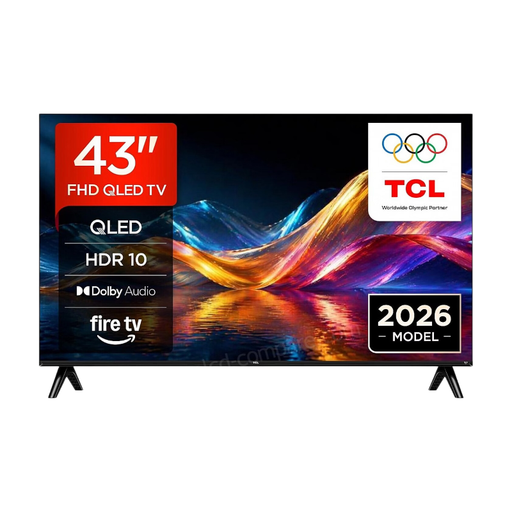
This 43-inch Full HD model is an alternative to compare with the recordings and playback source you plan to use.
Full HD QLED; 120 Hz; AirPlay 2; streaming apps; Dolby Audio.
Measure both the distance from your seat to the screen and the space where the TV will go. Based on its own research, the Consumentenbond suggests a comfortable viewing distance of around 2.4 times the screen diagonal. Use this as a guide, and also check that the TV fits with its stand attached.
No, a higher stated refresh rate doesn’t guarantee that. The recording’s frame rate and playback source also matter; compare the picture using the intended app or input, and try motion processing both on and off.
It depends on the TV model and file format. Sony lists the USB file systems and codecs supported by the K-43S3, but check that your specific file is compatible. Otherwise, see if an existing HDMI player will work.
ACM ConsuWijzer gives a new television ordered online as an example of a purchase with a statutory cooling-off period, which usually ends 14 days after delivery. Your statutory guarantee rights are separate from any manufacturer’s warranty: if a product is faulty despite normal use, the seller is responsible for providing an appropriate solution.
Compare the energy label for the exact model, and also check the separate information on use with HDR. To calculate your running costs, you’ll also need to know how long you use the TV and your electricity tariff.