
Host with guests seated in different places
You want guests sitting to the side to be able to follow the action. So assess the picture from the seats furthest to the side, and take viewing distance into account.


For a dimly lit viewing evening with guests seated in different places, OLED is often a sensible choice: the Consumentenbond generally notes wider viewing angles and deeper blacks. Compare the motion settings using a clip similar to your ballet recording; according to RTINGS, interpolation can reduce judder, but may also create an unnatural effect. If the lights will stay on, consider LCD or mini-LED models too, and check the size, playback options and sound on each TV to make sure they suit your set-up.
You want guests sitting to the side to be able to follow the action. So assess the picture from the seats furthest to the side, and take viewing distance into account.
You want movement to look smooth yet natural, with detail visible in both light and dark scenes.
You want to play the recording without connection problems and make sure everyone can hear the music clearly.
Start with the seating and lighting in the room, then compare motion, sound and how you’ll play the recording.
| What to consider | What to look for when buying | Who will this matter most to? |
|---|---|---|
| Viewing angle and screen size | Measure the distance to the TV and check the picture from seats at an angle too. | If guests are spread around the room, I want the colour and contrast to remain clear from the side; around 29% of consumers give the best view from different seats their highest priority. |
| Natural-looking dance movement | Compare the motion settings using the same representative clip, including with processing switched off. | When watching a ballet recording, I want movement to look smooth without appearing artificial; an estimated 29% of consumers prioritise natural-looking motion. |
| Contrast in your room’s lighting | Decide whether the room will be dimly lit, and assess black levels, brightness and reflections in similar conditions. | In a dark room, I focus on dark stage scenes; with the lights on, visibility in ambient light matters more. Around 21% of consumers prioritise contrast and brightness in their own lighting conditions. |
| Music and playback | Check that your player or service works with the available connections, and listen to see whether the sound suits the seating arrangement. | For an evening with guests, I want the music to be clear and the recording to play without connection problems; around 21% of consumers give sound and playback compatibility their highest priority. |
A large screen doesn’t guarantee that guests in the seats furthest to the side will see the picture clearly.
Measure the viewing distances and assess the screen from seats at an angle too.
How motion looks also depends on the recording and picture processing. Motion interpolation can reduce judder, but may create an unnatural effect.
Compare the settings using a clip similar to the ballet recording you plan to watch.
How much extra detail you can see also depends on the resolution and quality of the source material.
Check the recording and assess the overall picture, not just the number of pixels on the box.
The TV also needs to work with your sound set-up and the device or source storing the recording.
Check the connections you need and listen to see if the music is clear from the seats where you plan to sit.
The LG OLED65C68LA is a 65-inch OLED model worth considering if viewing angle and contrast in dim light are priorities.
The Philips 65OLED811/12 combines OLED with Ambilight, according to Philips, if the lighting around the screen is also a factor in your choice.
The TCL 65C8L is a mini-LED LCD model worth comparing if the room will stay relatively bright.
The BRAVIA 7 is a mini-LED range worth comparing for a brighter viewing room.
The Samsung UE55M1EHAUXXN is a 55-inch mini-LED model to consider if that size suits your viewing distance.
These models include OLED options for dimly lit viewing and QLED or mini-LED alternatives to compare; choose a size and connections to suit your room and playback set-up.
 No image available
This 83-inch OLED model could suit a viewing evening with a larger group; measure the viewing distance and check the picture from the side.
The product description lists 4K, a native 120 Hz panel, VRR up to 165 Hz and four HDMI 2.1 ports.
It also mentions Dolby Vision, webOS, Chromecast and an integrated 40 W speaker system.
 No image available
This 65-inch OLED option is worth considering if you want to watch dark stage scenes in dim light; also check the viewing distance and seating positions at an angle.
The product description lists 4K, a native 120 Hz panel, VRR up to 165 Hz and four HDMI 2.1 ports.
It also mentions Dolby Vision, Dolby Atmos, webOS 26 and a 40 W, 2.2-channel audio system.
No image available
This 55-inch OLED option could work if the smaller screen suits your viewing distance; check the picture from the side too.
The product description lists 4K, a native 120 Hz panel, VRR up to 165 Hz and four HDMI ports.
It also mentions Dolby Vision, Dolby Atmos and webOS 26.
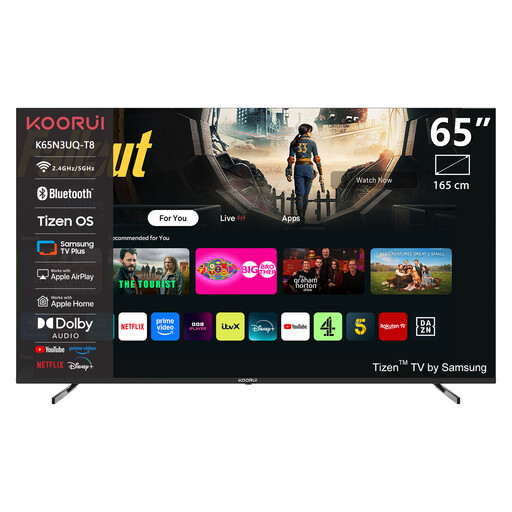 No image available
This 65-inch QLED TV is an alternative to consider alongside OLED; check that the size, viewing angle and lighting conditions suit your room.
The product information lists a 4K UHD screen, Tizen and LAN.
The description mentions support for streaming services and live TV through Tizen.
 No image available
This 85-inch mini-LED model could suit a large viewing area; measure the distance and check in advance that it will fit in your room.
The product description lists 4K QD-Mini LED, 144 Hz, VRR and HDMI 2.1.
It also mentions Google TV, Dolby Vision, HDR10+ and Onkyo 2.1-channel sound.
Not on its own. According to the Consumentenbond, the extra detail you can see also depends on the resolution of the content, so check the recording and consider motion, contrast and viewing distance too.
Measure the distance from the viewing positions to the TV. The Consumentenbond suggests around 2.4 times the screen diagonal as a comfortable viewing distance based on its own research. Use this as a starting point, and also check what guests can see from the side.
For a new TV bought from a webshop, ACM ConsuWijzer generally states that you have a statutory 14-day cooling-off period after delivery. Check the applicable returns terms and exceptions before ordering.
According to the Dutch Copyright Act, a performance isn’t considered public if it is limited to family, friends or a similar group and nobody pays to attend. This isn’t blanket permission for a paid or more widely accessible event; make sure you also use a lawful recording and check the source’s terms of use.
If a fault occurs during normal use sooner than you could reasonably expect, ACM ConsuWijzer says the seller is responsible for providing an appropriate remedy free of charge under the statutory guarantee. A manufacturer’s guarantee doesn’t determine the duration of this statutory protection on its own.