
Host with a wide seating arrangement
You want guests sitting at the sides to follow the costumes and movement. The Consumentenbond lists viewing angle and screen reflections as factors to compare when choosing a TV.


Measure your viewing distance and assess the picture from the seats furthest to the sides before choosing a TV. A large OLED TV could be a good fit if wide viewing angles and dark scenes matter to you. In a bright room, an LCD or mini-LED model may be worth considering, but check the viewing angle and reflections on the exact model. A 4K screen won’t automatically add detail to a recording with a lower-resolution source.
You want guests sitting at the sides to follow the costumes and movement. The Consumentenbond lists viewing angle and screen reflections as factors to compare when choosing a TV.
You host daytime screenings or have to contend with daylight. Compare reflections and brightness from the places where people will actually be sitting.
You watch a range of recordings and may use external players or speakers. Check the source quality and connections before paying extra for screen specifications.
A good fit if: wide viewing angles and contrast matter to you, and you can darken the room sufficiently.
Bear in mind: assess reflections and placement in your room; OLED doesn’t guarantee a reflection-free picture.
A good fit if: you watch in daylight and want to compare the brightness of specific models.
Bear in mind: a bright screen technology doesn’t guarantee a good picture from side seats; try it out from the seats furthest to the sides.
| What to consider | What to look for when buying | Who should pay particular attention? |
|---|---|---|
| Visibility from every seat | Measure the distance from the back row and view the picture from the seats furthest to the sides. | If guests are spread out, I want everyone to be able to follow the dancers and costumes. Around 40% of consumers put sightlines first. |
| Reflections and brightness | Watch a dark scene in the light conditions you expect at home; compare reflections on each model. | When hosting screenings in a bright living room, I want to be able to see dark scenes clearly. Around 30% of consumers put daylight first. |
| Recordings and sound | Play representative source material and check the connections for your player and sound system. | If I use different recordings and external equipment, I want to know what will connect directly and how the source looks. Around 20% of consumers prioritise source material and sound. |
| Energy use and placement | Check the dimensions, bracket details and energy label for the exact model. | I want to weigh up the dimensions and energy-use information for the space I have and my everyday use. Around 10% of consumers put running costs and placement first. |
The Consumentenbond generally describes OLED TVs as having wider viewing angles and deeper blacks, while LCD TVs can often produce higher brightness levels. These are general considerations, not a guarantee of how a specific TV will perform. Measure your viewing distance too: a larger screen won’t make up for a limited viewing angle.
Guests at the sides will see the screen from a different angle and may experience reflections differently from someone sitting directly in front of it.
Assess the model you’re considering from similar side seats and in lighting conditions like those at home.
The recording’s resolution limits its original level of detail; a 4K TV can’t add detail that isn’t in the source.
Play a representative clip of the material you want to watch before making your choice.
Apps and connections can vary between versions, so a service you want or a device you already own may not work as expected.
Check the full model code, the services you want and the connections you need for the version you intend to buy.
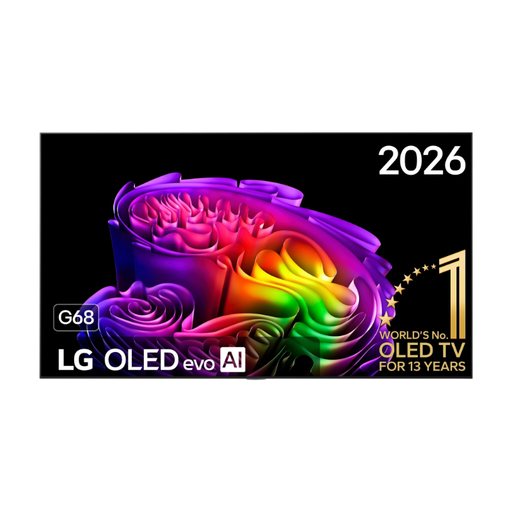
Worth considering for large OLED TVs; the LG OLED77C5ELB is an example of a 77-inch model available in the Netherlands.
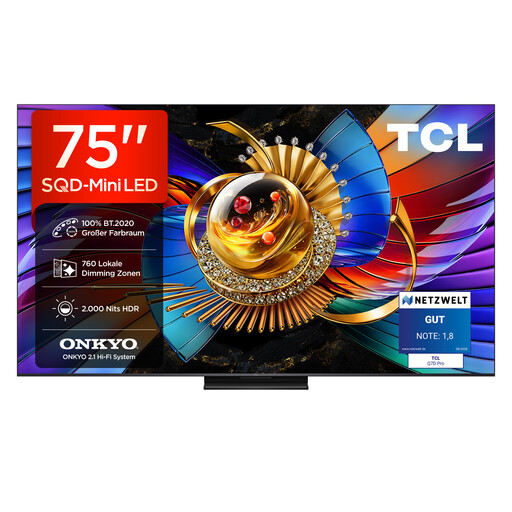
Worth considering for large Neo QLED models, including the 75-inch QN93F available in the Netherlands.
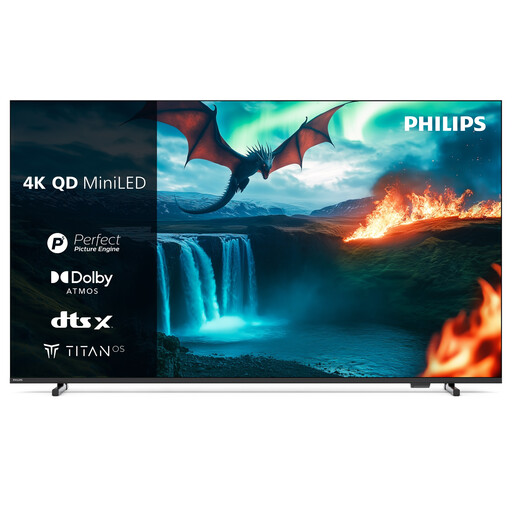
The 75MLED950/12 available in the Netherlands is a 75-inch QD mini-LED TV with Ambilight.
The K-75XR70 is a 75-inch LCD model specified for the Netherlands, with mini-LED backlighting.
These models are suited to watching ballet recordings with a group: a large OLED TV or a large LCD or mini-LED TV. Compare them based on seating, daylight, source material and the connections you need.
 No image available
A 77-inch OLED screen could work well in a group setting; assess the viewing angle from the seats furthest to the sides.
The product description lists 4K, pixel dimming, Dolby Vision and Dolby Atmos. It also mentions HDMI, USB and optical audio connections. Check that the connections are compatible with your equipment.
 No image available
The 75-inch version is a large LCD or mini-LED option to assess from the side seats.
The product description lists 4K, SQD-Mini LED, an anti-reflection screen, a 2.1 Onkyo audio system, Google TV and HDMI 2.1. The anti-reflection claim isn’t an independent measurement; check the picture in your room.
 No image available
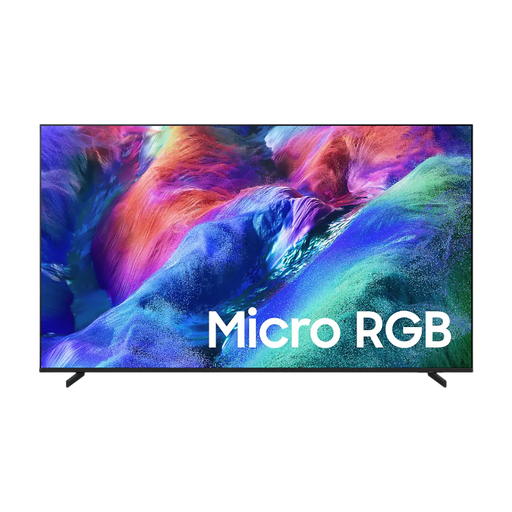
The 75-inch size suits group viewing; check the claimed viewing angle from the seats furthest to the sides.
The product description lists 4K upscaling, Dolby Atmos, four HDMI connections, HDMI with eARC and a VESA size. It also mentions a wide viewing angle; this is a product claim, not an independent measurement.
 No image available
This 75-inch mini-LED TV is worth comparing if you’re looking for a large screen; see how its viewing angle suits your seating arrangement.
The product description lists 4K, three-sided Ambilight and Titan OS. The specifications list three HDMI inputs and eARC. Check that these connections are compatible with your audio equipment.
 No image available
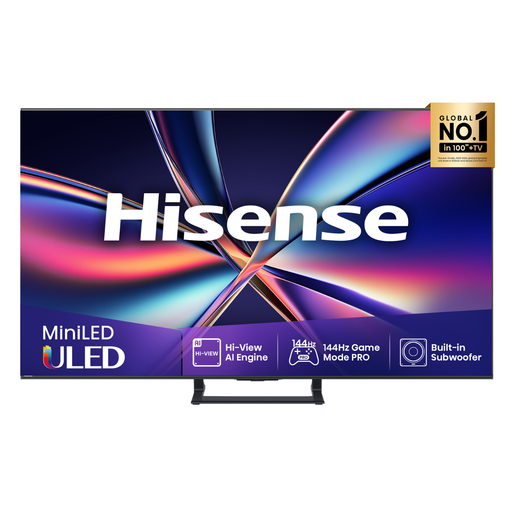
The 75-inch screen is designed for a large viewing setup; see for yourself how the picture looks from the seats furthest to the sides.
The product description lists 4K, Mini-LED, 144 Hz, four HDMI inputs and VIDAA. It also claims a wide viewing angle, but this isn’t an independent test result.
Measure the distance from the back row to where the TV will go. The Consumentenbond suggests about 2.4 times the screen diagonal as a guide to a comfortable viewing distance; try watching one of your own recordings from the seats furthest to the sides too.
Not automatically: the recording itself needs to be available in 4K to show the original 4K detail. So test the source material you actually plan to play.
Check the details for the exact TV and bracket, and follow the installation instructions. Sony warns of a risk of injury for the relevant BRAVIA models and recommends installation by a dealer or qualified contractor; don’t apply this advice to other models without checking first.
Check the European energy label and product information sheet for the exact model. The label includes information for standard dynamic range (SDR) and HDR, among other things; compare models on the same basis of use.
When you buy a standard new TV online in the Netherlands, you’ll generally have a statutory cooling-off period of up to 14 days after delivery, according to ACM ConsuWijzer. The retailer is also responsible for the statutory guarantee if a product used normally doesn’t meet what you could reasonably expect; this guarantee isn’t automatically limited to two years.