
For viewers sitting a long way from the screen
You want to follow details and subtitles easily from your usual seat. That’s why Consumentenbond recommends taking the distance between your eyes and the screen into account when choosing a screen size.


First, measure the distance between your eyes and where the screen will go. Consumentenbond uses this distance as a starting point for choosing the screen size, rather than as a fixed rule. Then consider the light in your room, your seating positions and the quality of your video source. OLED may suit dimly lit rooms and off-centre viewing, while a suitable LCD or mini-LED TV may be worth considering in rooms with lots of ambient light. Assess colour, reflections and energy use for each model.
You want to follow details and subtitles easily from your usual seat. That’s why Consumentenbond recommends taking the distance between your eyes and the screen into account when choosing a screen size.
When watching artworks and dark museum scenes, consider colour, contrast and picture settings, not just the resolution printed on the box. Consumentenbond points out that picture processing also affects how images are displayed.
You often watch during the day or from different seats, so you’ll want to know how the specific TV handles reflections and viewing angles.
Start with the viewing distance and the space available. Then assess the picture and room lighting for the specific model.
| What to consider | What to look for when buying | Who is this most relevant to? |
|---|---|---|
| Screen size and viewing distance | Measure from your usual seat. Consumentenbond suggests dividing the viewing distance by around 2.4 as a starting point for the screen diagonal in centimetres. Also check that the TV, including its stand, will fit. | I want to follow details and subtitles comfortably from my usual seat, which is a long way from the screen, so I start by checking the distance. Around 36% of consumers prioritise screen size when choosing a TV. |
| Colour, contrast and video source | Compare the same scenes using suitable settings for home viewing, and check whether the documentary source is actually available in 4K. | When viewing artworks, I want to assess colours and light and dark details carefully, rather than just see a high resolution on screen. Around 29% of consumers give picture detail their top priority. |
| Daylight, reflections and viewing angle | Check the position of windows and lamps, then assess reflections and viewing angles from your own seats. | If I watch during the day or don’t sit directly in front of the screen, I want to know how well the picture remains visible in that set-up. Around 21% of consumers prioritise room lighting and seating positions. |
| Energy use | Compare the EU energy label and energy-use figures for the specific models. The European Commission uses a scale from A to G for electronic displays. | I want to take energy use into account alongside screen size, without assuming that all larger models use the same amount of energy. Around 14% of consumers prioritise energy use when choosing a TV. |
The right screen size depends on your viewing distance and the space available. Consumentenbond also notes that larger screens generally use more energy.
Measure from your usual seat and check that the TV, including its stand, will fit in the planned spot. Then compare the energy labels for the specific models.
OLED, QLED and mini-LED don’t, by themselves, tell you how a specific TV displays colour, contrast and reflections.
Compare the same familiar scenes on the models you’re considering, using settings suited to watching at home.
In a limited Consumentenbond test in 2017, image retention occurred after static elements were displayed for an exceptionally long time. The test doesn’t show what will happen with every current model.
If you’re displaying a static image for a long time, change the image from time to time and check the guidance for your specific TV.
LG Netherlands lists a 77-inch C6 OLED model for anyone looking to compare a large OLED screen.
Samsung Netherlands lists the 75-inch QE75QN1EHAUXXN as a QN1EH Neo QLED model with mini-LED.
Sony lists a 75-inch version among the BRAVIA 5 series models.
TCL Netherlands lists a 75-inch C8K QD-MiniLED model.
Philips lists the 77OLED811/12 as a 77-inch OLED model with Ambilight.
These models range from OLED and QLED to QNED and QD-Mini LED. Compare them based on screen size, room lighting and the quality of your documentary source.
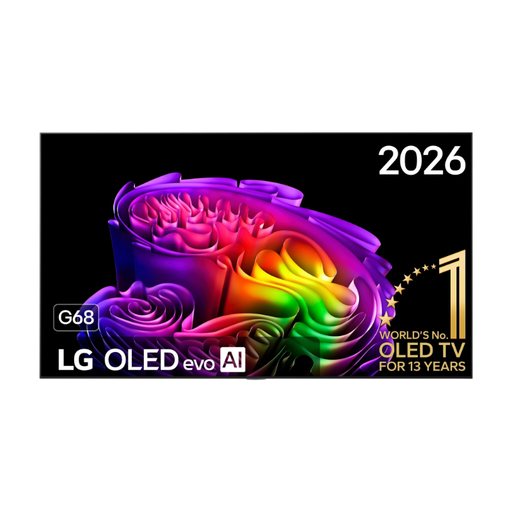 Image unavailable
With its 77-inch OLED screen, this is a large-screen option to compare with other screen technologies from a long viewing distance.
Specifications: 77 inches, 4K, OLED.
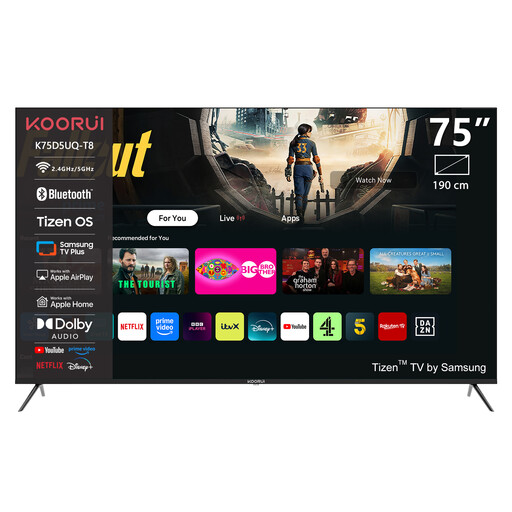 Image unavailable
At 75 inches, this model gives you a large screen to assess from your usual seat.
Specifications: 75 inches, 4K UHD, QLED, Tizen TV.
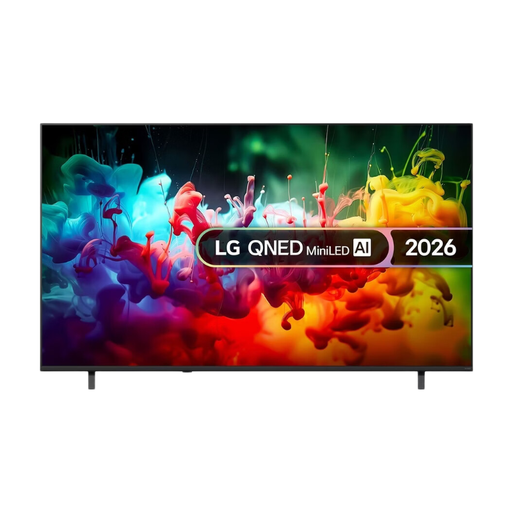 Image unavailable
The 75-inch version gives you a large-screen option to compare for viewing distance and picture quality.
Specifications: 75 inches, 4K, Mini LED, QNED70, 2026.
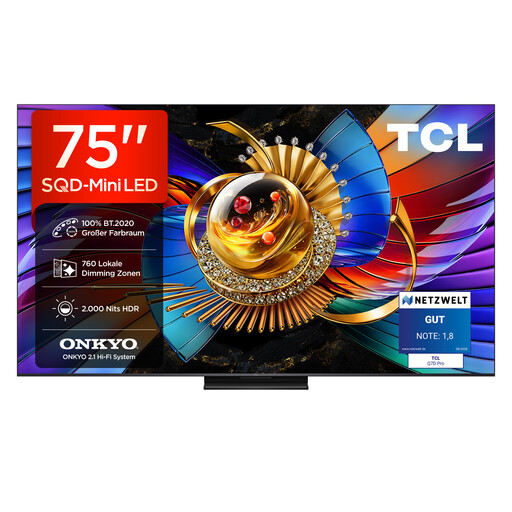 Image unavailable
At 75 inches, this is a large screen to compare for a long viewing distance. Assess the picture in the lighting conditions of your own room.
Specifications: 75 inches, 4K, QD-MiniLED, 2026. The product description lists an anti-reflection screen.
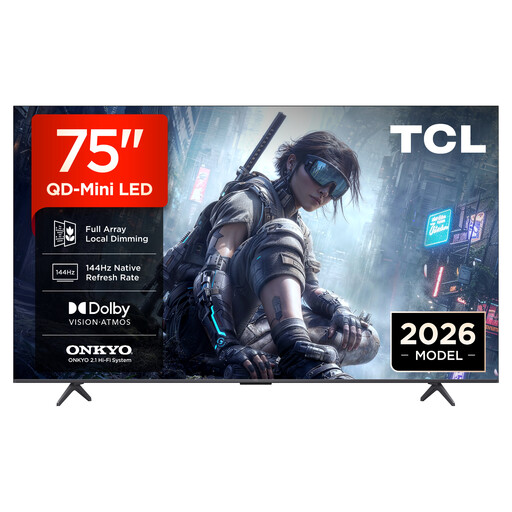 Image unavailable
The 75-inch screen makes this a model worth assessing alongside other large TVs from your usual viewing position.
Specifications: 75 inches, 4K, QLED, QD-Mini LED dimming, Onkyo 2.1-channel system.
No, a 75-inch screen isn’t necessary for every viewing distance. For around 4 metres, Consumentenbond suggests a range of 55–77 inches as a guide; for around 4.5 metres, it suggests 65–85 inches. Your preferences and the space available matter too.
Start with a home viewing setting rather than the shop setting. With your usual room lighting, check whether light and dark details remain visible and whether the colours look natural to you. Consumentenbond recommends using a familiar scene or photo for this.
No. The documentary must also be available and supplied in 4K. Consumentenbond also notes that the difference from Full HD isn’t always obvious.
Compare the EU energy label and energy-use figures for the specific models. The European Commission describes a labelling scale from A to G for electronic displays. When comparing models, also consider how long you watch TV and the available SDR and HDR figures.
According to ACM ConsuWijzer, when you buy a standard new television online, you generally have up to 14 days after delivery to change your mind. Your statutory guarantee is separate from any manufacturer’s guarantee. If a product doesn’t perform as you could reasonably expect under normal use, the seller is responsible for providing an appropriate solution.