
Archive manager presenting photographs
You show photos, captions or menus that sometimes stay on screen. So think about the screen type and how you will rotate the images in advance.


If photos, titles or menus regularly stay on screen for long periods, an LCD or Mini LED TV is a sensible option to compare; pay particular attention to reflections where the TV will be placed. OLED may suit you if images change regularly and wide viewing angles or deep blacks matter more, but the older test by the Dutch Consumers’ Association (Consumentenbond) does not provide a safe time limit for a current model. Measure your viewing distance and try your own photos and videos using the connection you plan to use before choosing a size or model.
You show photos, captions or menus that sometimes stay on screen. So think about the screen type and how you will rotate the images in advance.
You also use the TV during the day and want visitors to see the picture from different positions. Consider daylight, reflections and viewing angles together; the Consumentenbond also assesses these when testing TVs.
You want to play existing photos and videos from a USB drive or external player. Check the connections and file formats supported by the exact model, and try your own collection beforehand.
Start with the conditions in which the archive will be shown: how long images stay on screen, how much daylight reaches it and where visitors will sit. Then compare file playback and the size that suits the room.
Choose this if: the same photos, titles or interface regularly stay on screen, or daytime viewing is important.
Consider: the Consumentenbond says QLED TVs can often produce higher brightness, but brightness and reflection handling vary by model and set-up.
Choose this if: images change regularly and wide viewing angles or deep blacks are important for your presentation.
Consider: the Consumentenbond found image retention on older OLED TVs after prolonged exposure under unusual test conditions; that test does not establish a time limit for a current model.
| What to consider | What should you check? | Who is this important for? |
|---|---|---|
| Visibility in daylight | Assess reflections and brightness in similar lighting and from the viewing direction at the intended location. | If I sometimes show the archive during the day, I want to be able to view photos and captions without relying solely on the panel name. Around 28% of consumers say daylight visibility is their main concern. |
| Static images | Decide how long photos or menus will stay on screen, and whether the presentation will move on automatically or switch off. | If a photo or menu could remain on screen for a long time, I’ll take the screen type and playback set-up into account. Around 22% of consumers prioritise prolonged display of static images. |
| Readability for a group | Measure the distance to the back row and assess the picture from the sides using one of your own example photos. | If visitors will be sitting at different distances and in different positions, I want photos and captions to be clear from those spots. Around 22% of consumers prioritise readability for a group. |
| Playing files | Test your own photos and videos, and check whether USB or an HDMI player will work for the presentation you have in mind. | If I want to show existing files, I want to know whether they will open on the TV or through an external player. Around 17% of consumers name file playback as their main concern. |
| Running costs and support | Compare the energy label for the exact version and establish whether you are buying privately or on behalf of an organisation. | Even if I only use the TV occasionally, I want to understand its energy use and know which terms apply to my purchase. Around 11% of consumers prioritise costs and support. |
Brightness, viewing angle, incoming light and reflections are separate considerations. The panel name alone does not tell you how the picture will look in your space.
Assess the exact model in its intended set-up, and check the picture from positions off to the side too.
The Consumentenbond found image retention on older OLED TVs it tested after prolonged exposure in unusual conditions. That result does not establish a safe usage duration for a current model.
Make sure images change regularly, and consider LCD options too if the same content will often stay on screen for a long time.
Support depends on the TV model, file system and the files themselves. Having a port does not guarantee that your presentation will work.
Test representative photos and videos in the order you want to show them; if necessary, check whether an external player connected via HDMI will work.
Owning a file does not automatically mean you can show protected material publicly. Identifiable people may also raise privacy concerns.
Before the presentation, document the provenance of each collection and the permissions for displaying it.
The QE55QN90FATXXN is a 55-inch Neo QLED/Mini LED model worth considering when daylight and reflections are important factors.
The K-55XR5 is a Mini LED model to compare if you want to try playing archive files directly on the TV.
The 55C7K is a QD Mini LED model to compare with other options if brightness is a priority.
The 55MLED810/12 is a 55-inch QD Mini LED TV to compare if a high refresh rate is not essential for your presentation.
The OLED55C55LA is an OLED option if images will change and viewing angle or black levels are important.
These LCD, QNED and QD Mini LED TVs are options to compare for archive footage that sometimes stays on screen for longer. Check whether each model’s size, connections and file playback suit your room and collection.
 Image unavailable
An LCD option to compare if you want to show photos directly from USB and the ambient light varies.
55 inches; 4K; ambient light sensor; the product description lists support for JPEG, PNG, GIF, BMP and HEIF.
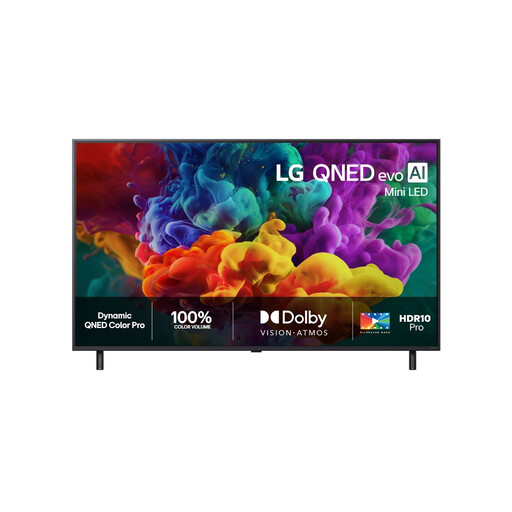 Image unavailable
A Mini LED option to compare if archive footage may stay on screen for longer and you want a large presentation format.
86 inches; QNED Mini LED; 4K Smart TV.
 Image unavailable
An LCD option to consider if visitors will be sitting in different positions and you want to try photos or videos from USB.
65 inches; 4K; viewing angle specified as 178°; two USB ports; the product description lists JPEG, PNG, MP4 and MKV, among other formats.
 Image unavailable
A Mini LED option to compare if you want a large screen and are considering an external player connected via HDMI.
65 inches; QD Mini LED; 4K; the product description lists HDMI 2.1.
 Image unavailable
A more compact size to compare if you’re looking for a QD Mini LED screen for photo and video presentations.
50 inches; QD Mini LED; 4K.
No, not necessarily. According to the Consumentenbond, extra 4K detail needs to come from the source material, and the difference from Full HD is not always easy to see. Try representative files at the intended screen size and viewing distance.
It depends on the exact TV model, the USB stick and the files. For the K-55XR5, Sony specifies FAT16, FAT32, exFAT and NTFS, as well as JPEG via USB. Test your own collection in the order you want to present it too.
No, owning the files or the TV does not automatically give you that right. According to the Dutch Government, you need the creator’s permission to use copyright-protected photos publicly, unless an applicable exception or licence applies. Privacy law may also be relevant where people are identifiable; establish which rights have been cleared for the specific collection.
For a consumer purchase, the product must meet what you can reasonably expect under normal use; ACM ConsuWijzer identifies the seller as your point of contact. If you are buying on behalf of an organisation, don’t assume the same consumer rules apply and check the contract.
Before mounting, check the mounting details, weight and instructions for the exact TV and bracket. LG advises against using harsh chemicals and abrasives to clean the screen.