First, measure the distance from your eyes to the planned screen position and check how much space you have. Only then choose a screen size. Compare how TVs display fine details and dark interiors, and check for reflections if you watch in daylight. A more feature-packed model won’t necessarily be more enjoyable if its size, the light in your room or the cost isn’t right for your living room.
Who should consider this choice?
Viewer with limited space for a TV
You want to enjoy architecture programmes, but you have a short viewing distance or limited space on your stand or wall. Start by measuring, rather than choosing a screen size in inches in advance. The Consumentenbond suggests dividing the viewing distance by 2.4 to estimate the screen diagonal in centimetres.
Detail-loving viewer
You notice façades, materials and dark interiors, and want to weigh up picture quality against your viewing conditions. LG describes deep blacks and contrast as features of the OLED42C55LA model; compare claims like these with the performance of other TVs.
Daytime viewer
You often watch during the day and want to avoid reflections from windows or lamps obscuring details. The Consumentenbond highlights reflections as something to consider when assessing a TV, so take your own lighting and set-up into account.
What should you look for when choosing?
In a small living room, start by considering where the TV will go and your viewing distance. Then compare picture quality, reflections and everyday usability.
| What to consider |
What to look for |
Who it matters to |
| Size and placement |
Measure the distance from where you sit, and check the width, stand and available space for the exact model. The Consumentenbond suggests dividing the viewing distance in centimetres by 2.4 to estimate the diagonal in centimetres. |
I want a TV that’s comfortable to watch from my seat and fits on my stand or wall. Around 36% of consumers focus mainly on finding the right size. |
| Detail and contrast |
Compare the same scenes on the TVs you’re considering. A 4K specification or panel technology doesn’t guarantee a better picture from the source or better detail in dark scenes. |
I want to make out lines, materials and the light and dark areas of buildings. For around 29% of consumers, picture detail and contrast are the top priorities. |
| Daylight and reflections |
Check for windows and lamps opposite the screen, and assess reflections in similar lighting conditions. Don’t assume you know how well a TV handles reflections based on its panel name alone. |
When I watch during the day, I don’t want incoming light to overpower the picture. For around 21% of consumers, daylight and reflections are the main things to consider. |
| Speech and usability |
Listen to speech on the exact TV you’re considering, and check that the apps you want are available on that model’s smart TV platform. |
I want to follow the commentary and easily start watching a programme. For around 14% of consumers, clear speech and everyday usability come first. |
Common pitfalls
-
Choosing a screen size in inches without measuring at home
Viewing distance is a useful starting point when choosing a size, but the diagonal doesn’t tell you how wide the TV is with its stand. As a result, a model might not fit in the space you have for it.
Measure both the distance from your seat and the space available for the TV. Then check the dimensions of the exact model.
If the TV doesn’t fit, you may need to go to extra effort to find another place for it.
-
Assuming panel technology or an extra feature guarantees picture quality
OLED, Mini LED and Ambilight refer to different technologies or features, but they don’t determine on their own how a TV displays your programmes in your lighting conditions.
Compare TVs using scenes similar to the programmes you watch, and look at reflections, fine details and dark areas.
-
Thinking the statutory guarantee ends after two years
ACM ConsuWijzer distinguishes between your statutory rights and an additional retailer’s or manufacturer’s guarantee, which has its own duration.
Before choosing an extra guarantee, check what it covers in addition to your statutory rights.
Brands to compare
LG
LG describes the OLED42C55LA as a 42-inch 4K OLED model for anyone considering a compact size.
- LG attributes deep blacks and contrast to this specific model.
- This is a manufacturer’s claim, not an independent comparison. Assess reflections, placement and cost separately.
Samsung
Samsung Netherlands describes the QE43QN90FATXXN as a 43-inch 4K Mini LED model.
- Its size and screen technology give you specific features to compare with other models.
- The model specifications don’t show how the TV will handle daylight or reflections in your living room.
Philips
Philips describes the 43PUS8000/12 as a 43-inch 4K LED TV with Ambilight and Titan OS.
- Ambilight is an extra feature to consider if you want lighting behind your TV.
- Check that the apps you want are available and that the space behind the TV is suitable for the light effects.
METZ
The 43MQF7500Z is a model-specific TV; a Dutch product description lists a 43-inch 4K QLED screen.
- The manufacturer’s specification sheet provides energy data for this model to include in your comparison.
- A product description isn’t an independent picture-quality test. Assess picture quality and energy data separately.
TVs at Joybuy
This selection includes compact 42- and 43-inch TVs for viewers who want to enjoy architecture programmes. Measure your viewing distance and available space, then compare the picture features listed.
 No image available
LG OLED42C68LA 42-inch 4K Ultra HD OLED Smart TV
A 42-inch OLED model to consider if you’re looking for a compact screen.
The product information lists 4K Ultra HD, Dolby Vision and HDR10.
Joybuy
 No image available
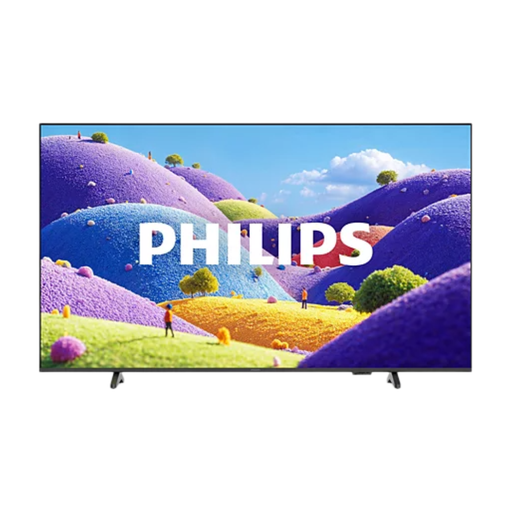
Philips 43PUS7061/12 43-inch 4K TV
A 43-inch model to compare if you’re looking for a compact screen with 4K resolution.
The product information lists a resolution of 3840 × 2160.
Joybuy
 No image available
Philips 43PQS7801 43-inch 4K QLED Smart TV
A 43-inch model to compare if you want to consider QLED and a compact screen.
The product information lists 4K resolution, three-sided Ambilight, HDR10+ and Titan OS.
Joybuy
 No image available
Hisense 43A6S 43-inch 4K UHD Smart TV
A 43-inch model to compare if you’re looking for a compact 4K screen.
The product name lists 60 Hz, Dolby Vision, VIDAA and Game Mode Plus.
Joybuy
 No image available
Hisense 43E7S PRO 43-inch QLED TV
A 43-inch QLED model to compare if you’re looking for a compact screen for watching programmes.
The product information lists 4K resolution, Dolby Vision, HDR10+ Gaming and FILMMAKER MODE.
Joybuy
Frequently asked questions
How do I work out a starting size for my TV?
Measure from your usual viewing position to where you plan to put the screen. The Consumentenbond suggests dividing the viewing distance in centimetres by 2.4 to estimate the screen diagonal in centimetres. Also compare nearby sizes and check the external dimensions of the exact TV.
Is 4K on its own enough for a good picture of buildings?
No. 4K alone doesn’t tell you how the exact TV displays fine patterns, dark areas and reflections. The Consumentenbond assesses picture quality and reflections separately, and the quality of the programme you’re watching also makes a difference.
How should I clean the screen?
Handle the screen carefully and avoid harsh chemicals and abrasive materials, as LG advises. Check the manual for your exact model to find out which cloth and cleaning method are safe to use.
What does a TV’s energy label tell me about its energy use?
The European energy label for TVs lists energy data for SDR and HDR, as well as the screen diagonal and resolution. Compare TVs on a like-for-like basis; your personal running costs also depend on how long you watch and your energy tariff.
What are my rights when I buy a TV online in the Netherlands?
According to ACM ConsuWijzer, when you buy a TV online you generally have a statutory cooling-off period of up to 14 days after delivery. You also have a statutory guarantee if the product doesn’t do what you could reasonably expect when used normally; this isn’t automatically limited to the duration of an offered manufacturer’s guarantee.


