
Viewer with a sofa set far away
Wants to follow façades, floor plans and on-screen captions from their usual seat. The Consumers' Association recommends using your viewing distance as the starting point when choosing a screen size.


Start by measuring your viewing distance: the Consumers' Association uses the distance divided by 2.4 as a guide to screen size, not as a minimum. Then choose based on your room and seating: compare LCD or Mini LED models for brightness, reflections and viewing angle, and OLED models if contrast in dark interiors is a priority. The exact model and the space available will still determine what works best.
Wants to follow façades, floor plans and on-screen captions from their usual seat. The Consumers' Association recommends using your viewing distance as the starting point when choosing a screen size.
Often watches in a bright living room and takes brightness, reflections and off-axis seating into account. The Consumers' Association outlines the differences between LCD and OLED; you should also assess the features of the specific model.
Pays particular attention to bright architectural details alongside dark interiors and wants to compare specific LCD, Mini LED and OLED models. The Consumers' Association explains the differences between LCD and OLED, as well as the role of HDR.
The Consumers' Association recommends using your viewing distance as the starting point for screen size. Your room, light levels and seating position will also help determine which model is right for you.
Consider this when: your measured distance calls for a larger screen and you want to factor in brightness in a light room.
Trade-off: black levels and viewing angles vary by model; the technology name alone does not predict picture quality.
Consider this when: you want to compare brightness and how bright and dark areas of the picture are controlled, as well as screen size.
Trade-off: it is still an LCD with a backlight; the number of dimming zones alone does not tell you how pictures will look in your room.
Consider this when: contrast in dark interiors matters and the available screen size suits your viewing distance.
Trade-off: compare reflections and the energy use of the exact model; deeper blacks will not make a screen that is too small the right choice.
| What to consider | What to look for when buying | Who should pay particular attention? |
|---|---|---|
| Screen size at a distance | Measure the distance from your eyes to the screen. Divide the number of centimetres by 2.4 as a starting point for the diagonal in centimetres; also check the width, including the stand. | From my usual seat, I want to make out façade details and captions without the TV taking up too much space. Around 36% of consumers say that a screen size suited to their viewing distance is their top priority. |
| Daylight and viewing angle | Assess the exact model in similar lighting and from your usual seats; check for reflections and how the picture looks from an angle. | In a bright living room or from a seat beside the TV, I want to judge how reflections and the viewing angle affect the picture. Around 29% of consumers prioritise visibility in daylight and from off-axis seats. |
| Contrast and detail | Compare the same bright and dark scenes on specific models. Also check whether the programme is in HDR. | I want to see bright materials and dark interiors clearly, so I compare TVs using the same footage. Around 21% of consumers put contrast and recognisable picture detail ahead of other considerations. |
| Power use and reception | Check the energy consumption of the exact model and make sure the tuner or connection is compatible with the TV service you use. | I want to know in advance whether the TV suits the way I watch and what it will cost to run based on my viewing habits. Around 14% of consumers give top priority to overall running costs and suitable reception. |
The screen diagonal does not tell you whether the TV will fit on your unit with the stand attached. The right size also depends on your measured viewing distance.
First measure the distance from your eyes to the screen and the available width. Then compare a few nearby screen sizes.
Picture processing varies from one TV to another. HDR information only makes a difference if the content includes it.
Compare specific models using the same bright and dark scenes, and check whether the source includes HDR.
The Netherlands Authority for Consumers and Markets states that the seller is responsible for the statutory guarantee if a product does not meet expectations.
Check what an additional package actually covers, and keep it separate from your statutory rights.
The QE75QN90FATXXN is a 75-inch Mini LED LCD model worth comparing if you want a large screen for a bright room.
The OLED77C54LA is a 77-inch C5 OLED model worth comparing if you want a large screen with OLED technology.
The 75C6K is a 75-inch QD Mini LED model worth comparing with other large LCD TVs.
The 75PUS8919/12 is a 75-inch 4K model with Ambilight worth comparing if lighting around the screen matters to you.
This selection from Joybuy includes a range of large screen sizes, plus OLED, LCD and Mini LED models to compare with your measured viewing distance, room and seating.
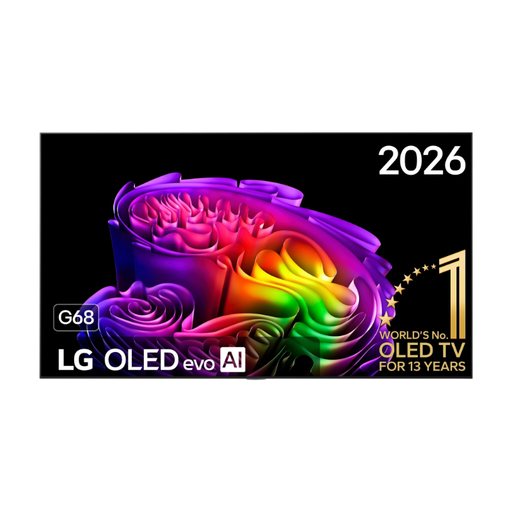 No image available
The 77-inch screen is an option to compare with your measured viewing distance.
Product information lists OLED, pixel-level dimming, Dolby Vision and HDR10.
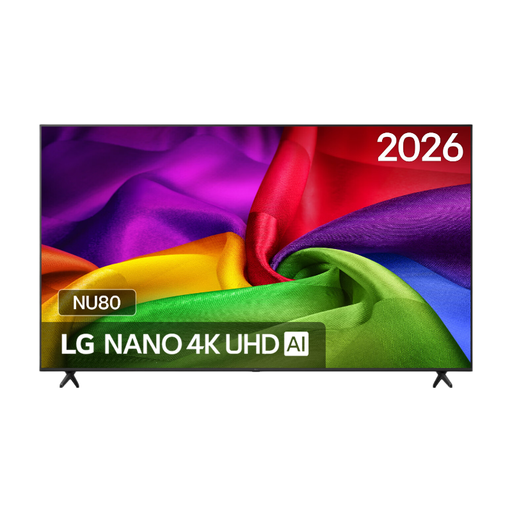 No image available
Compare the 85-inch screen size with your viewing distance and the space where the TV will go.
Product information lists 3840 × 2160 resolution, direct backlighting and support for HDR10 and HLG. Check the dimensions and connections of the exact model.
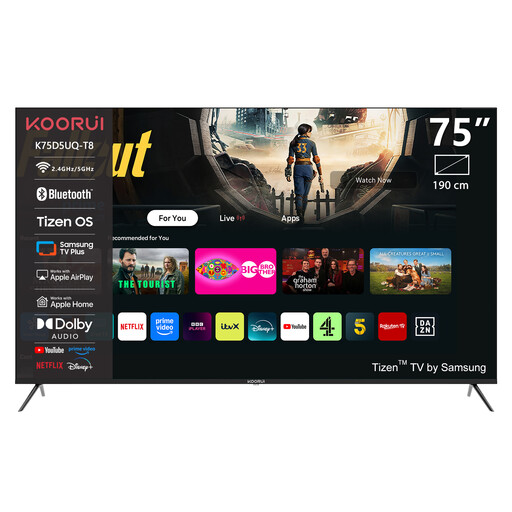 No image available
The 75-inch screen is an option to compare with your viewing distance and available space.
Product information lists 4K UHD, QLED, Tizen TV, Dolby Vision and HDR10+.
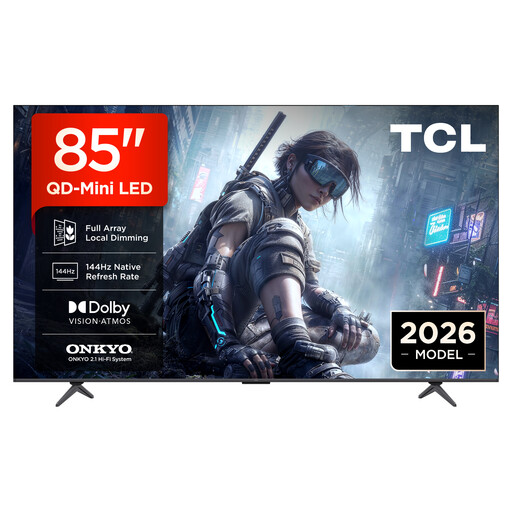 No image available
Compare this 85-inch model with your viewing distance and the space available for installation.
Product information lists 4K UHD, QD Mini LED and support for Dolby Vision, HDR10+ and HLG.
 No image available
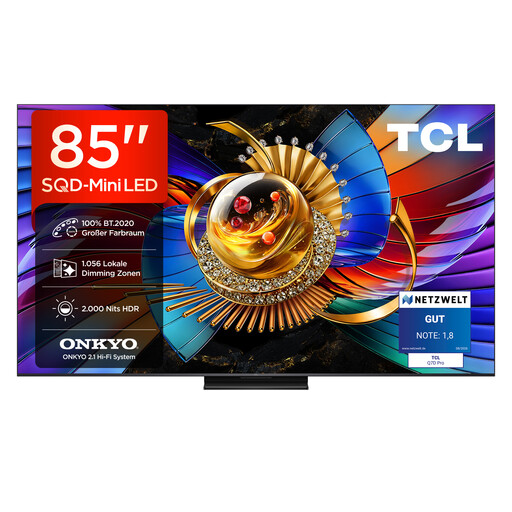
The 85-inch screen and stated anti-reflection coating make this model worth assessing alongside your viewing distance and room.
Product information lists 1,056 dimming zones and HDR brightness of 2,000 nits. For wall mounting, the wall must be suitable, and product information recommends at least 10 cm of clearance for ventilation.
No. First measure the distance from your eyes to the screen. The Consumers' Association gives a recommended range of 55–77 inches at 400 cm and 65–85 inches at 450 cm; your preference and available space also matter.
Watch a familiar scene with both bright and dark areas from your usual seat. The Consumers' Association recommends using, among other things, a paused image or a familiar photo when assessing picture settings.
That depends on the reception method and what your provider supports. According to the Consumers' Association, the built-in tuner may work with a compatible cable, aerial or satellite connection; you will not use it for a provider's internet TV service. Check your provider's terms and the connections on the exact model.
In the Netherlands, online TV orders are generally covered by the statutory cooling-off period; ACM ConsuWijzer states that this ends 14 days after delivery. If a product does not meet what you are entitled to expect, the seller is responsible under the statutory guarantee. This is separate from any additional warranty package.
Yes. When you buy a new, similar appliance, the seller must take back the old one, regardless of its brand or size. The Dutch Government recommends agreeing in advance how the take-back will work in practice when your new appliance is delivered online.