Who is this buying guide for?

Evening viewer who values contrast

If you mainly watch in a home cinema that you can darken, you’ll want to distinguish dark interiors from bright windows clearly. The Dutch Consumers’ Association highlights contrast and viewing angle as things to consider when comparing TVs.

Viewer in a bright room

If you also watch during the day or have windows nearby, consider reflections and how clearly you can see the screen from your usual seat. The Dutch Consumers’ Association recommends assessing ambient light and screen reflections for each model.

Viewer matching the screen to the room

If your choice depends mainly on viewing distance, multiple seats, clear narration or power consumption, compare the dimensions, sound and energy label of the models you’re considering.

What should you look for when choosing?

OLED for a room you can darken

Best for: mainly watching in the evening, with a focus on dark scenes and a wide viewing angle.

Bear in mind: reflections and performance vary by model, so assess them in the lighting conditions in your room.

LCD or Mini LED for a bright room

Best for: regular daytime viewing, when visibility in ambient light is a priority.

Bear in mind: QLED is a type of LCD, not OLED. Compare the black levels, reflections and viewing angle of the specific model.

What to consider What should you check? Who should pay particular attention?
Contrast and detail Compare the contrast, HDR and picture processing of the same model, and take the quality of the source into account. If I want to keep seeing details in dark interiors and bright accents, I compare picture quality across sets. Around 31% of consumers prioritise contrast and detail.
Daylight and reflections Check model measurements for brightness, reflections and viewing angle, and assess the screen from your usual seats. With windows or daylight in the room, I want to avoid reflections obscuring details. Around 25% of consumers prioritise visibility in daylight.
Size and positioning Measure the distance to the screen and check the TV’s external dimensions. The Dutch Consumers’ Association gives a viewing distance of around 2.4 times the screen diagonal as an average preference, not a fixed rule. If the seating position, wall space or several viewing positions determine the size, I want to know in advance what will physically fit. Around 19% of consumers prioritise size and room layout.
Dialogue and audio Compare sound ratings. If you have a soundbar or receiver, check the connections on both devices. If I want to follow the narration clearly without a separate audio system, I look at speech clarity and connection options. Around 13% of consumers prioritise dialogue and audio.
Power consumption For suitable screen sizes, compare the energy label and stated consumption per 1000 hours. Milieu Centraal recommends using this figure for comparison. If I want to take running costs into account, I compare the consumption of models that suit my room. Around 12% of consumers prioritise power consumption and total purchase cost.

Common buying mistakes

  • Confusing QLED with OLED

    QLED is a type of LCD with a backlight. The name doesn’t mean the screen is OLED, nor does it remove the trade-off between brightness and black levels.

    Check the actual screen type and compare the model in the lighting conditions you’ll be watching in.

  • Choosing a larger 4K TV without checking the source and viewing distance

    A 4K screen won’t create native 4K detail from a programme recorded at a lower resolution. A larger screen also needs more space and may use more power.

    Measure the viewing distance and available space, check the resolution of the programmes you watch, and compare the energy labels of suitable models.

  • Judging picture and sound by a bright shop setting or wattage alone

    An extra-bright shop setting won’t necessarily give you a realistic idea of how the TV will look at home. A stated audio output isn’t a measure of how clearly speech can be heard.

    Compare picture and sound ratings, then adjust the picture in your own room lighting.

Brands and models to consider

LG

The OLED evo G5 range is an OLED option to compare for a viewing room you can darken.

  • LG lists a 65-inch 4K OLED screen and picture processing for the OLED65G56LS.
  • These product specifications aren’t an independent assessment of architectural imagery; check reflections and mounting separately.

Hisense

The 65U7Q is a 65-inch 4K Mini LED LCD model to compare if daylight is a consideration.

  • The Dutch Consumers’ Association describes the screen type, size and HDMI-ARC/eARC.
  • Don’t assume Mini LED will perform better in daylight based on the term alone; check reflections and the performance of the specific set.

Philips

According to Philips, the 65OLED911/12 combines OLED with four-sided Ambilight and built-in Bowers & Wilkins sound.

  • These features may be relevant if built-in sound and the lighting experience you want are important to you.
  • The product specifications don’t prove that this model is better suited to architectural programmes; compare the sound, reflections and setup you want.

Sony

The BRAVIA 8 II, model K-65XR8M2, is a QD-OLED model with Google TV.

  • Sony lists eARC/ARC for this model.
  • The model specifications don’t support a general claim about picture or sound quality across the entire range.

Samsung

The QE65S90H is a 65-inch 4K OLED model to consider alongside other screen options.

  • The Dutch Consumers’ Association describes the size and HDMI-ARC/eARC.
  • Check reflections, sound and source compatibility for the version you’re considering.

Joybuy products

The Joybuy picks below are OLED models for anyone who values dark scenes. Compare reflections, viewing distance and the connections you need for each model.
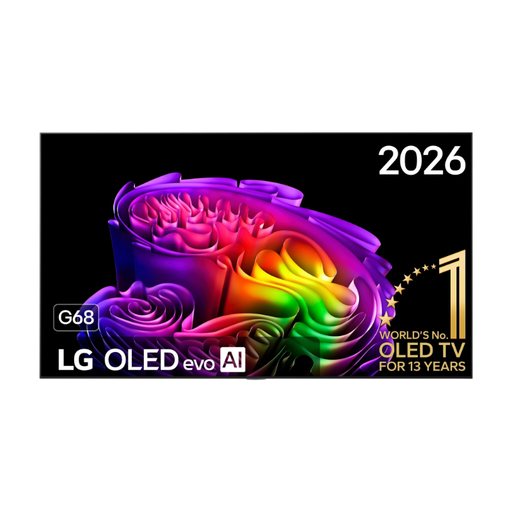
OLED77G68LW OLED TV

OLED77G68LW

An OLED model to compare if dark architectural scenes matter to you; check for reflections and whether the size suits your viewing distance.

Joybuy
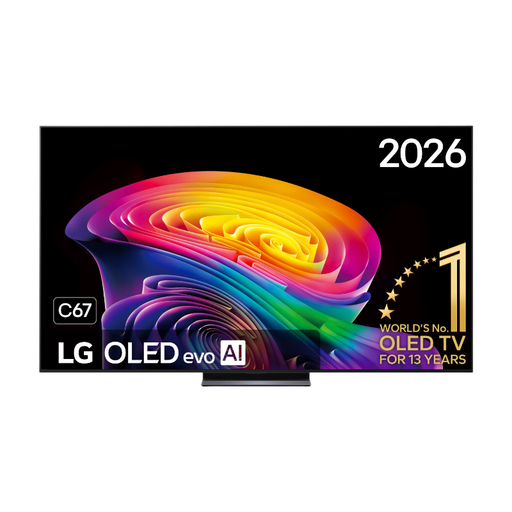
LG OLED83C67LA 83-inch OLED evo AI C6 4K Smart TV

LG OLED83C67LA 83-inch OLED evo AI C6 4K Smart TV

An 83-inch OLED model to compare for a viewing room with space for a large screen; check your viewing distance and available space first.

The product name lists OLED evo, 4K and Dolby Vision.

Joybuy
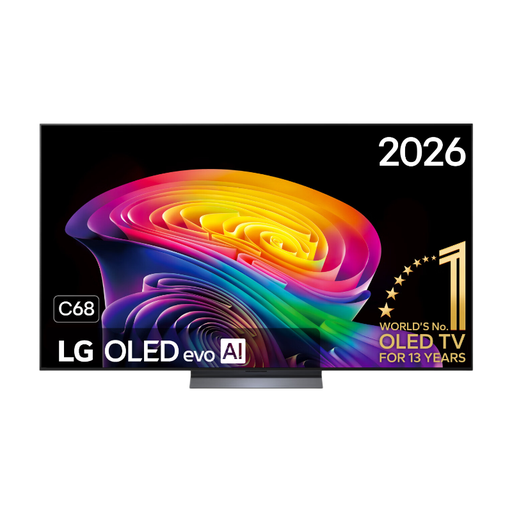
LG OLED65C68LA 65-inch OLED evo AI C6 4K Smart TV

LG OLED65C68LA 65-inch OLED evo AI C6 4K Smart TV

A 65-inch OLED model to compare if dark scenes matter to you; measure your viewing distance and check for reflections in your room.

The product name lists OLED evo, 4K and Dolby Vision.

Joybuy
LG OLED55C68LA 55-inch OLED evo AI C6 4K Smart TV

LG OLED55C68LA 55-inch OLED evo AI C6 4K Smart TV

A 55-inch OLED model to compare if a smaller screen is a better fit for your room and viewing distance.

The product name lists OLED evo, 4K and Dolby Vision.

Joybuy
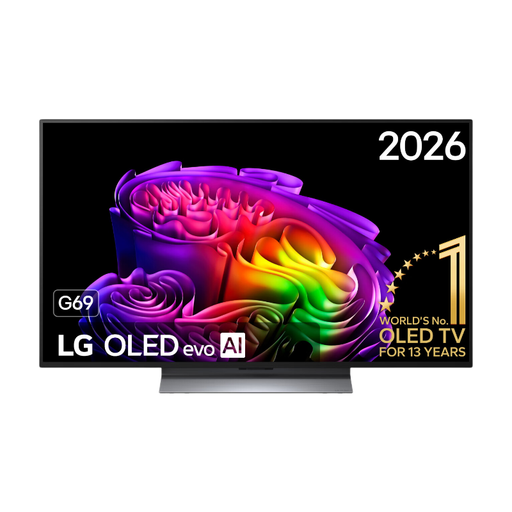
LG OLED48G69LS 48-inch OLED evo AI G6 4K Smart TV

LG OLED48G69LS 48-inch OLED evo AI G6 4K Smart TV

A 48-inch OLED model to compare if space is limited; check that the size works well from your usual seat.

The product name lists OLED evo, 4K and Dolby Vision.

Joybuy

Frequently asked questions

Is 4K worthwhile if I mainly watch architectural programmes on regular TV broadcasts?

A 4K screen won’t automatically show extra detail if the programme wasn’t made using a 4K source. The Dutch Consumers’ Association notes that regular broadcasts don’t routinely offer a 4K source, and that the visible difference from Full HD may be limited.

What size TV is right for my viewing distance?

Measure the distance from your seat to where you plan to position the screen, and check the TV’s external dimensions too. The Dutch Consumers’ Association suggests dividing the distance by 2.4 to get a guide to the screen diagonal in centimetres. It’s a preference, not a fixed rule.

How should I set up the picture to assess materials and shadows?

Adjust the picture in the lighting conditions you normally watch in, and make sure details remain visible in both bright and dark areas. The Dutch Consumers’ Association recommends using the home picture setting rather than the often extra-bright shop setting.

How can I compare the energy consumption of TVs?

Compare the energy label and stated consumption per 1000 hours for models in a size that suits your room. Milieu Centraal recommends using consumption per 1000 hours for comparison; the EU label also includes information about HDR.

What are my rights if I’m unhappy with a TV bought online or it develops a fault?

For a standard online purchase of a new TV, ACM ConsuWijzer says you’ll generally have 14 days from delivery to change your mind; check whether a legal exception applies. If a product is faulty, the seller is responsible for the statutory guarantee. There isn’t a fixed two-year period for every purchase: it depends on what you could reasonably expect from the product.
