Start by measuring the distance from the furthest seats, then check whether you can play the showreel from the device you plan to use. Compare colour reproduction, reflections and viewing angles in the lighting conditions you’ll present in. OLED can be appealing for dark scenes and seats off to the side, while a suitable LCD TV is also worth considering. Measure the available space and check the connections and energy label for the exact model before making a decision with your housemates.
Who is this choice for?
Animation maker who wants to assess the picture
You want to see how the colours and light and dark details in your showreel look on screen. View your own file using the home settings; the Consumentenbond notes that shop settings are often brighter than you need at home.
Housemates who watch together
You may be sitting at different distances and angles. Screen size, reflections and visibility from seats off to the side are therefore important things to assess in your shared living room.
Housemates sharing the costs and equipment
You want to play the showreel easily from a laptop or another device, and weigh up the power consumption and connections you’ll need together. To do that, compare the energy label and check your planned playback setup in advance.
What should you look for?
| What to consider |
What should you check? |
Who should consider this? |
| Screen size and placement |
Measure the viewing distance and available space, including the stand. The Consumentenbond suggests around 2.4 times the screen diagonal as a comfortable starting point for viewing distance; also make sure the size suits the room. |
If I want to follow the details from the furthest seat, I’m looking for a screen that suits both the distance and the furniture. Around 26% of consumers give size and placement top priority. |
| Colour, contrast and detail |
Compare light and dark scenes from your own showreel using the home settings. A panel label alone doesn’t tell you whether a specific model reproduces colours accurately. |
If I want to assess my animation rather than just see vivid shop-floor images, I compare the picture with scenes I know well. Around 21% of consumers prioritise picture accuracy. |
| Playing the showreel |
Test the complete file, including sound, from the laptop or player you plan to use. Check which HDMI connection you need or the exact wireless playback method. |
If I want to show my locally stored showreel without any hassle, I want to test the whole playback setup in advance. Around 21% of consumers give trouble-free playback top priority. |
| Visibility from different seats |
View the picture from seats off to the side, with the lighting you’ll have on during the screening. Viewing angles and reflections vary by model. |
If my housemates are spread around the room, I want to know whether the picture is still clear from the side. Around 16% of consumers prioritise visibility for the group. |
| Shared costs and still images |
Compare the energy label for the exact model and check which cables or mounting accessories you’ll need. With OLED, leaving a still image on screen for a long time is something to bear in mind. |
If we’re sharing the TV, I want to compare power consumption and what we’ll need in advance. Around 16% of consumers give shared costs top priority. |
Buying pitfalls
-
Mistaking shop mode for accurate picture reproduction
According to the Consumentenbond, shop settings can be brighter than you need at home. So they won’t necessarily give you a realistic idea of how your showreel will look in the shared room.
View your own file using the home settings and check both light and dark details.
-
Assuming every smart TV can play a local video file
A local file won’t automatically work with every app or wireless casting method. The right playback option depends on the TV, the file and the device you’re using.
Before the screening, test the complete file with picture and sound, or check whether you can connect your laptop or player to an available HDMI input.
-
Leaving an OLED TV on a paused image for a long time
In an older, demanding test, the Consumentenbond observed temporary image retention. That test doesn’t predict a risk for a new model in normal use, but it does highlight the need to be mindful of leaving a still image on screen for a long time.
Don’t leave a paused image or fixed interface on screen for longer than necessary, and check the user manual for your chosen model.
-
Choosing based on screen diagonal alone
A TV might seem the right size by diagonal measurement, but could be too wide with its stand for your furniture or unsuitable for the available viewing distance.
Measure your furniture and the distance to the seats. If you’re mounting the TV on the wall, also check that the bracket is compatible with the set.
Brands to consider
Philips
The Consumentenbond lists the 43PUS8001/12 and 55OLED761/12 among models tested recently. Philips also describes the 43PUS8000/12 as a 4K LED TV with Ambilight.
- The models mentioned give you a starting point for comparing a more compact size with a larger OLED screen.
- Ambilight and picture claims for the 43PUS8000/12 are the manufacturer’s descriptions; they don’t prove colour accuracy or performance for other models.
Hisense
The Consumentenbond lists the 50U7SE among recently tested TVs, offering a mid-sized option to compare with your viewing distance.
- This model gives you a specific size to compare with your room and seating arrangements.
- The model listing doesn’t tell you about colour, reflections or viewing angles; assess these for the exact model.
LG
The Consumentenbond lists the 55QNED93B6A and OLED77B68LA among recently tested models, offering different screen technologies and sizes.
- The models mentioned give you examples to compare screen technology and size separately.
- A 77-inch TV needs plenty of space; the model listing doesn’t tell you whether a particular version will suit your student house.
Samsung
The Consumentenbond lists the UE43M72H and QE48S83H, among others, as recently tested models.
- These models give you a more compact and a larger size to investigate further.
- Check the connections and viewing angle of the exact model; features of one model don’t necessarily apply to another.
Joybuy products for this setup
This selection includes 43-, 48- and 55-inch OLED and QLED TVs to compare with your viewing distance, available space and how you plan to play the showreel.
 No image available
LG OLED48G69LS OLED Evo AI G6 48-inch 4K
A 48-inch OLED model to compare if dark scenes and a screen size that suits your room are important to you.
The product name includes OLED and 4K. With OLED, leaving a still image on screen for a long time is something to bear in mind; the Consumentenbond describes a test of older models, not a prediction for this TV.
View at Joybuy
 No image available
Samsung QE55S99HATXXN QD OLED 55-inch (2026)
A 55-inch QD OLED model to consider if the viewing distance and available space in your room can accommodate this size.
The product name includes QD OLED and 55 inches. With OLED, leaving a still image on screen for a long time remains something to bear in mind; the Consumentenbond’s test involved older models.
View at Joybuy
 No image available
TCL 55T8C 55-inch 4K QLED
A 55-inch QLED model to compare with OLED if your space and shared viewing distance can accommodate this size.
The product name includes 4K and QLED. The panel label alone doesn’t prove colour accuracy or a wide viewing angle.
View at Joybuy
 No image available
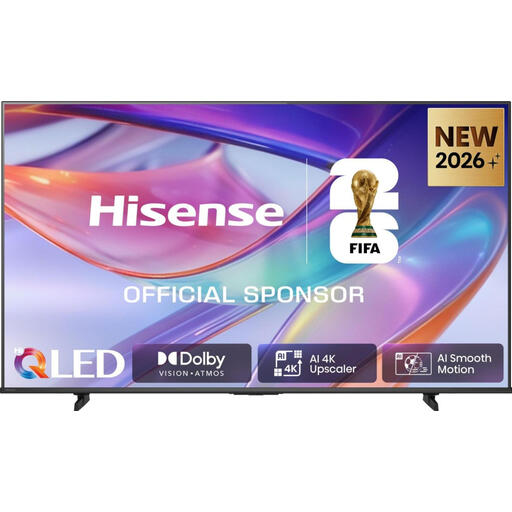
Hisense 43E7S 43-inch 4K QLED
A 43-inch QLED model to compare if space is limited or a more compact screen better suits your viewing distance.
The product name includes 4K and QLED. Check the viewing angle of the specific TV from the seats in your shared room.
View at Joybuy
 No image available
CHiQ U43QM10E 43-inch 4K QLED Smart TV
A 43-inch model to compare if you’re looking for a more compact screen for watching together.
The product name includes 4K and QLED. Before the screening, check that your chosen playback method is compatible with your locally stored video file.
View at Joybuy
Frequently asked questions
Do I need a 4K TV for my animation showreel?
Not just because it has a 4K label. According to the Consumentenbond, the content you watch also needs to be available in 4K to make use of those extra pixels, and the difference from Full HD isn’t always easy to see. Also consider the viewing distance and how your own file looks on screen.
Can I play the showreel wirelessly from my laptop?
First check that the TV and playback method you’ve chosen work with your file. A locally stored video won’t necessarily play using every casting method, so test your showreel in advance or connect a suitable player to an available HDMI input.
How should I set up the picture for a screening?
Use the home settings and check familiar light and dark scenes to make sure the details remain visible. The Consumentenbond points out that shop settings are often brighter than you need at home, so test the TV in the lighting conditions you expect during the screening.
How do I compare TVs’ power consumption?
Compare the EU energy label and product information for the exact model. The European Union uses an energy label scale from A to G for TVs.
Is an OLED TV suitable if I sometimes pause my showreel?
Leaving a still image on screen for a long time is something to bear in mind with OLED, but the Consumentenbond’s older, demanding test doesn’t predict a risk for a new model in normal use. Don’t leave a paused image on screen for longer than necessary, and check the user manual for your chosen TV.


