Start with the furthest seats and the light falling on the screen. A wide viewing angle helps when your group is spread out, while reflections and brightness need extra attention in a bright room. The Dutch Consumers' Association generally describes OLED as a way to get a wide viewing angle and deeper blacks. In rooms with lots of daylight, it’s also worth comparing suitable mini-LED and other LCD models. Then assess the exact model for viewing angle, reflections, sound, connections and its energy label.
Who is this choice relevant to?
A group with a wide seating arrangement
If you’re watching with others on a sofa and side chairs, focus on how colour and contrast look from the furthest seat. RTINGS.com highlights the importance of a wide viewing angle when seating is spread around the room.
A group watching films in a bright room
If you often watch during the day or opposite windows, consider how clearly you can see bright scenes as well as distracting reflections. The Dutch Consumers' Association and RTINGS.com identify brightness and reflection handling as relevant factors.
Viewers who put picture quality first
If you tend to watch with the lights dimmed, compare black levels, contrast and screen size for your viewing distance. The Dutch Consumers' Association notes that OLED can be a way to achieve deeper blacks.
What should you look for when choosing?
Start with the seating and the light in the room. This will help you focus on the picture features that matter for your film nights.
| What to consider |
What should you check? |
Who does this matter most to? |
| Picture quality from every seat |
Look at independent viewing-angle measurements for the exact model and assess the picture from the furthest seat. |
If everyone wants to follow the animated film comfortably, including from a side seat, viewing from different angles matters a lot. Around 28% of consumers put picture quality from every seat first. |
| Visibility in daylight |
Look for windows or lamps opposite the TV, and compare reflection-handling and brightness tests for each model. |
If you often watch during the day or with light sources opposite the screen, consider reflections as well as brightness. Around 22% of consumers give visibility in daylight and under lamps top priority. |
| Contrast and film performance |
Compare picture tests for the exact model and check that the film and playback device support your preferred HDR format. |
When watching films with the lights dimmed, dark scenes and contrast may matter more than other features. Around 22% of consumers put contrast and film performance first. |
| Screen size and running costs |
Measure your viewing distance and compare the EU energy labels in kWh/1000 hours, paying attention to SDR and HDR. |
If the TV needs to fit a particular room and you want to factor in energy use, screen size and running costs both matter. Around 17% of consumers put this combination first. |
| Clear dialogue and connectivity |
Compare independent sound tests and check that the exact model has the connections your devices need. |
If you want everyone to follow the dialogue and connect their existing playback devices, check sound and connections separately. Around 11% of consumers give these points top priority. |
Pitfalls to avoid
-
Assuming QLED automatically means a wide viewing angle
QLED is an LCD technology, and LCD panels can perform differently when viewed from the side. The Dutch Consumers' Association and RTINGS.com describe viewing angle as something to assess for each TV.
Compare measurements for the exact model and view the picture from the furthest seat you plan to use.
-
Focusing only on 4K or HDR on the box
A 4K screen doesn’t guarantee that you’ll see a difference compared with Full HD at every viewing distance. Reflections, contrast and viewing angle also play a part.
Check which picture formats the film and playback device support, and compare tests of the specific model too.
-
Treating an OLED stress test as a prediction of how it will fare during film nights
RTINGS.com discusses extended, repeated use with static images in an accelerated test. This isn’t the same as predicting the risk from ordinary film viewing.
Take your own usage patterns into account, and don’t turn a test involving extreme static use into a risk percentage for your viewing habits.
-
Confusing the manufacturer’s warranty with all your rights if a product develops a fault
According to the Dutch government, there is no fixed statutory warranty period in the Netherlands. A manufacturer’s warranty is separate from your right to a product that meets reasonable expectations.
Check what any extended warranty covers, and contact the seller if you have a complaint about a faulty product.
Brands to compare by model
Philips
The 65OLED810/12 is an OLED option with Ambilight for anyone who wants to factor in lighting around the screen.
- Philips says the lighting behind the TV responds to the content on screen; the model supports Dolby Vision.
- Assess Ambilight separately from viewing angle and reflections; the product claim isn’t an independent measurement of its effect.
TCL
The 65C7K is a QD mini-LED LCD option to compare for a bright viewing space.
- TCL lists brightness and dimming features for the C7K series.
- TCL states that relevant figures come from its own lab tests and that test conditions may vary. Don’t take this as a guarantee of viewing angle or performance in your room.
Sony
According to Sony, the BRAVIA 8 K65XR80PAEP combines a 65-inch OLED screen with Google TV and sound from the screen.
- Sony lists Dolby Vision and Acoustic Surface Audio+ for this model.
- You’ll need to assess separately whether the built-in sound is good enough for your group.
LG
LG offers OLED TVs as an option for comparing wide viewing angles and deep blacks.
- LG describes its OLED range as having individually lit pixels and wide viewing angles.
- That doesn’t tell you how each individual model handles reflections; check tests of the exact version.
Samsung
The Dutch product page identifies the 65-inch S90F QE65S90FATXXN as an OLED option to compare with other TVs for film viewing.
- The model is listed as the 65-inch S90F QE65S90FATXXN.
- Assess viewing angle, reflections and sound for each model; the brand name alone doesn’t tell you how it performs in these areas.
Joybuy products for this viewing space
This selection includes mini-LED and QLED LCD TVs for comparing features such as 4K and HDR support, plus an OLED model for anyone considering that screen technology.
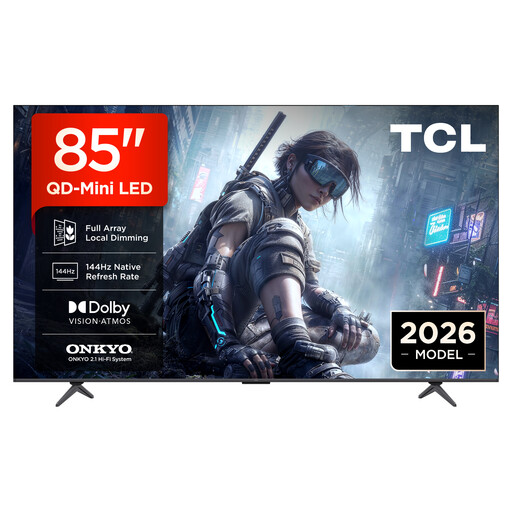 Image unavailable
TCL T8D 85-inch 4K QD-Mini LED Smart TV
A mini-LED TV to compare if you’re considering a large screen for a shared film-viewing space.
85 inches; 4K; Google TV; Dolby Vision and HDR10; 144 Hz; Onkyo 2.1-channel sound; HDMI 2.1.
View at Joybuy
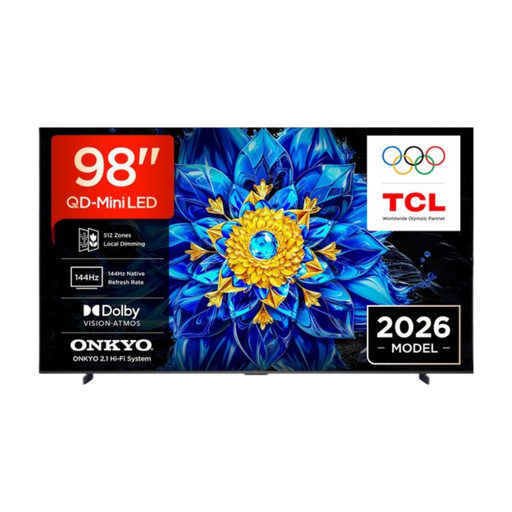 Image unavailable
TCL T8D 98-inch 4K QD-Mini LED Smart TV
A 98-inch mini-LED option; measure your viewing distance and check that the size suits your shared space.
4K; Google TV; Dolby Vision and HDR10.
View at Joybuy
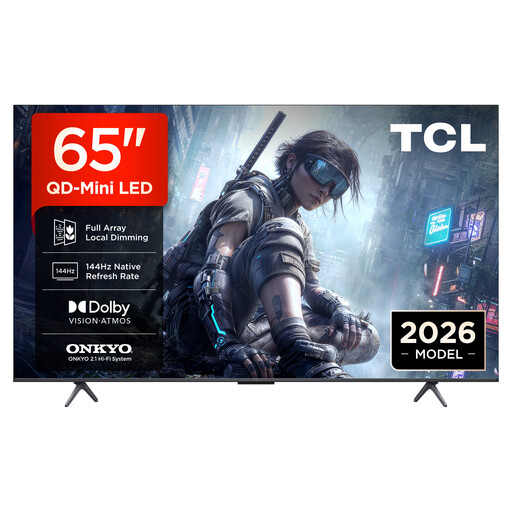 Image unavailable
TCL 65T8D 65-inch 4K QD-Mini LED TV
A 65-inch mini-LED model to compare if this screen size suits your viewing distance.
4K; Dolby Vision and HDR10+; Google TV; 144 Hz VRR; Onkyo 2.1-channel sound; HDMI 2.1.
View at Joybuy
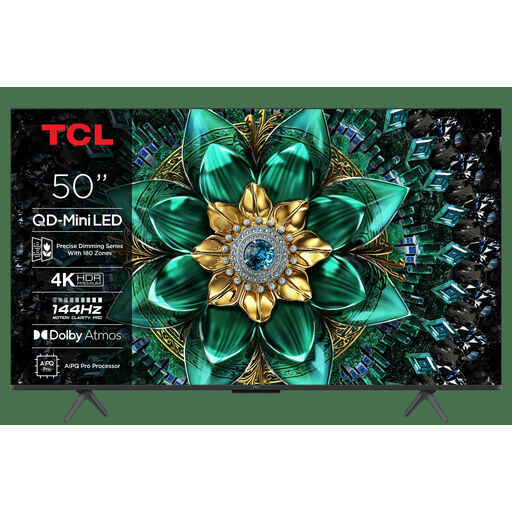 Image unavailable
TCL 50Q6C 50-inch QD-Mini LED 4K TV
A 50-inch mini-LED option to consider if a smaller screen would better suit your viewing distance.
4K; Dolby Vision IQ and HDR10+; Google TV; four HDMI inputs; energy rating E.
View at Joybuy
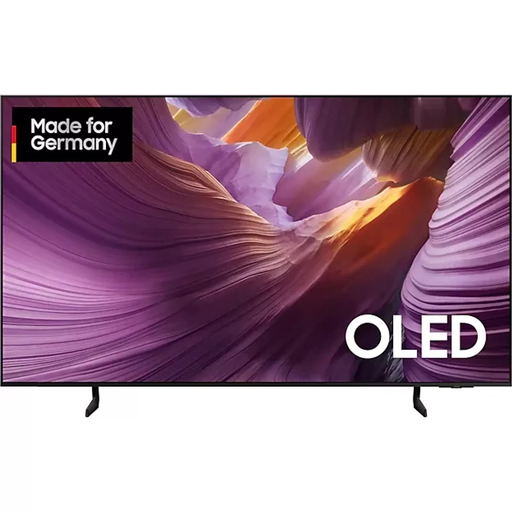 Image unavailable
Samsung S85F Series GQ55S85FAU 55-inch OLED 4K TV
An OLED option for anyone comparing this screen technology for watching films with the lights dimmed.
55 inches; 4K OLED; Smart TV; four HDMI ports.
View at Joybuy
Frequently asked questions
How can you avoid a disappointing picture from a side seat?
Compare the horizontal viewing angle of the exact model and view the picture from the furthest seat you plan to use. A wide viewing angle is particularly important when the group is spread out.
How do you choose a TV size without automatically going for the biggest one?
Measure the distance between the seats and the planned position of the TV. The Dutch Consumers' Association suggests around 2.4 times the screen diagonal as a comfortable viewing distance. Use this as a starting point, and also consider whether the screen suits the room.
How do you compare the power consumption of two TVs?
Compare the figures in kWh/1000 hours on the EU energy labels and note the difference between SDR and HDR. Your actual costs also depend on how many hours you use the TV and your electricity tariff.
Is a two-year manufacturer’s warranty the full statutory warranty in the Netherlands?
No. According to the Dutch government, there is no fixed statutory warranty period in the Netherlands. You’re entitled to a product that works properly, and the seller is your point of contact if something goes wrong. A manufacturer’s warranty is in addition to this, and what you can reasonably expect from the product is one of the factors considered.
Do you have a cooling-off period when buying a TV online?
According to the Dutch government, in many cases you have 14 days to change your mind when buying online from a business. Check the applicable terms; the rules for distance selling mentioned here don’t apply to an online purchase from a private seller.


