
Housemates who listen to records together
Want different people to be able to start and stop a record easily. Sony and Audio-Technica describe the models mentioned here as offering automatic operation.


First, choose based on who will be using the turntable and which speakers or amplifier you already have. A fully automatic turntable can make it easier to share, while a more manual model needs more attention when you set it up. Then check the connections and the speeds your records need. Built-in speakers save you from buying separate equipment, but they’re not the same as choosing external speakers.
Want different people to be able to start and stop a record easily. Sony and Audio-Technica describe the models mentioned here as offering automatic operation.
Want to play records through their current speakers or amplifier. Audio-Technica points out that the phono or line connection needs to suit your setup; passive speakers need an amplifier.
Want to take good care of their records and stylus, and are happy to pay extra attention to placement, operation and maintenance where needed. Pro-Ject recommends a level surface as part of the setup, while Audio-Technica offers advice on cleaning the stylus.
A good fit when: several housemates want to start a record without positioning the tonearm by hand, and you already have suitable speakers or audio equipment.
The trade-off: you’ll need suitable external playback equipment; Bluetooth alone doesn’t confirm that every device is compatible.
A good fit when: you don’t yet have separate speakers or an amplifier, and a compact setup is a priority.
The trade-off: auto-stop doesn’t mean the turntable also starts automatically; the stated speaker power alone won’t tell you how it will sound in your room.
A good fit when: you want to handle the controls and setup yourself, and already have suitable audio equipment or want to put a system together.
The trade-off: a lift that raises the tonearm at the end of a record doesn’t make a turntable fully automatic; also check what phono pre-amplification your setup needs.
When choosing, look beyond starting and stopping: check how the turntable connects to your speakers or amplifier, and whether it supports the speeds your records need.
| Concern | What to look for | Who does this matter to? |
|---|---|---|
| Easy to share | Check automatic start, stop and tonearm return separately; don’t assume the turntable starts fully automatically just because it has auto-stop. | When several housemates will be putting records on, I want it to be easy to use without having to position the tonearm myself every time. Around 33% of consumers put ease of shared use first. |
| Connecting to existing audio equipment | Check whether you have active or passive speakers, which input your amplifier uses, and whether the phono or line setting is suitable. | I want to use my existing speakers or amplifier without choosing the wrong input. Around 27% of consumers give connecting to their current setup top priority. |
| Looking after your collection | Check the setup instructions, where to place the turntable for a stable setup, and how to maintain the stylus. | If you want to play records carefully, pay attention to placement and stylus maintenance, and allow a little extra time where needed. Around 27% of consumers put caring for their record collection first. |
| No separate speakers | Check whether speakers are built in and which connections are available if you want to use external speakers later. | If I don’t have separate speakers yet, I want a setup that can play records without them. Around 13% of consumers give this kind of compact setup top priority. |
On a turntable with auto-stop only, you may still need to position the tonearm by hand when starting a record. That matters when several people use the turntable.
Compare start, stop and return as separate features before choosing a model.
A phono preamp doesn’t provide the speaker amplification that passive speakers need. Audio-Technica explains that passive speakers require a stereo amplifier.
Make a note of the speakers and inputs you already have, then check how the turntable can connect to them.
The Dutch government explains that there is no fixed statutory warranty period in the Netherlands. A manufacturer’s warranty doesn’t replace your rights with the retailer.
Keep your proof of purchase and report any fault to the retailer.
Sony describes the PS-LX3BT as an option for anyone looking to combine fully automatic operation with Bluetooth.
According to Audio-Technica, the AT-LP70XBT combines automatic operation with a switchable phono preamp.
According to Lenco, the LS-15BK is an all-in-one setup with two built-in speakers.
The SL-1500C is designed for an existing audio setup and has a built-in phono equaliser.
The Debut Carbon EVO suits a more manual setup where you handle the installation yourself.
These turntables are suited to shared use and listening through a compatible existing audio setup.
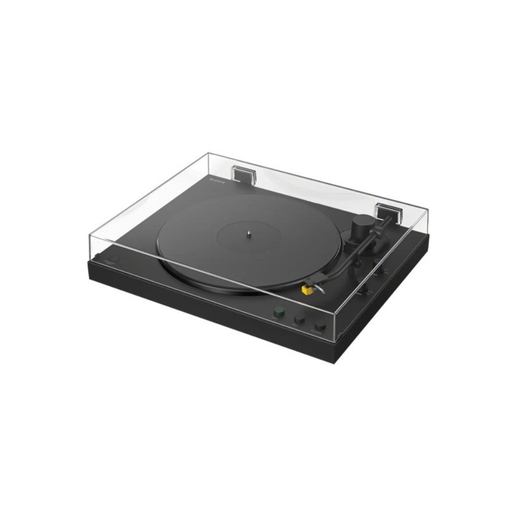 No image available
An option to compare for shared use with an existing audio setup; check in advance that the connection you need is compatible with the devices you want to use.
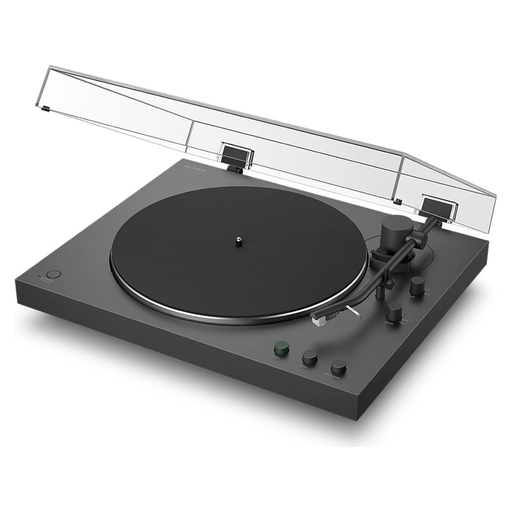 No image available
An option to compare for shared use with compatible existing audio equipment; check that the connection matches your setup.
You can with active speakers if the turntable’s output is compatible with the speakers’ input; passive speakers need an amplifier. Audio-Technica recommends matching the PHONO or LINE setting to the input you’re using and checking the manuals for both devices.
Place the turntable on a level, stable surface and follow the setup instructions for your chosen model. Audio-Technica warns that dust on the stylus can affect playback; use a cleaning method that’s suitable for the stylus and cleaning product.
You can’t tell just from the words ‘vinyl collection’. For the models reviewed, Sony, Audio-Technica and Lenco list 33⅓ and/or 45 tpm; check the supported speed for each model and compare it with your records.
When you buy as a consumer, you’re entitled to a product that meets the terms of the agreement. The Dutch government says there is no fixed statutory warranty period; report any fault to the retailer. A manufacturer’s warranty comes in addition to your legal rights.
For distance purchases from a business, you’ll generally have a 14-day cooling-off period in many cases. Whether it applies depends on the purchase; for example, the Dutch government distinguishes between buying from a business and buying from a private seller.