
Anyone who often plays singles
If you mainly play 45 rpm singles and regularly change records, automatic operation and the right speed and record-size settings can make a difference.


First, check the speed and material of your records: a 45 rpm single needs something different from a shellac record played at 78 rpm. Then choose between automatic and manual operation, check which phono connection you need, and place the turntable on a level surface away from speakers that cause vibrations. For shellac records, you’ll need a suitable stylus as well as a 78 rpm setting.
If you mainly play 45 rpm singles and regularly change records, automatic operation and the right speed and record-size settings can make a difference.
In a loft where the floor or speakers may transmit vibrations, it’s worth considering the location and surface when choosing a turntable. Audio-Technica recommends placing the AT-LP70XBT on a level, horizontal surface, away from speakers that cause vibrations.
If your collection includes 78 rpm shellac records, check the material and speed of each one. You’ll also need a suitable stylus for shellac, as Audio-Technica explains.
| What to consider | What should you check? | Who is this for? |
|---|---|---|
| Playing singles | Check the speed and record-size settings for the exact model. Also see whether you need a 45 rpm adapter for your records. | If I often change singles, I want to play them at the stated speed without too much fuss; around 33% of consumers prioritise quick changes above all else. |
| A stable location | Choose a level, horizontal surface and keep the turntable away from speakers that cause vibrations. This is also Audio-Technica’s set-up advice for the AT-LP70XBT. | I want to put the turntable somewhere stable in my loft, away from speakers that vibrate; around 25% of consumers prioritise a stable set-up. |
| Connecting to your audio equipment | Check the inputs on your amplifier or active speakers, and whether the turntable has a phono preamp. The Dutch Consumers’ Association points out that you may need a separate preamp if neither the turntable nor the amplifier has one. | If I want to use my existing amplifier or speakers, I want to know in advance which connection and preamp I need; around 25% of consumers put connectivity first. |
| Old 78 rpm records | Check the material and speed of each record. According to Audio-Technica, shellac records need a suitable stylus as well as a 78 rpm setting. | If my collection includes old shellac records, I want to know whether both the speed and stylus are suitable; around 17% of consumers prioritise compatibility with 78 rpm records. |
A record’s name doesn’t necessarily tell you which speed or stylus you need. A 78 rpm setting alone isn’t enough for shellac either: the stylus must also be suitable for that record.
Check the speed and material of your records before choosing a turntable. If you have shellac records, also check which stylus and settings they require.
A turntable isn’t automatically a complete playback system. Without suitable phono pre-amplification, it may not connect properly to your amplifier or speakers.
Before buying, check the inputs on your existing equipment and the output or switchable preamp on the model you’re considering.
If neither the turntable nor the amplifier has a phono preamp, you’ll need a separate one.
Audio-Technica recommends placing the AT-LP70XBT on a level, horizontal surface, away from speakers that cause vibrations.
Decide where your turntable will go in your loft before choosing a model, and make sure you allow for the connections you’ll need.
According to Audio-Technica’s model specifications, the AT-LP70XBT and AT-LP120XUSB offer different controls and supported speeds.
According to Denon, the DP-300F is a belt-driven, fully automatic turntable for 33⅓ and 45 rpm.
The Planar 1 is a manual turntable with a pre-fitted cartridge. Its manual specifies that it must be connected to a suitable phono preamp.
These Joybuy products are related to playing records. Check that each model’s speed, connections and placement options suit your jazz singles and loft.
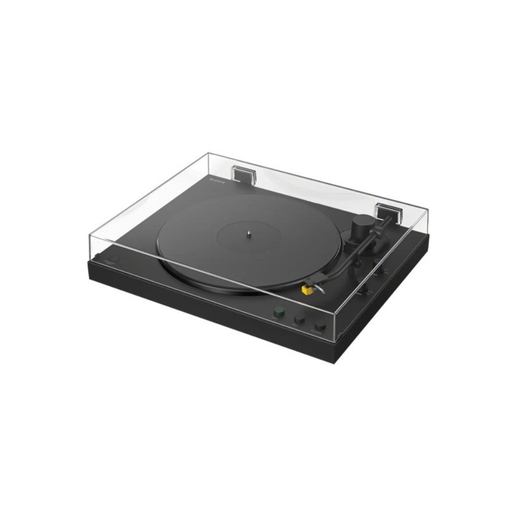 No image available
Bluetooth is mentioned in the product name. Check whether the exact model supports the speed of your records and suits your audio set-up.
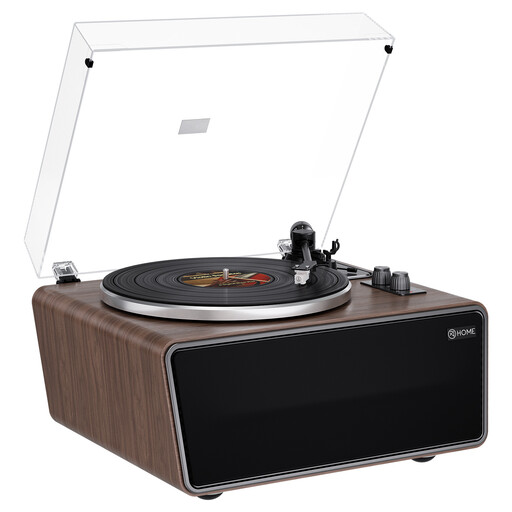 No image available
The product name lists four built-in speakers and an AT-3600L (MM) cartridge. Check whether the model supports the speed of your records and whether the built-in speakers suit your set-up.
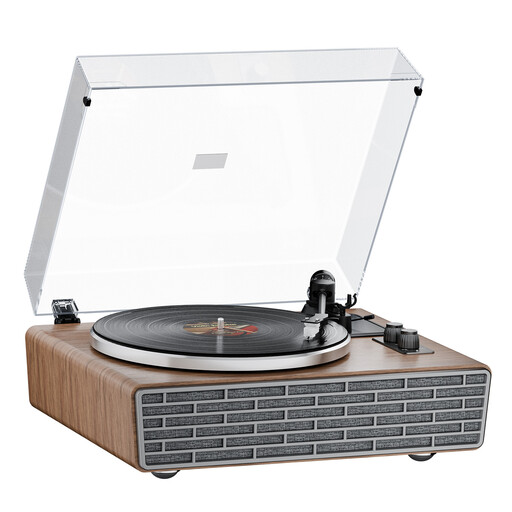 No image available
The product name lists Bluetooth, four built-in speakers and belt drive. Check the supported speed and whether the connections suit your audio set-up.
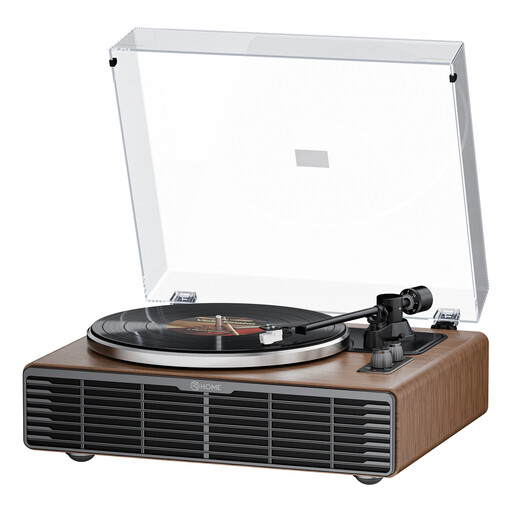 No image available
The product name lists Bluetooth, four speakers and an AT3600L cartridge. Check whether the model supports the speed you need and whether its connections work with your existing equipment.
Not without checking your records first. The Audio-Technica AT-LP70XBT and Denon DP-300F support 45 rpm, but records that require 78 rpm need a suitable speed setting. Shellac records also need a suitable stylus.
Choose a level, horizontal surface away from speakers that cause vibrations. This is Audio-Technica’s set-up advice for the AT-LP70XBT; check the manual for the model you choose too.
It depends on your turntable, amplifier and speakers. Check whether the turntable has a phono preamp and whether your equipment has a suitable input. The Dutch Consumers’ Association points out that you may need a separate phono preamp if neither the turntable nor the amplifier has one. The Rega Planar 1 manual specifies that it must be connected to a suitable phono stage.
Contact the retailer. According to the Dutch government, the retailer can’t refer you to the manufacturer if a product is faulty. When you buy remotely, you’re also entitled to a 14-day cooling-off period in many cases. This cooling-off period is separate from your rights if a product isn’t of satisfactory quality.