
Vintage soundtrack collector
First, work out whether your records are LPs, singles or 78 rpm records. This will help you check that the speed and stylus are right for your collection.


Start by checking whether your soundtrack records are LPs, singles or 78 rpm records, and which inputs your amplifier or speakers have. For LPs and singles, an automatic turntable with a switchable phono preamp can make connecting everything easier; 78 rpm shellac records also need the right speed and a suitable cartridge or stylus. Place the turntable on a flat, stable surface away from speakers that cause vibrations.
First, work out whether your records are LPs, singles or 78 rpm records. This will help you check that the speed and stylus are right for your collection.
You want to connect your turntable to your existing amplifier or active speakers, and find a stable spot where vibrations from the speakers won’t disrupt playback.
You might prefer automatic operation, or want to record your soundtracks too. These are different requirements, and not every turntable offers both.
Start by checking the records and audio equipment you already own. Then choose a turntable that works with both, and decide whether you need features such as automatic operation or recording.
| Priority | What to look for | Who is this important for? |
|---|---|---|
| Connecting to your audio set-up | Check whether you use a PHONO input, a standard LINE or AUX input, or active speakers. Also check the output and phono/line switch on the model you’re considering. | If I want to use my existing amplifier or speakers, I need to know which connections are compatible. Around 28% of consumers say connectivity is their main buying concern. |
| A stable spot in your loft | Look for a level surface with enough room for the turntable and cables. Keep it away from speakers that cause vibrations. | I want to set up my turntable without speaker vibrations affecting it. Around 22% of consumers prioritise a position with minimal vibration. |
| Compatibility with vintage records | Check the required speed and, for shellac records, whether the cartridge or stylus is suitable for them. | If I want to play vintage soundtracks, I need to know that the speed and stylus are right for my records. Around 22% of consumers make record compatibility their main concern. |
| Operation and stylus replacement | Check what happens automatically and whether the stylus or cartridge can be replaced on the exact model. | I don’t want to have to operate the tonearm manually every time, so I check exactly what the automatic features do. Around 17% of consumers prioritise ease of use. |
| Digitising soundtracks | If you want to create digital files, check whether the exact model can record and which media and file formats it supports. | I also want to keep my soundtracks as digital files, so I’m looking for a turntable with a recording function. Around 11% of consumers say digitising is their main buying concern. |
According to the Dutch Consumers’ Association, suitcase-style record players often sound worse than standard turntables. A striking design alone doesn’t tell you whether a turntable is right for your records and how you plan to use it.
Compare its controls, tonearm and cueing lever with those of a standard turntable. Don’t choose based on looks alone.
‘Vintage’ doesn’t tell you which speed your record needs. And having a 78 rpm setting doesn’t confirm that the supplied cartridge is suitable for shellac.
Check the format and material of your records. For shellac records, check separately whether the turntable and your chosen stylus or cartridge are suitable; Ortofon recommends a larger stylus profile for these records.
A standard turntable doesn’t automatically make a complete playback system. The correct output setting depends on the input you’re connecting it to.
Before you buy, map out the connection from the turntable through any phono preamp to your amplifier or speakers.
According to Sony Netherlands’ specifications, the Sony PS-LX3BT is an automatic option for 33⅓ and 45 rpm records, with Bluetooth and a switchable phono output.
According to Audio-Technica, the AT-LP70XBT combines automatic playback at 33⅓ and 45 rpm with Bluetooth, a wired connection and a switchable phono preamp.
Of the models listed, the Denon DP-400 has a 78 rpm setting, while the DP-450USB adds USB recording, according to Denon. The DP-300F offers automatic operation at 33⅓ and 45 rpm.
This selection includes Bluetooth turntables and models with built-in speakers. For vintage records, always check that the stated speed and cartridge are right for your collection.
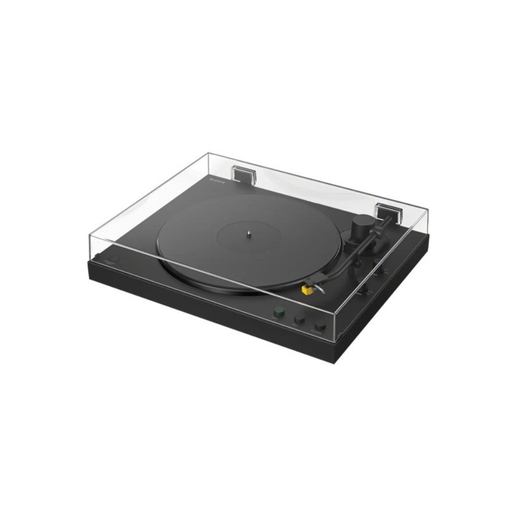 No image available
Worth considering if Bluetooth is part of your existing audio set-up. Before you buy, check which speeds and connections are right for your records and equipment.
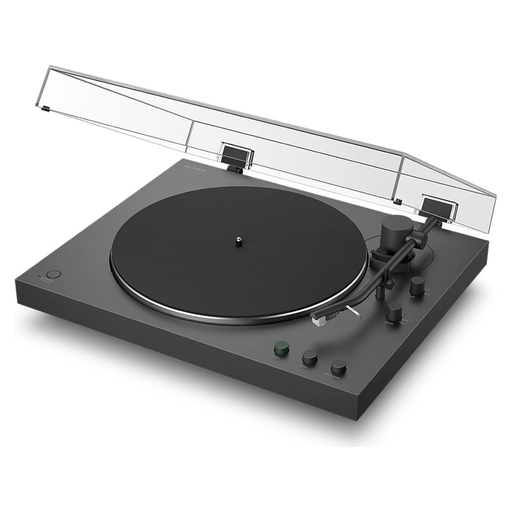 No image available
Bluetooth is included in the product name. Check this model’s specifications and compare its connections with your amplifier or speakers before deciding.
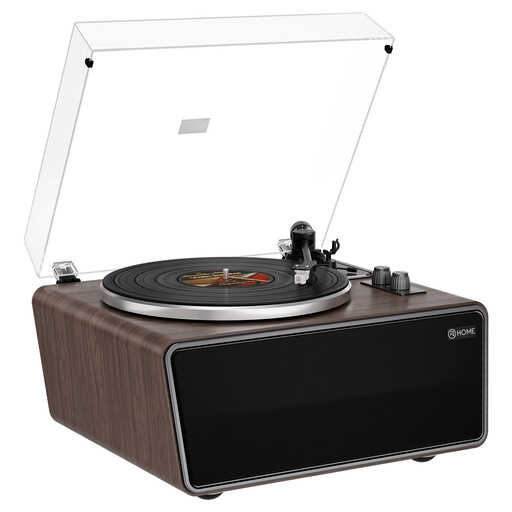 No image available
The product name describes an all-in-one model with built-in speakers. Check that its connections suit the way you want to listen.
The product name lists four built-in speakers, a phono preamp and an AT-3600L (MM) cartridge.
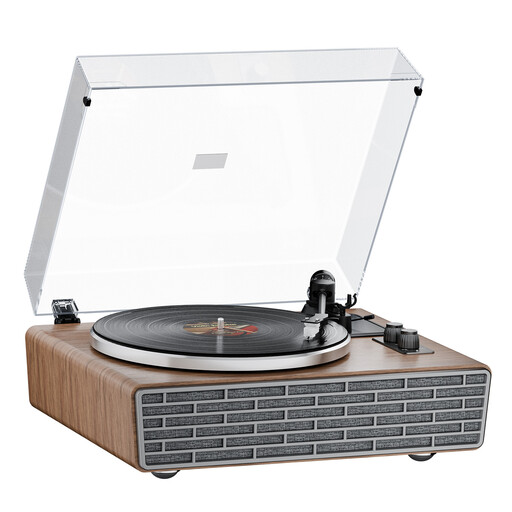 No image available
This model may suit a set-up where built-in speakers are a priority. Check the connections if you also want to use external audio equipment.
The product name lists Bluetooth, a transparent dust cover, belt drive and an AT cartridge.
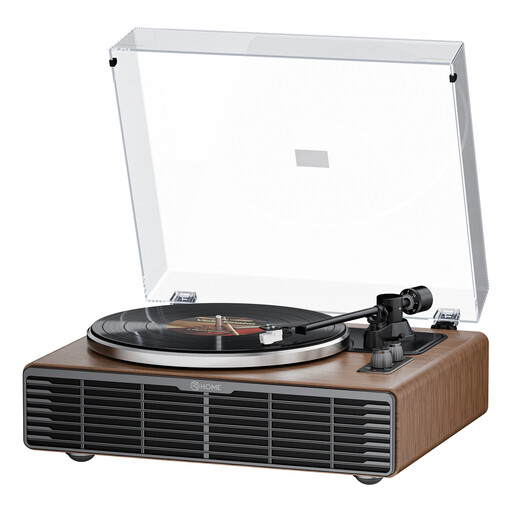 No image available
The product name lists built-in speakers and an RCA output for use with external audio equipment. Check which output setting is right for your equipment.
The product name lists Bluetooth, four speakers, belt drive, an AT3600L cartridge and a transparent dust cover.
It depends on your speakers’ inputs and the turntable’s output setting. For a standard LINE input, Audio-Technica says a turntable with a switchable phono preamp should be set to LINE; for a compatible PHONO input, use PHONO.
No. Also check that the chosen turntable takes a suitable stylus or cartridge. Ortofon recommends a larger stylus profile for 78 rpm shellac records.
Choose a flat, stable spot away from speakers that cause vibrations. Follow the instructions for your exact model when setting it up; for the AT-LP70XBT, Audio-Technica describes steps including fitting the drive belt and connecting the correct audio output.
For a consumer purchase in the Netherlands, the seller must help resolve a fault; the Dutch government states that there is no fixed statutory guarantee period. For distance sales from a business, you will usually also have a 14-day cooling-off period. This doesn’t affect any rights you may have if the product is faulty.