First, match your turntable to the speeds and materials of your records, and to the inputs on your audio equipment. For standard 33⅓ and 45 rpm records, an automatic turntable with the right phono or line connection can make operation simpler. For 78 rpm shellac records, you’ll also need a suitable stylus and the correct settings. Place the turntable on a stable surface and follow your speaker manufacturer’s guidance on positioning them near a wall.
Who is this advice for?
Listener with limited space
Your speakers need to sit close to a wall, and you’re looking for a stable spot for your turntable without placing it on or right next to a vibrating speaker. Audio-Technica warns that vibrations can affect how a turntable works.
Listener looking for an easy start
You mainly play records at 33⅓ or 45 rpm and don’t want to operate the tonearm yourself every time. Automatic models from brands including Audio-Technica and Sony are worth comparing for ease of use and connectivity.
Collector of older spoken-word records
First, you want to find out whether your records are 78 rpm shellac. Audio-Technica warns that a standard LP stylus is unsuitable and can damage both the record and the cartridge.
What should you look for?
First, check your record formats and make sure you have space for a stable setup. Then choose controls and connections that work with your speakers and amplifier.
| What to consider |
What should you look for? |
Who is this important for? |
| Positioning and vibrations |
Follow the positioning guidance for your speakers and place the turntable level on a stable surface, not on a vibrating speaker. |
If space is limited and the speakers need to sit close to the turntable or wall, you’ll want to avoid vibrations and unsuitable positioning. Around 36% of consumers prioritise placement. |
| Easy operation |
Check whether the turntable starts and returns automatically, and whether it supports the speeds your records use. |
Do you mainly play 33⅓ or 45 rpm records and prefer not to operate the tonearm yourself every time? Around 29% of consumers put ease of use first. |
| Connecting to your system |
Check the inputs on your speakers or amplifier, and whether the turntable has a phono preamp. |
If you want to keep using your existing speakers, it’s important to have a suitable signal path. Around 21% of consumers prioritise connecting to their existing system. |
| 78 rpm records |
Check whether the record is shellac, and make sure the turntable has a 78 rpm setting, a suitable stylus and the required tonearm adjustment. |
If you have older shellac records, a 78 rpm setting alone isn’t enough. Around 14% of consumers prioritise this compatibility. |
Common pitfalls
-
Assuming a 78 rpm setting means full shellac compatibility
A standard LP stylus can damage a shellac record and the cartridge. So, a turntable that plays at 78 rpm won’t necessarily have the right stylus for this type of record.
Before playing a record, check its material, stylus compatibility and the tonearm settings required.
Shellac records may need a suitable specialist stylus, which means buying an extra component.
-
Choosing a turntable without considering speaker placement
Vibrations from a speaker can affect the turntable. The distance from the wall may also matter for speaker placement.
Plan where to put the turntable and speakers together, and follow the guidance for your specific speaker model. You may need a different surface or setup.
-
Treating a phono output like a standard speaker output
What you need depends on whether the turntable has a phono preamp and on the inputs of the rest of your system. Passive speakers also need an amplifier.
Check the entire signal chain and the phono or line setting before you order. Depending on your equipment, you may need a phono preamp or amplifier.
Brands to compare
Audio-Technica
Audio-Technica offers automatic and manual models for a range of record formats.
- According to Audio-Technica, the AT-LP70XBT is automatic and supports 33⅓ and 45 rpm; the AT-LP120XBT-USB also supports 78 rpm.
- The AT-LP120XBT-USB’s 78 rpm setting doesn’t make the supplied AT-VM95E LP stylus suitable for shellac. Check which stylus you need for those records. These specifications don’t tell you whether speakers can be placed right next to the turntable.
Sony
Sony describes the PS-LX3BT as an automatic turntable with Bluetooth and a built-in phono preamp.
- Sony lists support for 33⅓ and 45 rpm, along with a PHONO/LINE switch.
- The listed speeds don’t include 78 rpm, and the specifications don’t mention a removable headshell. This isn’t an independent sound comparison.
Denon
Denon describes the DP-300F as a fully automatic belt-drive turntable for 33⅓ and 45 rpm.
- Denon lists a switchable phono preamp; the tonearm returns automatically when playback ends.
- The listed speeds don’t include 78 rpm. Positioning the turntable next to speakers is a separate consideration.
Pro-Ject
The Debut EVO 2 is an option if you want to put together a separate analogue system.
- Pro-Ject lists a damped platter, a carbon tonearm and RCA connections.
- These features don’t prove that the turntable will be more resistant to speaker vibrations in a particular room. Also check what phono amplification you’ll need and whether the version is suitable for the Netherlands.
Rega
The Planar 1 Plus is an alternative if you’re setting up separate speakers.
- According to Rega, this model has an integrated MM phono preamp, so you may not need a separate phono stage.
- The published information doesn’t demonstrate an advantage when speakers are nearby, or suitability for 78 rpm shellac records. Check that the version is suitable for the Netherlands and will connect to your amplifier.
Turntables at Joybuy
These turntables are aimed at records played at 33⅓ or 45 rpm, and are designed to work with integrated or separate audio equipment. Check the product details and your own setup, especially if you have 78 rpm shellac records or need to position speakers close to the turntable.
 No image available
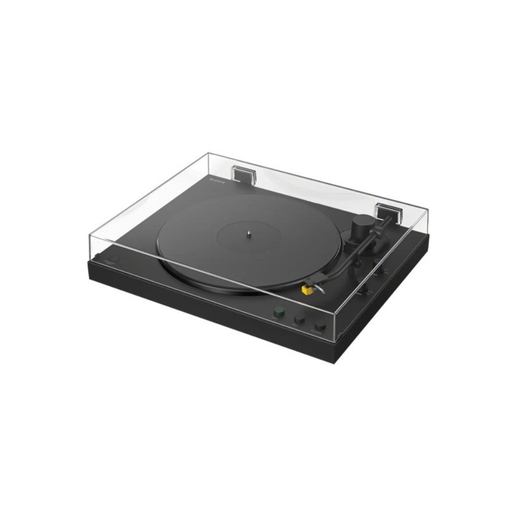
Sony PS-LX5BT
Suited to spoken-word records at 33⅓ or 45 rpm if you’re looking for automatic operation.
The product description mentions automatic tonearm return, a PHONO/LINE switch and Bluetooth. Check that the connections work with your speakers or audio system.
View at Joybuy
 No image available
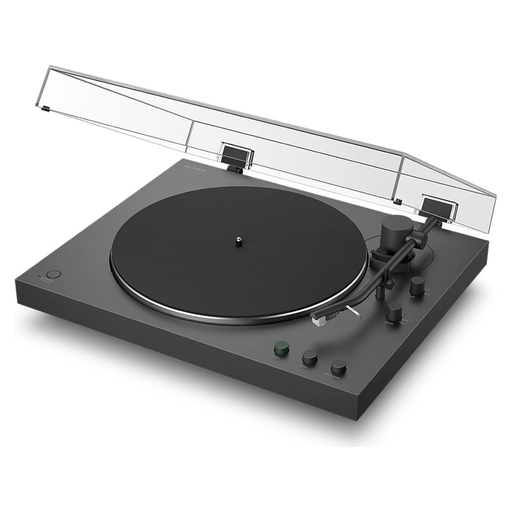
Sony PS-LX3BT
Suited to spoken-word records at 33⅓ or 45 rpm if you want automatic operation.
Sony lists Bluetooth, a built-in phono equaliser with a PHONO/LINE switch, and automatic tonearm return. The listed speeds are 33⅓ and 45 rpm.
View at Joybuy
 No image available
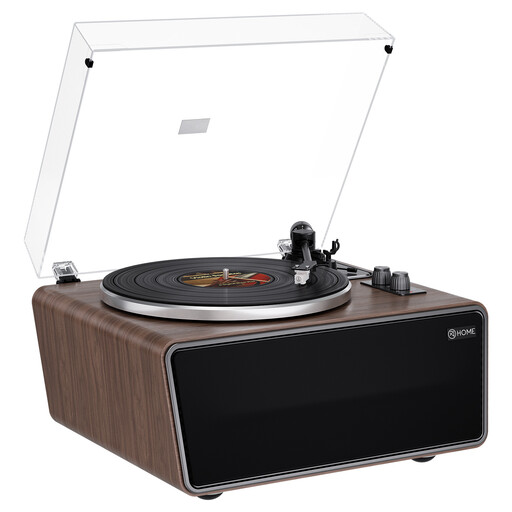
XJ-HOME XJ-H01
Suited to anyone looking for an all-in-one setup for records at 33⅓ or 45 rpm.
The product name mentions four built-in speakers and a phono preamp. The description lists AUX and RCA outputs for external speakers.
View at Joybuy
 No image available
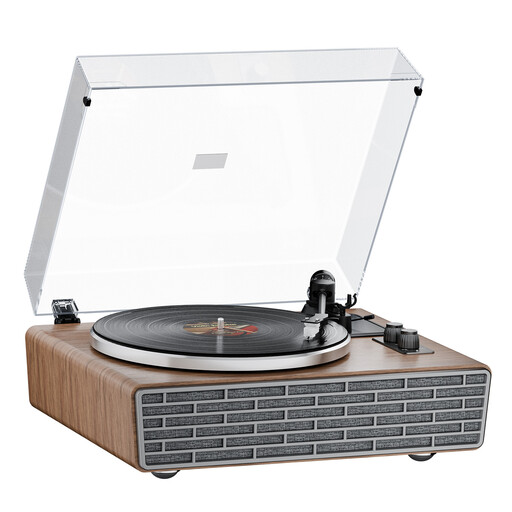
XJ-HOME XJ-H02
Suited to anyone who wants built-in speakers alongside connection options for external equipment.
The product name lists Bluetooth, four built-in speakers, belt drive and an AT cartridge. The description mentions 33⅓ and 45 rpm, and RCA outputs for an external amplifier or active speakers.
View at Joybuy
 No image available
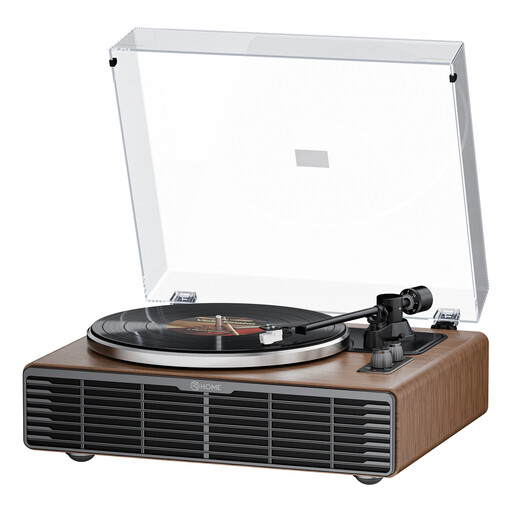
XJ-HOME XJ-H03
Suited to anyone who wants to play records at 33⅓ or 45 rpm, with built-in speakers and connections for external equipment.
The product name mentions belt drive, an AT3600L cartridge and four speakers. The description lists Bluetooth and RCA Phono/Line outputs for external equipment.
View at Joybuy
Frequently asked questions
Can speakers sit next to the turntable if they need to be close to the wall?
Avoid letting a speaker transmit vibrations directly to the turntable or the surface it sits on. For the distance from the wall, follow the guidance from the manufacturer of your speaker model. ELAC suggests a front- or downward-firing port as a possible option when a speaker needs to sit close to a wall, but this isn’t guaranteed to work for every model.
Can a turntable with a 78 rpm setting play my old spoken-word records straight away?
Not until you’ve checked the record material and the stylus. For 78 rpm shellac records, Audio-Technica warns against using a standard LP stylus and describes a suitable specialist stylus and adjusted tonearm settings. Check that the whole setup is right for your record and turntable.
Do I need an amplifier as well as a turntable?
That depends on your speakers and the inputs on your equipment. A built-in phono preamp can make the signal suitable for a standard audio input, but passive speakers still need an amplifier. Check the entire connection chain before making your choice.
What should I expect in the Netherlands if a product is faulty or I buy online?
For a faulty product, the seller must provide an appropriate solution under guidance from the Dutch government; there is no fixed statutory warranty period for all products in the Netherlands. When you buy online from a business, you’ll usually have 14 days to change your mind, subject to legal exceptions. An additional manufacturer’s warranty doesn’t replace your statutory rights.


