
Listeners with old spoken-word records
If you want to play old records, first check whether your collection includes 78 rpm shellac records. Audio-Technica recommends using a suitable stylus for shellac rather than a standard LP stylus.


The right turntable depends first on the material and speed of your records. A player that supports 78 rpm isn’t automatically suitable for shellac records; you’ll also need the right stylus. Then choose between built-in speakers, connecting to your existing audio system or USB for digitising, and check that the controls suit the way you like to listen.
If you want to play old records, first check whether your collection includes 78 rpm shellac records. Audio-Technica recommends using a suitable stylus for shellac rather than a standard LP stylus.
If you want to listen without separate speakers, or prefer to use your existing audio equipment, compare the connections you need and whether you want built-in speakers. Lenco and Audio-Technica describe a range of connection options for their models.
If you want to digitise spoken-word records, USB is worth considering. Also check that the speed and stylus suit the record material; a recording connection doesn’t replace these checks.
Start with the record material and the speed you need. Then decide how you want to listen, operate the turntable and, if needed, connect it to a computer.
| What to consider | What should you check? | Who is it most important for? |
|---|---|---|
| Record and stylus compatibility | Check the record material and speed. For shellac records, ask whether the stylus and set-up are suitable. Audio-Technica advises against using a standard LP stylus for shellac. | If you have old records, first find out what you need to play them safely. Around 36% of consumers give record and stylus compatibility top priority. |
| Speakers and connections | Check whether you want built-in speakers or whether the turntable will work with the inputs and speakers in your audio system. | If you want to start listening straight away in your hobby room, check whether your existing equipment will do the job or whether you need built-in speakers. Around 29% of consumers prioritise a working room set-up. |
| Ease of use | Check separately whether starting, stopping and returning the tonearm are automatic. Lenco states that the LS-50GY does not have automatic tonearm return. | If you listen regularly and want as few manual steps as possible, check what the turntable does automatically. Around 21% of consumers give ease of use top priority. |
| Digitising | Check whether the turntable has USB and whether its speed and stylus suit the records you want to record. | If you want to save recordings on a computer, a suitable recording connection can help, but don’t overlook record compatibility. Around 14% of consumers prioritise digitising. |
The right speed alone doesn’t make a standard LP stylus suitable for shellac. Audio-Technica recommends using a suitable 78 rpm stylus.
First identify the record material, then check the stylus and set-up for the exact model.
Shellac records may require a separate, compatible stylus.
A turntable without built-in speakers needs to be connected to suitable audio equipment. The connections and phono preamp must be compatible with that equipment.
Before buying, map out the full connection chain, including speakers and available inputs.
Depending on your existing set-up, you may need active speakers, an amplifier or a suitable phono preamp.
Lenco states that the LS-50GY has an automatic stop function, but no automatic tonearm return.
Check separately whether the turntable starts and stops automatically and returns the tonearm, if you want to keep manual steps to a minimum.
The AT-LP60X is an automatic turntable for 33⅓ and 45 rpm records. According to Audio-Technica, the manual AT-LP120XUSB also supports 78 rpm and USB.
According to Lenco, the LS-50GY is designed for a set-up with built-in speakers and offers RCA, USB and three speeds.
The PS-LX310BT is worth considering if you want automatic operation and a Bluetooth connection.
According to Denon, the DP-300F is a fully automatic turntable designed to connect to an audio system.
The Planar 1 Plus is an option for a separate audio set-up, with a built-in phono stage.
These product picks are suited to a hobby room set-up with built-in speakers or a connection to other audio equipment.
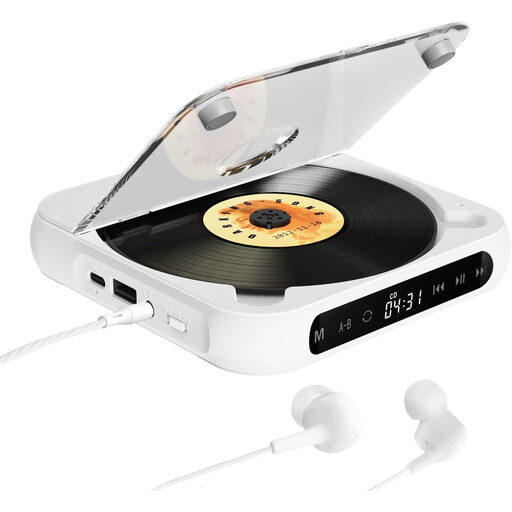 No image available
The product title describes this as a portable CD player, while the product information also lists record speeds. Before buying, check that the device is actually suitable for the records you want to play.
The product information lists Bluetooth 5.3, RCA Phono/Line outputs, USB recording and built-in speakers. The record speeds given are 33⅓ and 45 rpm.
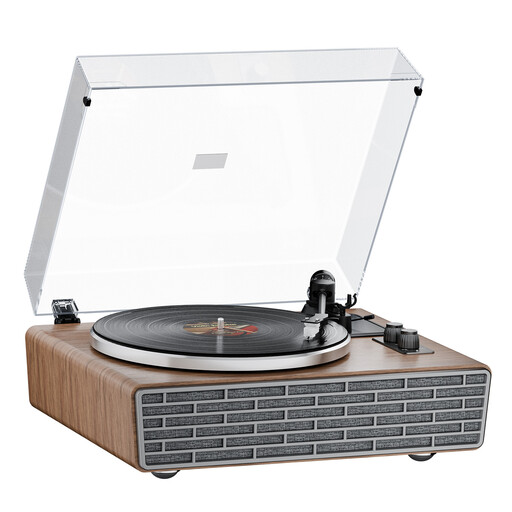 No image available
The product information lists built-in speakers and connection options for listening independently in your hobby room or using other audio equipment.
Listed speeds: 33⅓ and 45 rpm. Also listed: four built-in speakers, Bluetooth, AUX and RCA Phono/Line outputs. For 78 rpm records, check that the exact model and stylus are suitable.
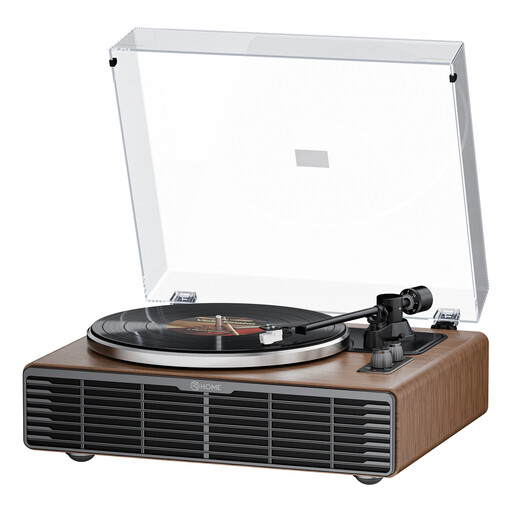 No image available
The built-in speakers let you listen without separate speakers. The product information also lists connections for external audio equipment.
Listed speeds: 33⅓ and 45 rpm. Also listed: four speakers, Bluetooth, AUX and RCA Phono/Line output. For 78 rpm records, check that the exact model and stylus are suitable.
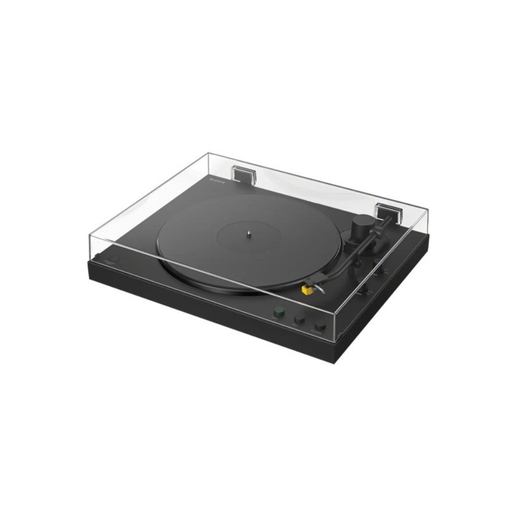 No image available
The product information lists automatic operation and Bluetooth or a wired connection for a set-up with other audio equipment.
Listed speeds: 33⅓ and 45 rpm. Also listed: MM cartridge and PHONO/LINE switch. Check whether you need a different model for 78 rpm records.
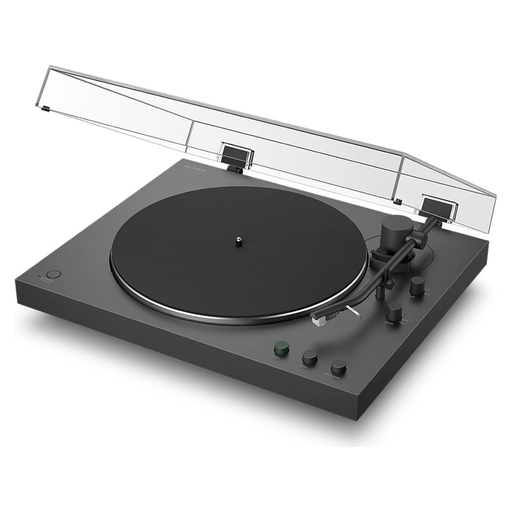 No image available
Automatic operation and a Bluetooth connection are listed for listeners who want to use as few controls as possible with wireless or wired equipment.
Listed speeds: 33⅓ and 45 rpm. Also listed: automatic tonearm return, built-in phono equaliser and PHONO/LINE switch. Check whether you need a different model for 78 rpm records.
No, 78 rpm isn’t the only requirement. Audio-Technica recommends using a suitable 78 rpm stylus for shellac rather than a standard LP stylus. Also check the set-up for your chosen model.
Choose a model with a phono preamp that can be set to line output, then connect it to a suitable input on your audio system or active speakers. Check the settings in the manuals for both devices.
Check the recommended stylus and tonearm settings for the type of record and the specific model. When switching from shellac to 33 or 45 rpm vinyl, Audio-Technica recommends readjusting the stylus and relevant tonearm settings.
When you buy from a seller at a distance, you generally have 14 days to change your mind, with some exceptions. The Dutch Government states that an online purchase from a private individual does not count as a distance purchase in this sense. If a seller supplies a faulty product, you should be able to seek a solution from them.