
A lounge with existing speakers
You want to play live albums through the audio system already in place. Check that the turntable’s connections and any phono preamp are compatible with your speakers and amplifier.


Start with the lounge’s audio system: a standard turntable needs a suitable amplifier and speakers, while an all-in-one model has built-in speakers. Then decide how much automatic operation users need and check that the turntable’s output works with the equipment already in place. A simpler set-up doesn’t automatically make an all-in-one model the right choice if you want a different listening set-up.
You want to play live albums through the audio system already in place. Check that the turntable’s connections and any phono preamp are compatible with your speakers and amplifier.
Several people will be putting records on. Easy start-up and knowing what happens automatically when a record ends can both be important.
You’re looking for a set-up that can play records without separate speakers. Built-in speakers may be useful, while an additional output gives you the option of connecting other equipment later.
Suitable for: a lounge without an existing audio system, where easy set-up is the priority.
Consider: the Consumentenbond warns that all-in-one turntables generally may not sound as good as standard turntables; this is not an assessment of every individual model.
Suitable for: a lounge with compatible speakers or an audio system, especially if several people will be using the turntable.
Consider: match the input and phono or line setting to your existing equipment. Bluetooth is only useful if the receiving equipment can connect to it.
Suitable for: an existing audio set-up where someone can start the record manually.
Consider: auto-lift raises the tonearm at the end of a record, but doesn’t start the record or necessarily return the tonearm to its rest position.
| What to consider | What to check before buying | Who is this most relevant to? |
|---|---|---|
| Connecting to the lounge audio system | Check which inputs your amplifier or active speakers have and whether the turntable offers a suitable phono or line output. | I want to play live albums through the existing speakers without setting up a second set. Connections are the top priority for around 36% of consumers. |
| Use by different people | Check separately whether the turntable starts, stops and returns automatically; auto-lift is not the same as fully automatic operation. | If several people will be putting records on, I want starting and finishing playback to involve as few steps as possible. Ease of use comes first for around 29% of consumers. |
| Playing records without an audio system | Check whether the turntable has built-in speakers and an output for connecting other equipment. | I want to be able to listen straight away in a lounge without an existing system, without first connecting separate speakers. A self-contained set-up is the top priority for around 21% of consumers. |
| Records and stylus maintenance | Check the required playback speed and which replacement stylus type is compatible with the exact model variant. | If my collection includes records with different speeds, I want to know which playback speeds and compatible styli are available. Records and maintenance matter most to around 14% of consumers. |
A standard turntable isn’t a complete listening set-up on its own. Depending on the turntable and the equipment you already have, you may need an amplifier.
Before buying, make a note of the speakers and inputs available, then check which output the turntable offers.
If your existing system doesn’t have compatible speakers or connections, you may need additional audio equipment.
The Consumentenbond warns generally that all-in-one turntables often don’t sound as good as standard turntables; this isn’t a test result for every individual model.
Weigh the convenience of easy set-up against the listening experience you want, and check whether you can connect external equipment.
If the built-in sound doesn’t suit your preferred set-up later on, connecting external equipment may involve extra work.
Auto-lift raises the tonearm at the end of a record, but it doesn’t put the record on for you.
Check separately whether the turntable starts automatically, stops and returns to its rest position.
Whether permission is needed depends on how the space is used and who has access. BumaStemra says permission is required for public use of music, and describes a limited exception for private parties under specific conditions.
Establish whether the lounge is used publicly or privately and check what permission applies; the word ‘shared’ alone doesn’t determine this.
The AT-LP70XBT is designed for an automatic set-up with external speakers, connected by cable or Bluetooth.
The PS-LX310BT is an option for automatic playback with external Bluetooth audio equipment or a wired sound system.
The LS-50WD is an option for a lounge without an existing audio system.
The DP-300F is designed for an existing audio system, with automatic operation and a switchable phono preamp.
The SL-1500C is a turntable that you start manually, designed for use with an existing audio system.
These product picks are Sony Bluetooth turntables for anyone who wants to play vinyl in a shared lounge. Check that the connections on your chosen variant work with the speakers or audio system already in place.
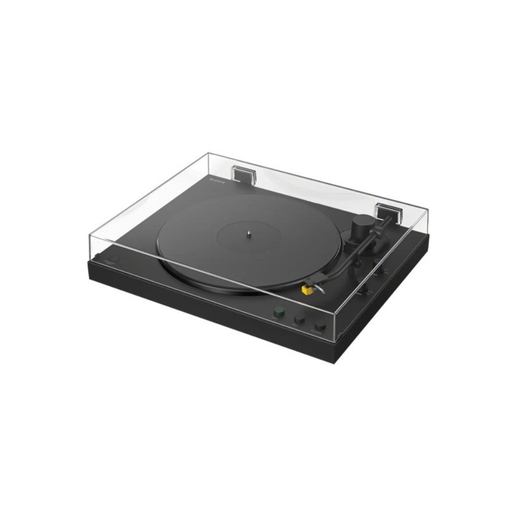 No image available
An option if you’re looking for a Sony turntable with Bluetooth for a shared listening space. Check that the audio equipment you plan to use and its connections are compatible with this variant.
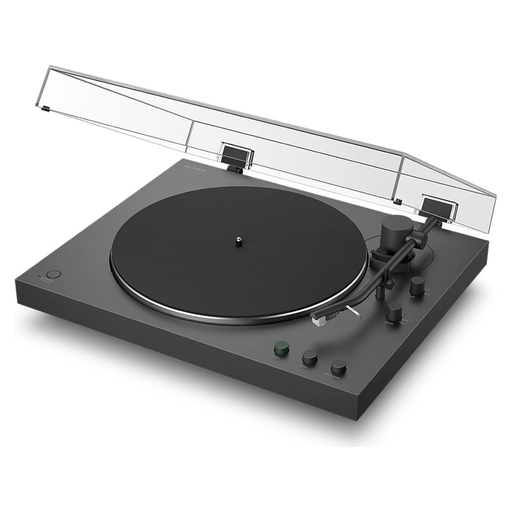 No image available
An option if you’re looking for a Sony turntable with Bluetooth for a lounge used by several people. Check that the audio equipment you plan to use and its connections are compatible with this variant.
That depends on the input on your speakers or amplifier, and the signal the turntable provides. Use a compatible phono connection, or check whether you need a phono-preamped signal for a line input or compatible active speakers. Make sure you check the setting for the exact model variant.
Follow the instructions for your chosen model for positioning, connections, and stylus and cartridge maintenance. When replacing the stylus, check which type is compatible with the exact variant: the VM95 upgrades listed by Audio-Technica apply to the AT-LP70XBT and not automatically to other turntables.
You don’t need an extended warranty to have your statutory consumer rights when buying as a consumer. According to ACM ConsuWijzer, the seller is your point of contact if a product doesn’t meet what you could reasonably expect during normal use. Check whether an extended warranty genuinely offers anything extra; different purchase terms apply when an organisation buys the product.
That depends on the space and the audience. BumaStemra says permission is required to use music publicly, for example in a shop, café or office; according to BumaStemra, a limited exception for private parties applies only under specific conditions. So establish who has access and what permission is needed before playing music publicly.