
A lounge with different users
You want different people to be able to put on a soundtrack without having to operate the tonearm themselves each time. Sony and Denon describe automatic operation on specific models.


Start by considering the records you want to play and the inputs on the audio system already in the lounge; a retro look doesn’t guarantee the right speed or connection. Automatic operation can be handy when several people use the turntable, while a manual model requires more hands-on control. Either way, place it on a stable surface, away from the speakers.
You want different people to be able to put on a soundtrack without having to operate the tonearm themselves each time. Sony and Denon describe automatic operation on specific models.
You want to connect the turntable to speakers or an amplifier that’s already there, and first check whether phono, line or Bluetooth is the right fit. The Consumentenbond points out that a turntable needs a suitable preamplifier.
You want to know which speeds and styli your collection requires, especially if it includes shellac records. Audio-Technica distinguishes between styli for shellac and those for 78 rpm vinyl.
Start with record formats and connections. Then consider how much automation different users need and where the turntable can sit securely.
| What to consider | What to look for | Who is it for? |
|---|---|---|
| Easy operation | Check whether starting, stopping and returning the tonearm are all automatic; autostop alone doesn’t mean it starts automatically too. | If several people use the turntable, you’ll want to put music on without having to operate the tonearm yourself each time. Around 37% of consumers prioritise ease of use. |
| Connection to the audio system | Note the inputs on your amplifier or active speakers, and check the phono or line setting. Also check Bluetooth on the playback device. | If you want to keep using your existing system, you’ll need to know which connection is suitable. For around 27% of consumers, this is their top priority. |
| Speed and stylus | Check the speed markings and the material your records are made from. For shellac records, also check that the stylus is suitable for the record and the cartridge you’ve chosen. | If your collection includes older records, check in advance that both the speed and stylus are right. Around 18% of consumers base their choice on the record formats they own. |
| A stable setup | Check for a level spot away from direct speaker vibrations and busy walkways; then compare the model’s dimensions with the space available. | In a shared lounge, the turntable needs a permanent spot where it won’t get in the way or vibrate right next to a speaker. For around 18% of consumers, this setup is their top priority. |
The appearance won’t tell you which speeds the turntable supports or which stylus is right for your record. Both matter for shellac.
Check the labels on your records and, before buying, confirm the speed, material and stylus compatibility.
If the system isn’t complete, you may need active speakers, an amplifier or a phono preamplifier.
Vibrations and acoustic pressure can disrupt playback. Audio-Technica recommends placing the turntable on a level surface, away from speakers.
Before buying, set aside a stable spot away from the speakers and busy walkways.
The PS-LX310BT is a fully automatic model with switchable pre-amplification and Bluetooth.
The DP-300F is designed for fully automatic operation; the DP-450USB is worth considering if you need 78 rpm playback.
The E1 Phono is a manual option with a pre-fitted cartridge and built-in, switchable phono preamplifier.
The L-3808 is a manual option for anyone looking for adjustment features or the ability to record via a computer.
The AT-LP60XBT is a fully automatic model with Bluetooth and a wired connection option.
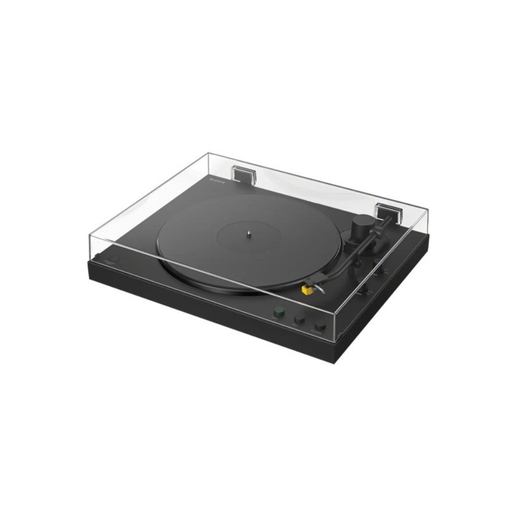
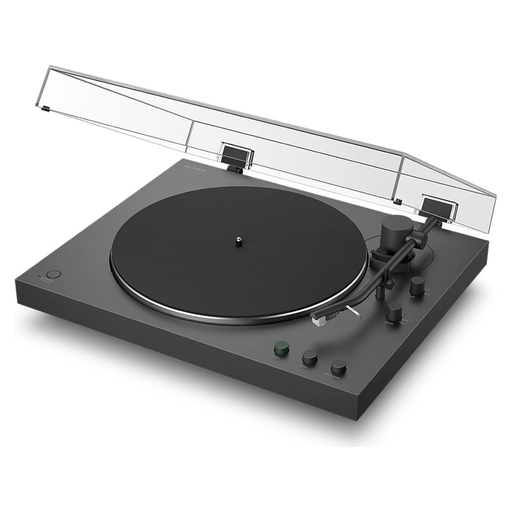
The Joybuy options shown are automatic Sony turntables with Bluetooth, designed for shared use and standard LPs and singles. Before buying, check that the speed and connection on the exact model suit your records and audio system.
 No image available
Automatic operation suits a lounge where different people use the turntable. Check that this model’s connection is compatible with your existing amplifier or speakers.
 No image available
Automatic operation and tonearm return make it suitable for use by different people. Check whether Bluetooth or the wired connection is compatible with the audio equipment in your lounge.
Not if the turntable has a built-in phono preamplifier switched on and the speakers have a suitable line or aux input. If there’s no pre-amplification anywhere in the connection chain, you’ll need a suitable separate phono preamplifier. Check the connections before buying.
No, first check that the turntable supports 78 rpm. Shellac records also need a suitable stylus; Audio-Technica distinguishes between styli for shellac and those for 78 rpm vinyl.
Place the turntable on a level surface, away from speakers, to avoid vibrations and acoustic pressure. Keep the stylus clean according to the manufacturer’s instructions: Audio-Technica warns that built-up dirt can reduce playback quality and may damage the stylus assembly.
For an online consumer purchase, you generally have a 14-day cooling-off period from the date you receive the item, subject to legal exceptions. According to ACM ConsuWijzer, you also have a legal guarantee: if the product doesn’t perform as you could reasonably expect under normal use, the seller is responsible for providing a suitable solution.
It depends on how the music is used. Ondernemersplein and BumaStemra explain that a licence is required for using music in a business, for example when customers or staff can hear background music. The fact that a lounge is shared doesn’t, by itself, make it clear whether this applies.