For a space with different users and standard 33⅓ and 45 rpm records, an easy-to-use turntable with the right speaker connections is a practical choice. For 78 rpm records, you’ll also need to check the record material and use a compatible stylus: a 78 rpm setting alone isn’t enough. The Consumentenbond says that suitcase turntables often sound worse than standard turntables; this is a general assessment, not a test of every individual model.
Who is this choice right for?
A lounge with different users
If several people will be starting records, automatic operation can reduce the number of times they need to handle the tonearm. Also check how the turntable connects to the room’s speakers; Sony and Denon describe automatic models for 33⅓ and 45 rpm records.
A listening group that wants speech to be clear
If several people will be listening, it’s worth checking the room’s speaker setup first. The Consumentenbond notes that suitcase turntables often sound worse than standard turntables.
Someone looking after old 78 rpm recordings
Check the record speed and material before choosing a turntable. Audio-Technica Support stresses that 78 rpm records also need a stylus that’s compatible with the record material.
What should you look for when choosing?
Fully automatic with external speakers
Choose this when: different people will be playing 33⅓ and 45 rpm records and you already have speakers or an audio system.
Bear in mind: the speakers and any amplification must be compatible with the turntable. Sony describes one-button operation for the PS-LX3BT; Denon lists automatic operation for the DP-300F.
Manual, including for 78 rpm records
Choose this when: you can handle records carefully and speed settings, connections or stylus choice matter to you.
Bear in mind: manually cueing a record takes care. For 78 rpm records, both the speed and stylus must be suitable; Audio-Technica Support highlights the importance of using the right stylus for the record material.
All-in-one suitcase turntable
Choose this when: quick setup and fewer separate components matter more than having a setup with separate speakers.
Bear in mind: the Consumentenbond says that suitcase turntables often sound worse than standard turntables. This is a general caveat, not a test of an individual model.
Choose the controls and speaker setup first. Then check that the speeds suit your collection and, for 78 rpm records, that the stylus is compatible too.
| What to consider |
What should you check? |
Who is this important for? |
| Easy operation |
Check whether the turntable starts and stops automatically or returns the tonearm, and whether it supports the speeds of your records. |
If different people will be using the turntable, I want to minimise handling of the tonearm. Around 36% of consumers make ease of use their top priority. |
| Listening with several people |
Check whether suitable speakers are available and whether the turntable can connect to them. |
When several people will be listening, I want to know whether the speaker setup suits the room. Around 29% of consumers put a shared listening setup first. |
| Old 78 rpm records |
Check the speed and record material, and make sure the stylus is compatible with the specific cartridge and record. |
If I want to play old 78 rpm recordings, both the speed and stylus must be suitable. Around 21% of consumers make compatibility with old recordings their top priority. |
| Connections and equipment |
Make a note of the speakers and inputs you have; check that phono pre-amplification and amplification for passive speakers are covered. |
With an existing setup, I want to avoid incompatible connections or missing equipment. Around 14% of consumers put compatibility with their existing setup first. |
Common buying mistakes
-
Assuming a 78 rpm setting means a turntable is fully compatible with old records
The right speed isn’t the only requirement: Audio-Technica Support also distinguishes between styli for different record materials.
Find out what material the record is made from and check which stylus is compatible with the specific cartridge before playing it.
Some 78 rpm records may need a separate, compatible stylus.
-
Expecting a standard turntable to drive passive speakers directly
A phono pre-amplifier doesn’t provide the amplification that passive speakers need.
Map out the entire signal chain before buying: turntable, phono pre-amplification, amplification and speakers. Check which components you already have.
Depending on your existing setup, you may need active speakers or an amplifier.
-
Choosing a suitcase turntable just because it’s quick to set up
The Consumentenbond says that suitcase turntables often sound worse than standard turntables. This is a general assessment, not a test of every individual model.
Weigh up the quick setup against the listening experience you want, and check how the turntable sounds in the room where you plan to use it before making your choice.
Brands to consider as a reference
Sony
The PS-LX3BT is an automatic option with Bluetooth for a collection of 33 and 45 rpm records.
- Sony lists one-button operation and a wireless connection for this model.
- Check the speaker connection, and don’t assume 78 rpm support unless it’s listed in the model specifications.
Denon
The DP-300F is designed for automatic operation with an existing audio system.
- Denon lists a switchable phono pre-amplifier, automatic tonearm operation and 33⅓ and 45 rpm playback for this model.
- Denon doesn’t list a 78 rpm setting for the DP-300F.
Audio-Technica
The AT-LP120XUSB is a manual option for collections with records at multiple speeds.
- Audio-Technica lists three speeds, USB and a switchable pre-amplifier for this model.
- According to Audio-Technica Support, 78 rpm records also need a stylus that’s compatible with the record material.
Pro-Ject
The E1 Phono is a manual 33/45 rpm option with a built-in phono pre-amplifier.
- Pro-Ject lists a dust cover and connections for active speakers or an amplifier.
- According to the Dutch product page, this model isn’t fully automatic.
Lenco
The Classic Phono TT-116BK combines a turntable with built-in speakers.
- Lenco lists RCA and headphone outputs, and playback at 33, 45 and 78 rpm.
- The Consumentenbond’s general caveat about suitcase turntables isn’t an independent test of this specific model. Also check that the stylus is compatible with the 78 rpm record in question.
Joybuy products for 33 and 45 rpm records
These Joybuy products are automatic turntables for 33 and 45 rpm records, designed for use with external speakers or an audio system.
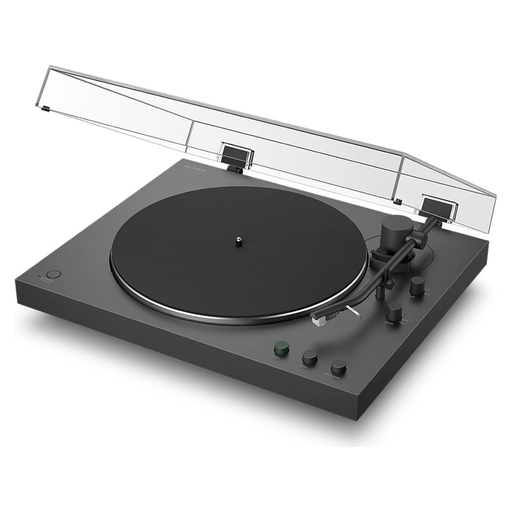
 No image available
Sony PS-LX5BT
Automatic operation makes it a good fit for a room where different people will be starting 33 and 45 rpm records.
Supports 33 and 45 rpm. The product description lists Bluetooth and a PHONO/LINE switch with a built-in phono pre-amplifier.
Joybuy
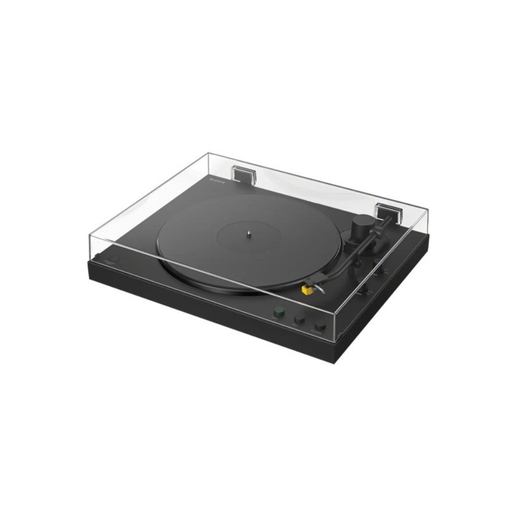
 No image available
Sony PS-LX3BT
Automatic operation can reduce the need to handle the tonearm when several people are starting records.
Supports 33 and 45 rpm. The product description lists Bluetooth, a built-in phono equaliser and a PHONO/LINE switch.
Joybuy
Frequently asked questions
Can I play any spoken-word record on a turntable with 33 and 45 rpm settings?
No. Check the speed specified for the record. To play a 78 rpm record, you’ll need a turntable with that speed and a stylus that’s compatible with the record material.
How do I connect a standard turntable to the lounge audio system?
Check whether the turntable or audio system has a phono pre-amplifier. A switchable built-in pre-amplifier can feed a suitable line input; passive speakers also need an amplifier. Follow the manuals for the devices you choose.
How can I avoid problems with records and the stylus when several people use the turntable?
Agree on who will handle the records and check that the stylus is clean and suitable. An automatic tonearm reduces the handling needed to start and stop playback, but it doesn’t replace checking the speed and stylus compatibility.
Does a two-year manufacturer’s guarantee mark the limit of my rights?
No. For a purchase by a consumer in the Netherlands, the seller is responsible for the statutory guarantee. ACM ConsuWijzer explains that the law doesn’t specify a fixed two-year guarantee period; what you can reasonably expect from the product is what matters.
Can I play copyright-protected spoken-word recordings in any shared lounge?
It depends on the circumstances: private use and making a work available to the public are not the same. The Dutch government says that permission is required to make copyright-protected work available to the public. So establish whether the lounge and intended use are public, and which rights apply to the recording and text; owning the record doesn’t settle the question.


