What should you consider?
First, decide where the turntable can sit securely. Then check how it connects to your speakers, and choose the controls and speeds that suit your record collection.
| What to consider |
What to look for |
Who is this important for? |
| Stable positioning |
Decide where the turntable and speakers will go, and check that there’s enough space and that the surface is stable. |
If I listen in an open-plan living space, I want to be able to put the turntable in a suitable spot. Around 36% of consumers give stable positioning top priority. |
| Connections |
Check the phono or line output, the input on your amplifier or active speakers, and whether Bluetooth is supported. |
If you want to keep using your existing audio equipment, check that the connections are compatible. Around 29% of consumers put connectivity first. |
| Controls |
Check whether the specific model starts, stops and returns automatically, or whether you need to operate the tonearm yourself. |
If I want to start an album with as few steps as possible, automatic operation may appeal. Around 21% of consumers choose controls as their main consideration. |
| Records and maintenance |
Check the supported speeds, which stylus is suitable for your records, and which parts need maintenance. |
If you own different record formats, you’ll want to know whether the turntable supports the speeds you need and which parts require attention. Around 14% of consumers start by considering compatibility with their collection and maintenance. |
Turntables at Joybuy
These models are designed for automatic playback and Bluetooth, and also offer a wired connection option. Check that each model’s connections are compatible with your existing equipment; according to Sony, neither model supports 78 rpm records.
 No image available
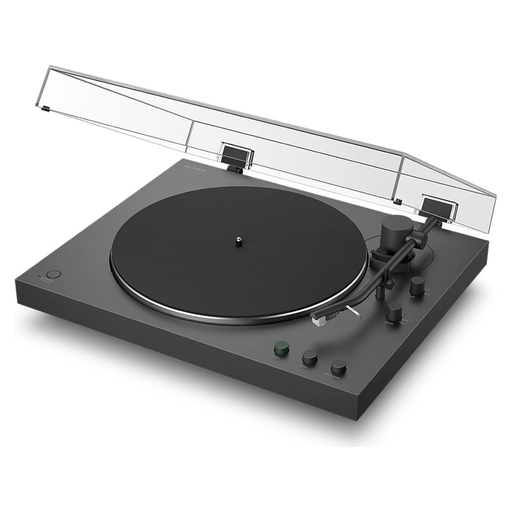
Sony PS-LX3BT Bluetooth turntable
Ideal if you want automatic playback and the option to use Bluetooth or a wired connection.
The product description lists belt drive, a built-in phono equaliser with a PHONO/LINE switch, and speeds of 33⅓ and 45 rpm. Not suitable for 78 rpm records, according to Sony.
Joybuy
 No image available
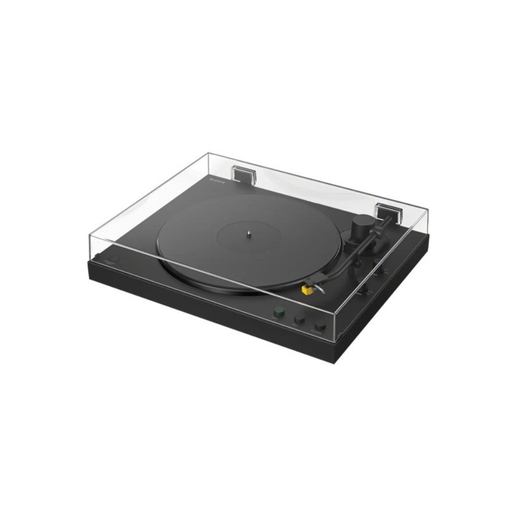
Sony PS-LX5BT Premium Bluetooth turntable
Ideal if you want automatic playback and the option to use Bluetooth or a wired connection.
The product description lists belt drive, a built-in phono preamp with a PHONO/LINE switch, and speeds of 33⅓ and 45 rpm. Not suitable for 78 rpm records, according to Sony.
Joybuy
Frequently asked questions
Can I connect a turntable directly to my active speakers?
Yes, if the speakers have a suitable line input and the turntable has a built-in phono preamp. Check the connections on both devices. If the turntable doesn’t have a built-in preamp, you’ll need a suitable phono stage elsewhere in the signal chain.
What can I do if the sound is distorted by vibration or hums?
First, check that the turntable is stable and that the furniture or speakers aren’t transferring vibrations. If you hear a hum, check the cables and connections before replacing any parts or buying an isolation platform.
What ongoing costs and warranty rights should I consider?
Allow for stylus maintenance and, on belt-drive models, possible belt replacement; follow the instructions for your specific model. In the Netherlands, statutory consumer guarantees apply alongside any manufacturer’s warranty. If a product doesn’t perform as you could reasonably expect under normal use, the retailer must offer an appropriate solution.
Can I play music at any volume in my flat, and can I return an online purchase?
If your music might disturb your neighbours, agree on things such as when you’ll play it; the Dutch government advises discussing this with each other first. For a standard online consumer purchase, you generally have a statutory 14-day cooling-off period from delivery. Check which exceptions apply to your purchase.


