
Listener with existing speakers
You want to connect your collection to an existing amplifier or active speakers, and need to match phono and line inputs. The Consumentenbond explains why a turntable needs a suitable preamp.


Start with your existing speakers and amplifier: a turntable with a switchable phono preamp can provide a line-level signal if your equipment doesn’t have a phono input. Then choose between automatic and manual operation, and allow for a level surface away from your speakers to minimise the effects of vibration.
You want to connect your collection to an existing amplifier or active speakers, and need to match phono and line inputs. The Consumentenbond explains why a turntable needs a suitable preamp.
You pay attention to the tonearm, cartridge, replaceable stylus and maintenance, and want a spot where vibration has as little impact as possible. Audio-Technica points out that a stylus wears over time and needs replacing.
You play records regularly and want fewer steps when starting and stopping. Compare fully automatic and manual operation, and check the features of the exact model you’re considering.
First check the connections and amplification you already have. Then decide how much you want to control yourself and where the turntable can go.
| What to consider | What should you check? | Who is this important for? |
|---|---|---|
| Connections | Check whether your speakers are active or passive, and which phono or line inputs your amplifier has. See whether the turntable has a switchable phono/line output. | I want the turntable to work with my existing audio system and don’t want to overlook a phono preamp or amplifier I may need. Around 36% of consumers prioritise connections. |
| Looking after records and the stylus | Check which cartridge and replacement stylus are compatible with the exact model. With an adjustable model, find out how to set the tracking force and anti-skating. | If I want to play my existing collection with care, I pay attention to the stylus, tonearm and maintenance. Around 29% of consumers have this as their main buying priority. |
| Operation | Check separately whether the turntable starts and stops automatically and returns the tonearm. A tonearm lift at the end of a record is not the same as fully automatic playback. | I play records often and want as few steps as possible each time. Around 21% of consumers mainly look for convenience. |
| Where to put it in your loft | Measure the space and place the turntable on a level surface, not on or right next to speakers. Allow room to open the dust cover, too. | I want a practical spot for both my turntable and speakers, without placing the setup on unstable furniture. Around 14% of consumers prioritise placement and vibration. |
Phono and line-level signals require different inputs. Passive speakers also need an amplifier.
Make a note of the inputs on your existing equipment and check the phono/line switch on the exact turntable model before choosing.
Depending on your setup, you may need extra equipment, such as a phono preamp, amplifier or suitable active speakers.
The Consumentenbond explains that the sound quality of suitcase record players is often lower and that the stylus may not always sit as carefully on the record. This is a caveat about the category, not a judgement on every model.
Compare the compact setup with a standard turntable and separate speakers, and assess the features of the specific model.
According to the manufacturer, the stylus on the Audio-Technica AT-LP60X is replaceable, but the cartridge is integrated into the headshell.
Check which stylus and cartridge can be replaced on the exact model you’re considering.
This may limit your options for future upgrades more than you’d expect from the replaceable stylus alone.
Audio-Technica warns in its setup instructions about vibration and acoustic pressure when placing a turntable on or close to speakers.
Measure the available space in advance and choose a level spot away from the speakers.
You may need to clear another spot or make room for suitable furniture.
The AT-LP60X is a fully automatic model for connecting to an existing audio system.
The PS-LX3BT is an option if you want to combine automatic operation with Bluetooth output.
The E1.2 Phono is a manual model with a built-in phono preamp, for connecting to active speakers or an amplifier with a line input.
The DP-300F is a fully automatic model with a switchable phono preamp.
The SL-1500C is a manually started model with direct drive and a built-in phono preamp.
This selection includes Bluetooth turntables and models with built-in speakers. Check that the connections and setup suit your audio system and the space available in your loft.
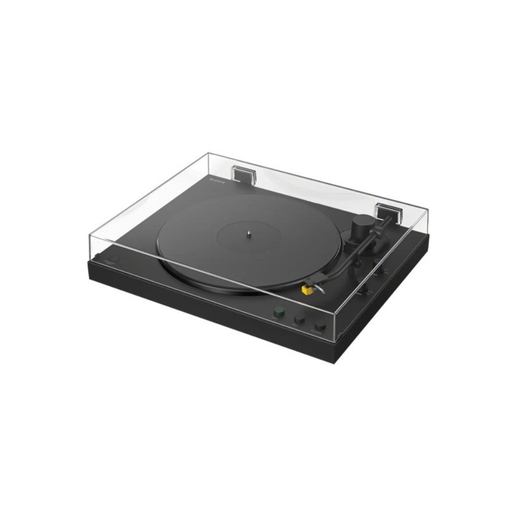 Image unavailable
A Bluetooth model to consider if you’re also looking at wireless connections; check that it suits your existing setup.
Bluetooth.
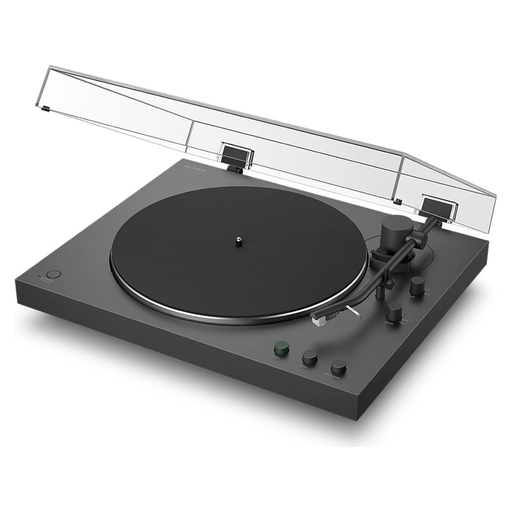 Image unavailable
A Bluetooth model to compare if you’re looking for this connection option; make sure the connection you choose suits the equipment you already own.
Bluetooth.
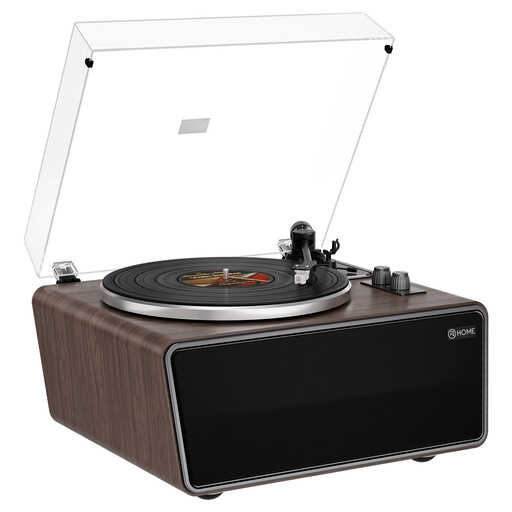 Image unavailable
A version with built-in speakers to compare if you don’t want to add separate speakers; think about where it will go in your loft, too.
Four built-in speakers, phono preamp and AT-3600L (MM) cartridge.
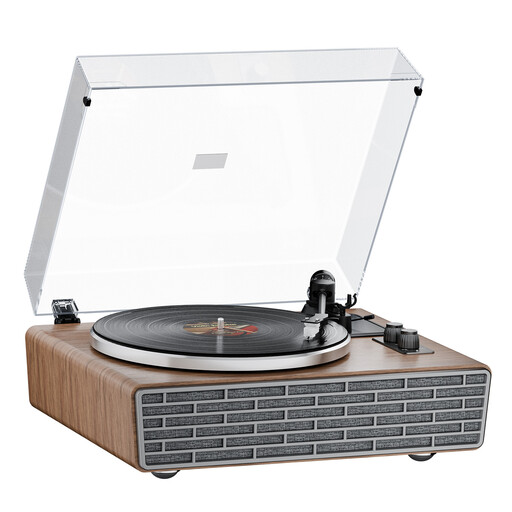 Image unavailable
A model with built-in speakers to consider if you’re looking for a compact listening setup.
Bluetooth, four built-in speakers, belt drive and transparent dust cover.
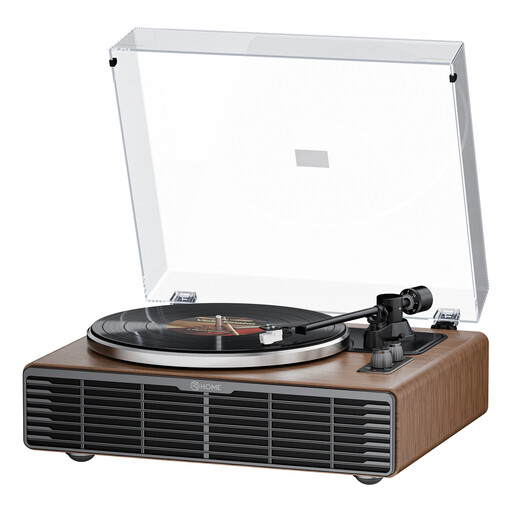 Image unavailable
A version with speakers and phono/line outputs to compare with your existing audio setup.
Bluetooth, four speakers, belt drive, AT3600L cartridge and RCA phono/line output.
You can connect it to active speakers with a suitable line input if the turntable’s phono preamp is switched on. Passive speakers also need an amplifier, so check the connections on your own setup.
Choose a level surface, away from speakers rather than on or right next to them. Audio-Technica warns about vibration and acoustic pressure in its setup instructions. Also check that there’s room to open the dust cover.
No. The manufacturer lists a replaceable stylus for the Audio-Technica AT-LP60X, while the cartridge is integrated into the headshell. Check which parts can be replaced on your exact model.
For a distance purchase from a business, you generally have 14 days to change your mind, according to the Rijksoverheid. The Rijksoverheid also states that the Netherlands has no fixed statutory guarantee period. However, when you buy as a consumer, you’re entitled to a product that is fit for purpose, and the seller is your point of contact if something is wrong.
No. Sony lists playback speeds of 33⅓ and 45 tpm for the PS-LX3BT and states that 78-rpm records aren’t supported. For those records, also check that the stylus is suitable for the material.