Start with a flat, level spot away from speakers; if the floor vibrates, sort out the placement before choosing a different turntable. Then match the phono or line connection to your amplifier or active speakers, and decide whether automatic operation or manual adjustment suits you better. Manufacturer instructions can help you make these choices, but they don’t prove that one model will sound better in every loft.
Who is this choice relevant to?
Loft resident with a springy floor
If you want to play live LPs without footfalls or speakers getting in the way, it’s worth assessing the location first. Audio-Technica recommends placing the turntable on a flat, level surface away from speakers that cause vibration.
Listener with an existing audio system
If you want to use active speakers or an amplifier, check whether the connection needs to be PHONO or LINE and where the phono preamp is located. Which? notes that this amplification needs to be built into the turntable or available elsewhere in the system.
Vinyl collector who wants to choose how to operate the turntable
If you often play different LPs, you can weigh up automatic operation against manual adjustments and component maintenance. The Pro-Ject manual, for example, explains how to set the tracking force and anti-skating on the Debut EVO 2.
What should you look for?
First, assess whether the location is stable and suitable. Then check that the turntable will connect to your audio equipment, and choose the controls and level of maintenance that suit how you use it.
| What to consider |
What should you check? |
Who is this important for? |
| Vibration and placement |
Check whether the surface is flat and level, and whether it responds to footsteps or speakers. If you choose a wall shelf, make sure the shelf and fixings are suitable for the type of wall. |
If your floor flexes, find a stable spot before choosing a model. Around 33% of consumers give placement and vibration their highest priority. |
| Audio connection |
Check whether you’ll use PHONO or AUX/LINE inputs and whether the turntable has a phono preamp. If the output is switchable, set it to the appropriate mode. |
If you want to connect the turntable to existing active speakers or an amplifier, check in advance which input and amplification you need. For around 27% of consumers, this connection comes first. |
| Operation and speed |
Check automatic start, stop and return separately; a tonearm lift at the end of a record is not the same as fully automatic operation. Also check that the turntable supports the speeds you need. |
If you want to start or finish live albums with as little effort as possible, the exact way the controls work matters. Around 20% of consumers choose operation as their main consideration. |
| Record care and components |
Check which type of stylus can be replaced, whether the cartridge itself is interchangeable and what adjustments the manual recommends. |
If you want to take good care of your records and value replaceable components, look at the stylus and adjustment options. Around 20% of consumers put record care and maintenance first. |
Common pitfalls
-
Buying a different turntable without addressing the vibration
A spot close to speakers or on a springy floor can disrupt playback; buying a different turntable won’t solve the placement issue by itself.
First, assess the floor, furniture and distance from the speakers. Consider wall mounting only with a shelf and fixings that are suitable for the wall.
-
Assuming every turntable can connect directly to AUX
A turntable needs phono amplification, either built into the turntable, built into the system or supplied by a separate device. Without it, a standard line input isn’t enough.
Check the inputs on both devices and the PHONO or LINE setting before connecting a turntable.
-
Confusing a tonearm lift at the end of a record with fully automatic playback
A tonearm lift that raises the stylus at the end of a record doesn’t start it automatically. According to Technics, the SL-1500C has this kind of Auto Lifter function.
Check start, stop and return as separate functions if you expect the turntable to do these things automatically.
-
Assuming a turntable with built-in speakers is the same as a standard hi-fi setup
Which? often describes the sound quality of suitcase record players as mediocre. This isn’t a judgement on every model with built-in speakers.
Compare the complete setup, including speakers and phono amplification, rather than looking at the turntable alone.
Brands to consider
Audio-Technica
The AT-LP70XBT combines fully automatic operation, Bluetooth, a switchable phono preamp and playback at 33⅓ and 45 rpm.
- The integrated AT-VM95C accepts replacement styli from the VM95 series.
- The integrated design doesn’t allow the cartridge to be freely swapped; claims of superior sound quality come from the manufacturer.
Denon
The DP-300F is a fully automatic turntable with a switchable phono preamp and support for 33⅓ and 45 rpm.
- Denon describes automatic start and return, as well as a manual tonearm lift.
- Check that these controls suit your preferences and that the output matches the input on your system.
Pro-Ject
The Debut EVO 2 is suited to anyone who wants to adjust a manual turntable and connect it to a compatible phono setup.
- The manual covers the phono output, setting the tracking force and anti-skating, and height-adjustable damped feet.
- The feet don’t prove that the turntable will be vibration-free on a particular loft floor; the required adjustments need extra attention.
Technics
The SL-1500C combines direct drive with a supplied cartridge, a built-in phono equaliser and a tonearm lift at the end of a record.
- With a compatible line input, the built-in phono equaliser may make a separate phono preamp unnecessary.
- The end-of-record tonearm lift isn’t a fully automatic start function; Technics’ claims about vibration reduction aren’t measurements taken in your room.
Sony
According to Sony, the PS-LX3BT offers one-touch, fully automatic playback and Bluetooth.
- The controls described may suit anyone looking for a straightforward wireless playback option.
- The product information provided doesn’t support a comparison of sound quality with other models.
Turntables at Joybuy
This selection includes turntables with built-in speakers and an automatic Bluetooth turntable. Check which wired connection is compatible with your system for each model.
 No image available
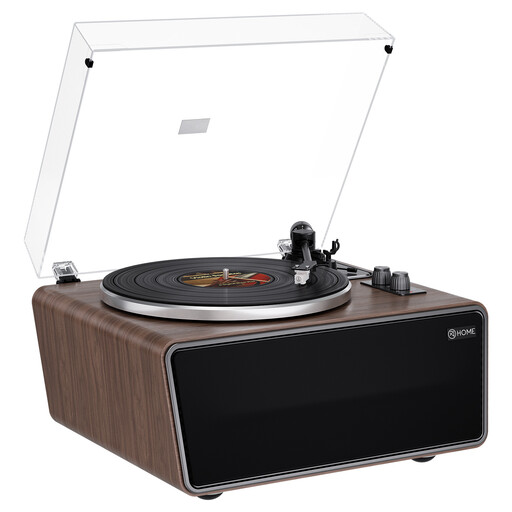
XJ-HOME XJ-H01 Vintage All-in-One Record Player
With four built-in speakers, this model lets you listen without separate speakers.
The product information lists playback at 33⅓ and 45 rpm, a phono preamp, Bluetooth, AUX and RCA outputs, and an AT-3600L (MM) cartridge.
View at Joybuy
 No image available
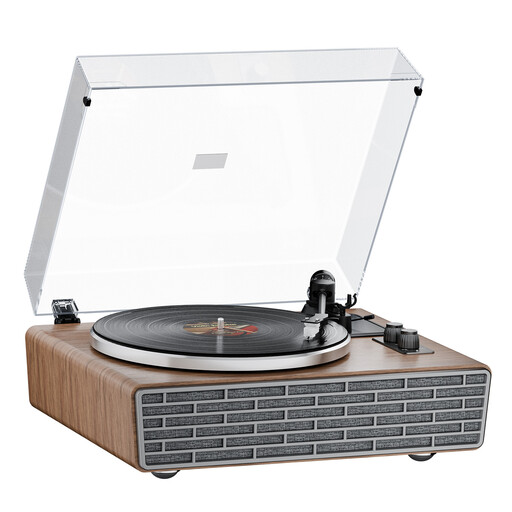
XJ-HOME XJ-H02 Retro Walnut Bluetooth Turntable
The built-in speakers let you listen without external speakers.
The product information lists Bluetooth, belt drive, a transparent dust cover, an AT cartridge, AUX and RCA Phono/Line outputs. The turntable supports 33⅓ and 45 rpm.
View at Joybuy
 No image available
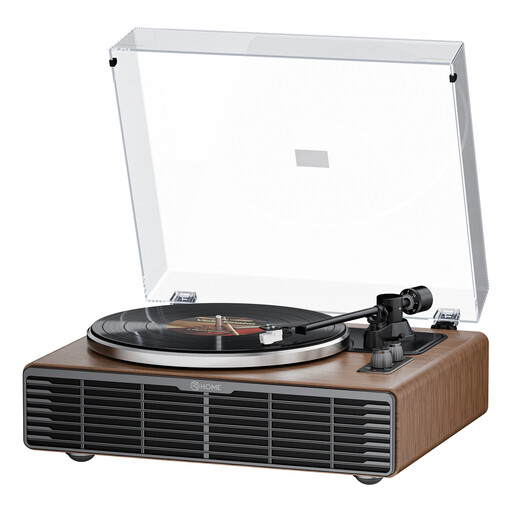
XJ-HOME XJ-H03 Walnut Bluetooth Turntable
With four built-in speakers, this model can play records without external speakers.
The product information lists Bluetooth, belt drive, an AT3600L cartridge, RCA Phono/Line output and playback at 33⅓ and 45 rpm.
View at Joybuy
 No image available
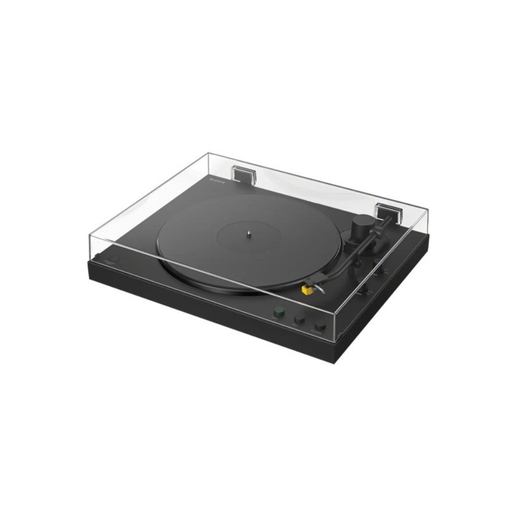
Sony PS-LX5BT Premium Bluetooth Turntable
The listed fully automatic operation and Bluetooth offer a wireless playback option.
The product information lists playback at 33⅓ and 45 rpm and a switchable PHONO/LINE output.
View at Joybuy
Frequently asked questions
Can I connect a turntable directly to my active speakers?
You can if the turntable has a suitable LINE output and the speakers have a compatible input. For the AT-LP70XBT, Audio-Technica recommends selecting LINE for a standard line input and PHONO for a dedicated phono input.
Where should I put the turntable if my loft floor flexes?
Start with a flat, level spot away from speakers. If the floor vibrates, wall mounting may be an option, but choose a shelf and fixings suitable for the type of wall; Pro-Ject distinguishes between solutions for lightweight and solid walls.
What maintenance does a belt-drive turntable need?
Follow the model-specific instructions for the belt, bearing and stylus. Pro-Ject describes belt ageing and bearing maintenance for its turntables; don’t assume the same guidance applies to other brands.
Am I automatically entitled to exactly two years’ legal guarantee in the Netherlands?
No. According to the Dutch government, the Netherlands has no fixed statutory guarantee period: the product must meet what you could reasonably expect from it, and the retailer is your point of contact if there’s a problem. Any manufacturer’s guarantee offered is separate from this.
Is a CE marking a quality mark for sound?
No. The European Commission describes CE marking as an indication that a product complies with the applicable EU product rules. It doesn’t tell you which turntable will sound best in your loft.


