Start by considering where you’ll put the turntable and how it will connect to your existing sound system. A flat, stable surface away from speakers is important, as is a suitable phono or line connection. Choose automatic operation if you want to play an album with minimal fuss; go for a manual model if you want to operate or adjust the tonearm yourself and have the necessary phono setup. A suitcase turntable needs less separate equipment, but the Consumentenbond warns that these models often sound less good and may not encourage careful handling of records.
Who is this choice for?
Loft-dweller with a vibration-sensitive setup
You want to play live albums somewhere where floor movement or speakers could affect your setup. So start by finding a suitable spot, then compare turntables. Audio-Technica recommends placing the turntable on a flat surface, away from speakers.
Listener looking for a simple connection
You want to start an album with minimal fuss and need a connection that works with your existing speakers or amplifier. Sony and Denon describe models with automatic operation and a built-in phono preamp; make sure you check which input your equipment has.
Listener who wants to make their own adjustments
You want to take an active role in handling the tonearm and stylus, or replacing parts later, and are happy to do a little extra setup and operation. Audio-Technica and Pro-Ject describe manual models with features for users who want to make their own adjustments.
What should you look for when buying?
| What to consider |
What should you check? |
Who is this important for? |
| Stable placement |
Find a flat, sturdy surface, preferably away from speakers. Check whether adjustable feet help you level the turntable. |
If the floor moves or speakers are close to the turntable, find a suitable place for it first. For around 33% of consumers, placement comes first. |
| Connection to your equipment |
Check whether you have a phono or line input and whether you need a phono preamp. Also check whether your speakers are active or need an amplifier. |
If you want to connect the turntable to existing equipment, make sure the whole setup works, from turntable to speakers. Around 25% of consumers give connection their top priority. |
| Automatic or manual |
Check whether the exact model starts and returns automatically, or whether you operate the tonearm yourself. Consider which adjustments you’ll actually want to make. |
If you want to play an album with minimal fuss, automatic operation may be important; if you want to operate the tonearm yourself, you may prefer a manual model. For around 25% of consumers, operation is the main consideration. |
| Maintenance and replacement |
Check whether the stylus is replaceable and whether a detachable headshell or cartridge matters for the way you’ll use the turntable. Follow the manufacturer’s cleaning instructions. |
If you want to maintain or replace parts later, check what’s possible with the specific model. Around 17% of consumers put maintenance and replacement first. |
Common buying mistakes
-
Choosing a suitcase turntable just because it has built-in speakers
The Consumentenbond describes the sound quality of suitcase record players as often mediocre and warns that some may not handle records carefully. A standard turntable, on the other hand, may need extra audio equipment.
Compare the whole connection setup and how you want to use your records, not just the number of devices.
-
Confusing a phono preamp with a complete amplifier
A built-in phono preamp can make the signal suitable for a standard audio input, but it won’t drive speakers by itself.
Map out the whole setup from the turntable output to the speakers, and check whether you need active speakers or an amplifier.
-
Relying on vibration-damping features instead of finding a suitable spot
Audio-Technica recommends placing the turntable on a flat surface away from speakers. Adjustable or damped feet don’t, by themselves, prove that floor or speaker vibrations will be eliminated.
First find a stable place for the turntable, then compare the features that matter on different models.
Brands to consider
Sony
The PS-LX3BT is an automatic option with Bluetooth and a built-in phono preamp.
- Sony lists automatic start and return, playback at 33⅓ and 45 rpm, and a phono/line selector for this model.
- The PS-LX3BT has no USB connection or detachable headshell; Sony specifies a fixed RCA cable.
Audio-Technica
The range includes both automatic and manual models, with different operating and adjustment options.
- Audio-Technica says the AT-LP3XBT has Bluetooth, a built-in phono preamp, a replaceable stylus and a detachable headshell. The manual AT-LP120XUSB includes adjustable tracking force and USB.
- These features belong to different models. Manual operation takes more attention when starting and stopping playback.
Denon
The DP-300F is an automatic turntable with a switchable phono preamp.
- Denon describes automatic start and return, and playback at 33⅓ and 45 rpm. The built-in preamp allows you to connect it to a standard aux input.
- These specifications alone don’t indicate an overall advantage in sound quality.
Pro-Ject
The manual Debut EVO 2 is an option if you want to handle setup and adjustment yourself and have a suitable phono setup.
- Pro-Ject lists adjustable damped feet, a detachable phono cable and electronic selection between 33 and 45 rpm.
- The manual describes separate assembly and adjustment steps. The feet are no substitute for a stable surface.
Rega
The Planar 1 is a manual option with a pre-fitted cartridge and pre-set tonearm bias.
- For the Planar 1, Rega lists an RB110 tonearm, a pre-fitted Carbon cartridge and belt drive.
- Check which phono connection you need, and don’t confuse the Planar 1 with the Planar 1 Plus, which Rega lists as having a built-in phono preamp.
Turntables at Joybuy
This selection includes automatic Sony turntables and XJ-HOME models with built-in speakers, for anyone who values a choice of connections or wants to keep separate equipment to a minimum.
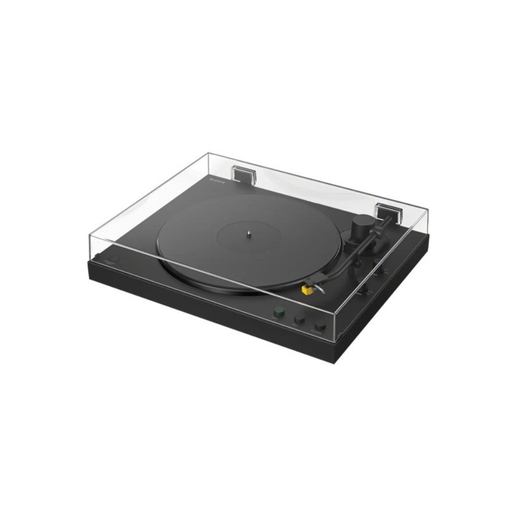 Image unavailable
Sony PS-LX5BT
A good fit if you’re considering automatic operation and Bluetooth or a wired connection.
The product description lists fully automatic operation, a built-in phono equaliser and a PHONO/LINE switch. Playback at 33⅓ and 45 rpm is also listed.
View at Joybuy
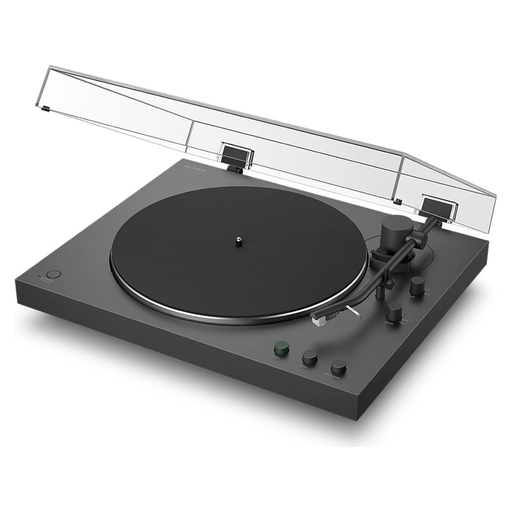 Image unavailable
Sony PS-LX3BT
An option if automatic operation and a choice of wireless or wired connections are important to you.
The product description lists automatic operation and tonearm return, Bluetooth, a built-in phono equaliser and a PHONO/LINE switch. Playback at 33⅓ and 45 rpm is also listed.
View at Joybuy
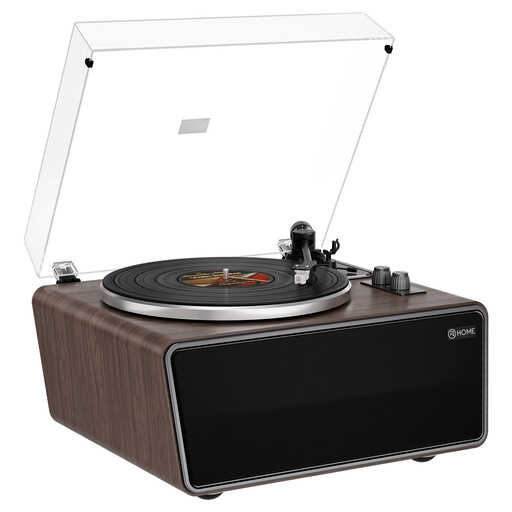 Image unavailable
XJ-HOME XJ-H01
A good fit if you’re looking for a model with built-in speakers and additional connection options.
The product name lists four built-in speakers, a phono preamp and an AT-3600L (MM) cartridge. The description lists playback at 33⅓ and 45 rpm, Bluetooth, AUX and RCA outputs.
View at Joybuy
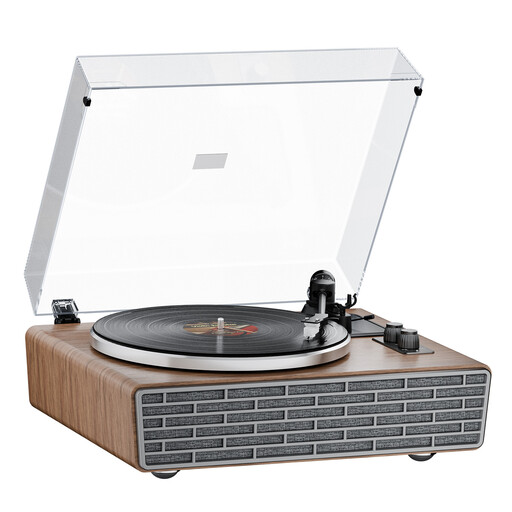 Image unavailable
XJ-HOME XJ-H02
Worth a look if you want both built-in speakers and the option to connect external equipment.
The product name lists four built-in speakers, belt drive, an AT cartridge and a transparent dust cover. The description lists playback at 33⅓ and 45 rpm, Bluetooth, AUX and RCA outputs.
View at Joybuy
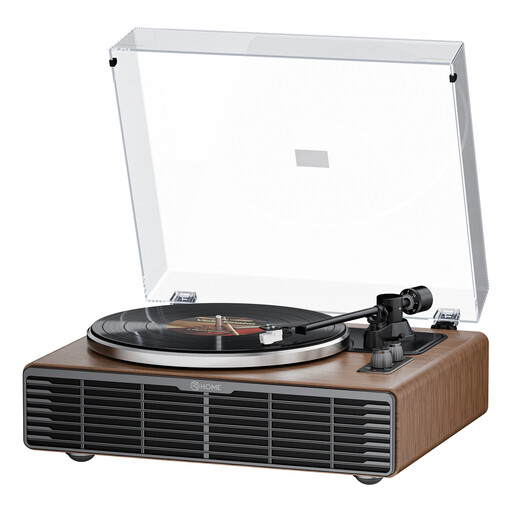 Image unavailable
XJ-HOME XJ-H03
A good fit if you want built-in speakers alongside Bluetooth or wired connection options.
The product name lists four speakers, belt drive, an AT3600L cartridge and a transparent dust cover. The description lists playback at 33⅓ and 45 rpm, Bluetooth, AUX and RCA Phono/Line outputs.
View at Joybuy
Frequently asked questions
Do you always need a separate phono preamp for a standard turntable?
No, but there must be a suitable phono preamp somewhere in the connection setup. It may be built into the turntable or amplifier, or used as a separate device. Check the inputs and match a switchable phono/line output to the input you’ve chosen.
Where should you put a turntable if the floor or speakers cause vibrations?
Start with a flat, stable surface and don’t put the turntable next to speakers. This is setup advice from Audio-Technica’s manual, not a guarantee that a particular turntable will eliminate vibrations in every loft.
How do you look after the stylus?
Follow the instructions for the stylus on your turntable. Audio-Technica’s cleaning method involves brushing gently from back to front, not from side to side.
Can you return a turntable bought online without giving a reason?
For online purchases in the Netherlands, you generally have a statutory 14-day cooling-off period from delivery. ACM ConsuWijzer also outlines exceptions, so check which terms apply to your purchase.
Can you play live albums as loudly as you like in a loft?
Don’t assume the same rules apply to every loft. If noise is disturbing your neighbours, the Dutch government recommends agreeing arrangements with them first, such as when you’ll play music. Also check which rules apply to your home.


