
Listener with a large living room
Wants to hear old soundtracks throughout the listening space, and starts by checking the connections on their existing amplifier and speakers rather than focusing on the turntable alone.


First, choose a turntable that supports the speeds of your records and connects properly to the amplifier or active speakers in your setup. In a large living room, the speaker system also determines how you arrange your listening space. Automatic playback means fewer steps, while manual models offer different adjustment and customisation options depending on the version.
Wants to hear old soundtracks throughout the listening space, and starts by checking the connections on their existing amplifier and speakers rather than focusing on the turntable alone.
May have records in different formats and checks both the speed and the correct stylus before playing an old record.
Prefers automatic playback and a simple connection to their existing setup, as long as the turntable is compatible with their records.
Start with the speeds and connections you need. Then consider which controls and adjustment options suit the way you want to use your turntable.
| What to consider | What to check before buying | Who should pay particular attention? |
|---|---|---|
| Connection and audio chain | Check for a phono or line connection, and whether there is a phono preamp anywhere in the audio chain. | When listening in a large living room, I want to know how the turntable connects to my amplifier and speakers. Around 33% of consumers put the audio chain first. |
| Speed and stylus | Check the speed of your records. For 78-speed records, also find out which stylus is suitable for that particular type of record. | If I have old records with different speeds, I want to make sure both the turntable and the stylus are suitable. Around 27% of consumers give compatibility with record formats top priority. |
| Ease of use | Check whether starting playback and returning the tonearm are automatic; features vary by model. | If I want to put a record on with minimal effort, I look for automatic start and return. Around 20% of consumers prioritise easy playback. |
| Maintenance and customisation | Check which cartridge is fitted, which replacement stylus is compatible with it, and whether the headshell is interchangeable. | If I want to replace or customise parts, I check that they are compatible with the cartridge and tonearm. Around 20% of consumers give maintenance and customisation top priority. |
A standard turntable is not a complete playback system in its own right. The amplifier, any phono preamp and the speakers are all part of the connection chain.
Before buying, map out the connection from the turntable to the speakers and check which components you already have.
Depending on your existing setup, you may need separate speakers, an amplifier or a phono preamp.
Speed and stylus suitability are two separate things to check. A turntable that supports 78 tpm does not automatically come with a stylus that is suitable for your record.
Check the speed on the record, then find the right stylus for the exact cartridge.
Some combinations require a separate stylus that is suitable for both the cartridge and the record.
Rega lists a built-in phono stage for the Planar 1 Plus, while the Planar 1 manual refers to a suitable phono stage.
Check the full model name and find out whether your amplifier has a phono input or whether your setup needs a separate phono preamp.
With the Planar 1, you may need a separate phono stage if your amplifier does not have one built in.
The AT-LP120XUSB is an option if you want multiple speeds, manual operation and a switchable phono preamp.
The PS-LX310BT is an example of a turntable for anyone looking for automatic operation and the choice of Bluetooth or a wired connection.
The Debut EVO 2 is a belt-driven option for playing 33⅓ and 45-speed records as part of a separately assembled hi-fi system.
The Planar 1 is a manual turntable with pre-set bias, designed to connect to a compatible hi-fi system.
The SL-1500C is a direct-drive model worth considering if 78 tpm and a separate hi-fi system are relevant to you.
The Joybuy options below include an automatic model and turntables with built-in speakers. Check that the stated speeds and connections suit your records and listening setup; built-in speakers alone do not guarantee that the sound will fill a large room.
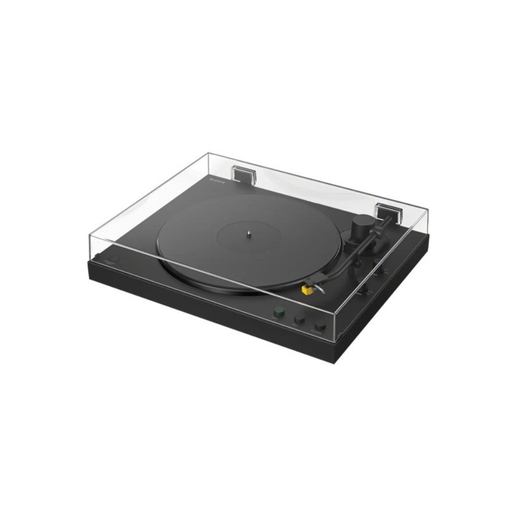 No image available
Suited to anyone looking for automatic playback and a choice of phono/line or Bluetooth connections.
33⅓/45 tpm; automatic operation; built-in phono preamp; phono/line and Bluetooth connection options; MM cartridge; belt drive.
The stated speeds are 33⅓ and 45 tpm; check separately that they suit your collection.
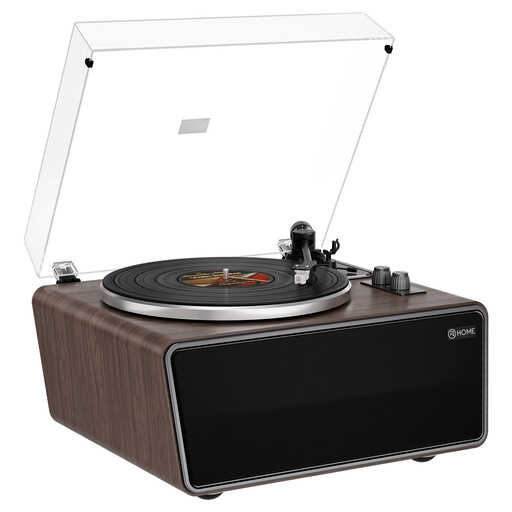 No image available
Suited to anyone who wants built-in speakers and an RCA connection for an external setup.
Four built-in speakers; phono preamp; RCA outputs; 33⅓/45 tpm; AT-3600L cartridge; adjustable counterweight; USB recording.
Check separately that the stated speeds suit your records and that the built-in speakers are suitable for your room.
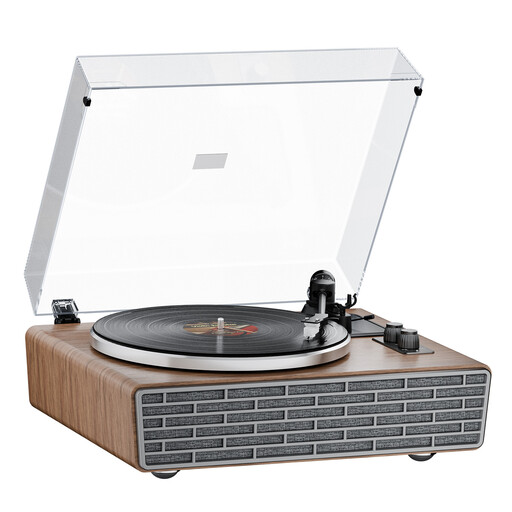 No image available
Suited to anyone looking to combine built-in speakers with an RCA connection for an external setup.
Four built-in speakers; PHONO/Line RCA outputs; 33⅓/45 tpm; AT-3600L cartridge; belt drive; spare belt included.
Check separately that the stated speeds suit your records and that the built-in speakers are suitable for your room.
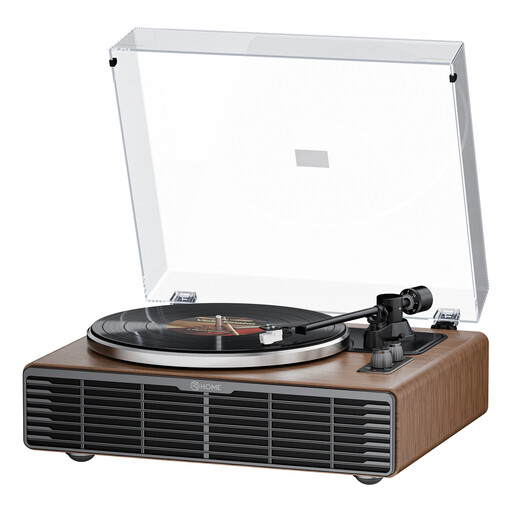 No image available
Suited to anyone looking for a turntable with built-in speakers and an RCA Phono/Line output.
Four speakers; 33⅓/45 tpm; belt drive; AT3600L cartridge; RCA Phono/Line output; Bluetooth.
Check separately that the stated speeds suit your records and that the built-in speakers are suitable for your room.
With a standard turntable, you need speakers and a suitable amplifier. Before using a line input, also check whether the phono preamp is built into the turntable or amplifier, or is a separate device.
No. As well as checking the speed, make sure the stylus is suitable for the record in question. Audio-Technica offers a separate VM95SP stylus for many 78-speed records; that does not mean the standard stylus on every 78-tpm turntable is suitable.
Not simply because the turntable has built-in speakers. Check the information on the speakers and connections for the exact version, and decide whether they suit your listening space.
On an automatic model, functions such as starting playback and returning the tonearm can happen automatically; check which actions the specific model automates. With a manual model, you operate the tonearm yourself, and adjustment options can vary by version.
When you buy remotely from a business, you generally have a 14-day cooling-off period, according to the Dutch government. There are exceptions, including online purchases from a private individual. You are also entitled to a product that is in good condition; if there is a problem, contact the seller about your statutory guarantee rights.