
Listener with 45 rpm jazz singles
Wants to select the right record size and speed without complicated controls. Audio-Technica describes the AT-LP70XBT as having a separate setting for 7-inch records.


For standard jazz singles, choose a turntable that supports the speed shown on the record and, for 7-inch singles, has the right size setting and, if needed, a 45 rpm adapter. Also check that its connections suit your speakers, and place the turntable on a level surface, away from speakers that cause vibrations where possible. For 78 rpm records, you’ll also need a suitable stylus and the right setup.
Wants to select the right record size and speed without complicated controls. Audio-Technica describes the AT-LP70XBT as having a separate setting for 7-inch records.
Has limited space and needs to find a stable spot for the turntable, while also taking care over speaker placement. Audio-Technica recommends placing the AT-LP70XBT on a level surface, away from speakers that cause vibrations.
Needs to check whether their collection includes standard vinyl singles or 78 rpm records. As well as the correct speed, 78 rpm records need a suitable stylus; Audio-Technica describes the AT-VM95SP for this purpose.
| Buying concern | What should you look for? | Who is this most important to? |
|---|---|---|
| Speed and size | Check the speed shown on the record, the setting for 7-inch records and whether you need a 45 rpm adapter. | I want to play my standard jazz singles at the specified speed and with the correct size setting. Around 33% of consumers put speed and size first. |
| Vibrations and placement | Check whether there’s a level, stable spot for the turntable, and follow your speakers’ placement instructions. | I have limited space and want to stop vibrations from my speakers reaching the turntable. Around 27% of consumers make a low-vibration setup their top priority. |
| Connecting to speakers | Check whether your speakers are active or passive, which inputs are available and where the phono preamp is located. | I want to connect my existing speakers without a missing link in the signal chain. Around 20% of consumers put connectivity first. |
| Controls and stylus | Decide whether automatic operation is important to you, and check which stylus is compatible with the exact model. | I switch between singles regularly and want to do as little as possible when starting and stopping playback. Around 13% of consumers give ease of use top priority. |
| 78 rpm records | Check the speed and record type, and make sure the turntable, cartridge and stylus are compatible. | I want to play older jazz records, so I first check whether they’re 78 rpm records. Around 7% of consumers name this type of collection as their main buying concern. |
A turntable needs phono pre-amplification. This may be built into the turntable, the amplifier or another part of the signal chain. So check which PHONO or LINE input is available and the position of the switch. Speaker placement can also affect sound when speakers are close to a wall. Genelec discusses this in relation to studio monitors, so follow the guidance in your own speakers’ manual.
Not every older jazz record is a 45 rpm record. A turntable with a 78 rpm setting isn’t automatically fitted with a stylus suitable for 78 rpm records either.
Check the speed on the record or sleeve, then make sure the turntable, cartridge and stylus are compatible.
Audio-Technica recommends placing the AT-LP70XBT on a level surface, away from speakers that cause vibrations. Placing speakers close to a wall can also affect their sound.
Where possible, set aside a stable spot for your turntable and follow your speakers’ placement instructions.
The correct PHONO or LINE setting depends on where the phono preamp sits in your signal chain. If the settings don’t match, the connection may not be compatible with your turntable and amplifier.
Before you buy, check your equipment’s inputs and the setting on the turntable.
The AT-LP70XBT is an automatic turntable for 33⅓ and 45 rpm records. The manual AT-LP120XUSB also offers a 78 rpm setting and a replaceable cartridge.
Sony describes the PS-LX310BT on its Dutch website as an automatic belt-drive turntable for 33⅓ and 45 rpm records, with Bluetooth and switchable PHONO and LINE output.
Denon describes the DP-300F on its Dutch website as a fully automatic belt-drive turntable for 33⅓ and 45 rpm records, with a switchable phono preamp.
Technics describes the SL-1500C on its Dutch website as a manual direct-drive turntable for 33⅓, 45 and 78 rpm records, with line and phono outputs and an EP adapter included.
These models are worth comparing for playing singles, with controls, connections and space for your speakers in mind.
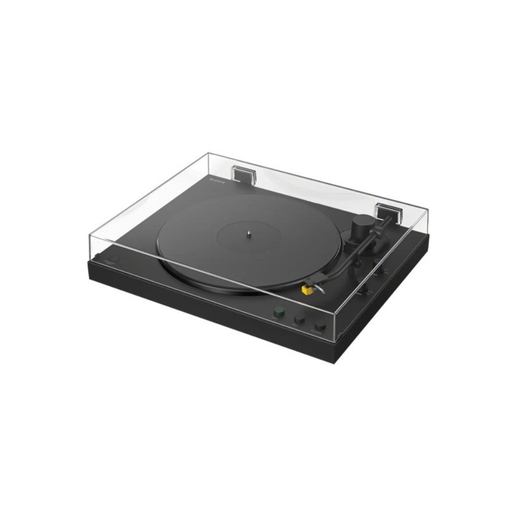 No image available
Worth considering if Bluetooth connectivity suits your setup.
Bluetooth.
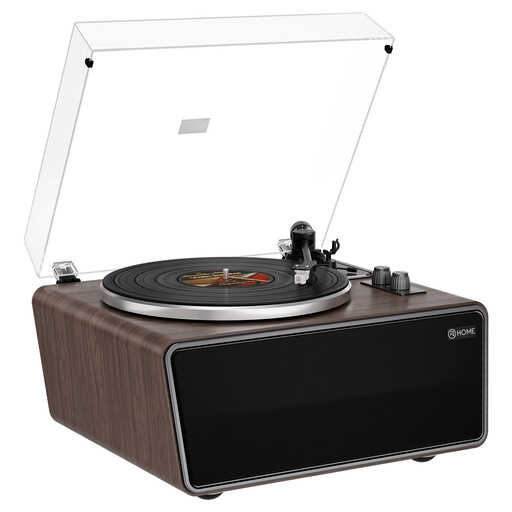 No image available
Worth comparing if you’re considering built-in speakers and connections for external equipment.
The product name lists four built-in speakers, a phono preamp and an AT-3600L cartridge.
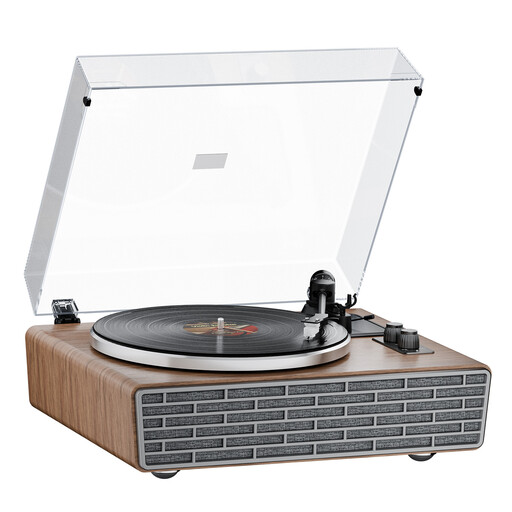 No image available
Worth comparing if you want Bluetooth and built-in speakers in one setup.
The product name lists four built-in speakers, belt drive, a transparent dust cover and an AT cartridge.
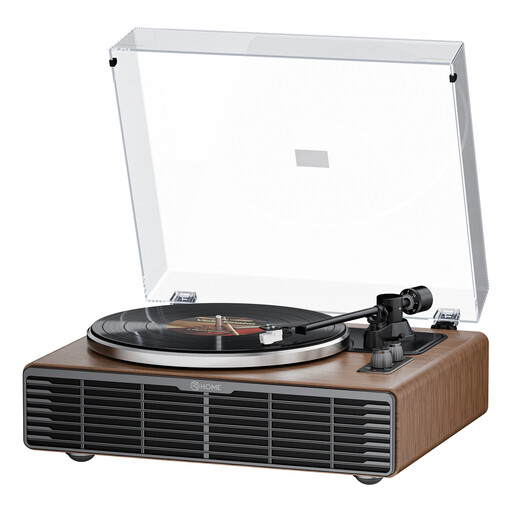 No image available
Worth comparing if Bluetooth or an RCA connection is important for your speakers.
The product name lists four speakers, belt drive, an AT3600L cartridge and an RCA PHONO/LINE output.
As well as checking the speed, check the size setting and the record’s centre hole. The Audio-Technica AT-LP70XBT manual describes a 7-inch setting and the use of a 45 rpm adapter. Don’t assume every model has the same controls or includes an adapter.
It depends on your setup, but where possible, stop vibrations from the speakers reaching the turntable. Audio-Technica recommends placing the AT-LP70XBT on a level surface, away from speakers that cause vibrations. Follow the placement guidance for your own speakers to make sure they have enough space.
Only if there isn’t a suitable phono preamp elsewhere in your signal chain. Check the turntable’s PHONO or LINE setting, and whether your amplifier or active speakers have a compatible input.
In the Netherlands, a product must meet what you can reasonably expect from it. The Dutch government says there’s no set statutory guarantee period; contact the retailer if there’s a problem.
No. A CE mark isn’t an individual practical test or a buying recommendation. The Dutch government says the mark is required for applicable product groups; check which product information and markings apply to the product you’re considering.