
Jazz 45 rpm single listener
You want to play singles regularly and with ease. Check that the turntable supports 45 rpm and whether your records need a centre adapter; Sony, for example, lists a 45 rpm adapter with the PS-LX310BT.


First, check whether your jazz singles are 45 rpm vinyl or historic 78 rpm shellac. Shellac records need both a suitable 78 rpm turntable and the right stylus. Then choose a turntable that works with your amplifier or speakers, and place it on a level surface away from speakers that could transfer vibrations.
You want to play singles regularly and with ease. Check that the turntable supports 45 rpm and whether your records need a centre adapter; Sony, for example, lists a 45 rpm adapter with the PS-LX310BT.
Your speakers are close to the wall or the turntable. Bear vibrations in mind and follow the placement instructions for your speaker model, rather than assuming there’s one ideal distance from the wall.
If you have historic 78 rpm records, check both the record material and the stylus you need. Audio-Technica stresses that 78 rpm shellac records require a suitable stylus.
Choose this if: you mainly play 45 rpm vinyl and would rather not operate the tonearm yourself each time. Sony and Denon describe automatic models that play records at 33⅓ and 45 rpm.
Keep in mind: these speeds aren’t suitable for 78 rpm shellac records. Automatic operation also won’t prevent vibrations from speakers placed next to the turntable.
Choose this if: you want to operate the turntable yourself and already have, or plan to add, a suitable phono preamp. Pro-Ject lists electronic speed selection for the E1.2; with the Rega Planar 1, you move the drive belt.
Keep in mind: whether a phono preamp is built in depends on the version. Only the Phono version of the Pro-Ject E1.2 has one, while the Rega Planar 1 manual specifies a suitable phono stage.
Choose this if: your historic records are marked 78 rpm and you’ve confirmed that they’re made of shellac. Denon lists 78 rpm support for the DP-450USB.
Keep in mind: speed alone isn’t enough. Check that the stylus and cartridge setup are also suitable for the record material. Audio-Technica recommends a suitable stylus for 78 rpm shellac records.
| Consideration | What to check | Best for |
|---|---|---|
| Speed and operation | Check for 45 rpm and, if your record requires one, whether you need a centre adapter. Choose automatic or manual operation based on how much you want to do yourself. | If I often play 45 rpm singles, I want the right speed and an easy way to switch between records. Around 36% of consumers prioritise this combination of speed and ease of use. |
| Vibration-resistant placement | Plan a level spot for the turntable, away from speakers that vibrate. Follow your speakers’ manual for advice on placing them near a wall. | If my speakers are close to the turntable, I want to stop vibrations affecting the stylus. Around 29% of consumers give a stable setup top priority; Audio-Technica warns against placing a turntable next to speakers. |
| Connections and amplification | Check whether your speakers are active or passive and whether your setup has a phono or line input. Passive speakers also need an amplifier. | If I want to use my existing setup, the turntable’s output needs to work with my inputs and speakers. Around 21% of consumers prioritise connections and the amplification they need; the Dutch Consumers’ Association and Audio-Technica explain the role of phono pre-amplification and amplification. |
| Historic 78 rpm records | Check the speed and whether the record is made of shellac or vinyl. Then make sure both the turntable and stylus are suitable. | If I have historic 78 rpm shellac records, I want the whole setup to suit them. Around 14% of consumers give this compatibility top priority; Denon lists 78 rpm support for the DP-450USB, and Audio-Technica highlights the need for a suitable stylus. |
A turntable that plays at 45 rpm and has a standard vinyl stylus isn’t automatically suitable for historic 78 rpm shellac records.
Check the speed marking and the record material before choosing a turntable or stylus. Audio-Technica recommends a suitable 78 rpm stylus for shellac.
Shellac records may need a suitable stylus as well as a compatible turntable.
Vibrations and sound pressure from speakers can affect a turntable if it’s placed next to them.
Plan to place the turntable on a level surface away from the speakers, and follow the placement instructions for your speaker model. Audio-Technica warns against placing a turntable next to speakers.
A phono preamp makes the signal suitable for a line input, but it won’t drive passive speakers by itself.
First check whether your speakers are active or passive. Then see which phono and line connections your setup and turntable have.
The PS-LX310BT and PS-LX3BT are worth considering if you’re looking for automatic operation; features vary by model.
The AT-LP70XBT is worth considering for automatic operation and wireless connectivity; check the version you’re interested in.
The E1.2 is a manual option to consider if you want to use a separate turntable with an existing hi-fi setup.
The DP-300F and DP-450USB cater for different speed requirements; check which model suits your records.
The Planar 1 is a manual 33⅓/45 rpm option to consider if you have, or plan to add, a suitable phono stage.
This selection includes Sony turntables and XJ-HOME models with built-in speakers. Check each version for the speed, stylus and connections that suit your records and speakers.
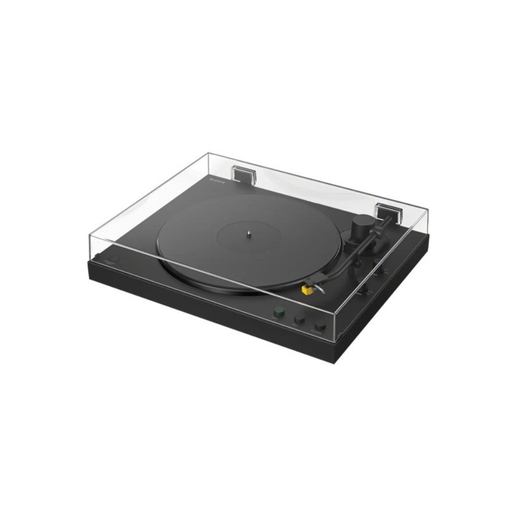 No image available
Could suit you if you’re looking for automatic operation; check that the version offers the speed and connections your setup needs.
Sony describes the PS-LX5BT as fully automatic with wireless connectivity.
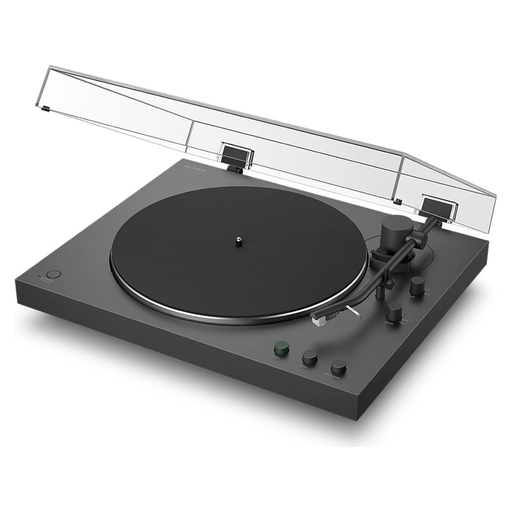 No image available
Could suit you if you’re looking for an automatic model with wireless connectivity; check that its speed and connection options work with your setup before choosing.
Sony describes this model as fully automatic and equipped with Bluetooth.
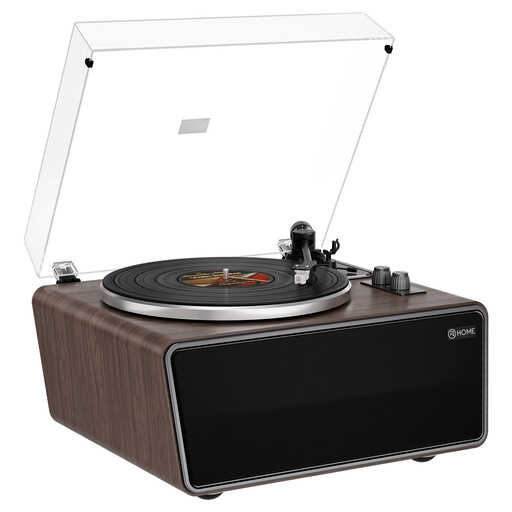 No image available
Could suit you if you’re looking for a model with built-in speakers; consider whether this setup fits with your plans to use speakers close to the wall.
The product name lists four built-in speakers, a phono preamp and an AT-3600L (MM) cartridge.
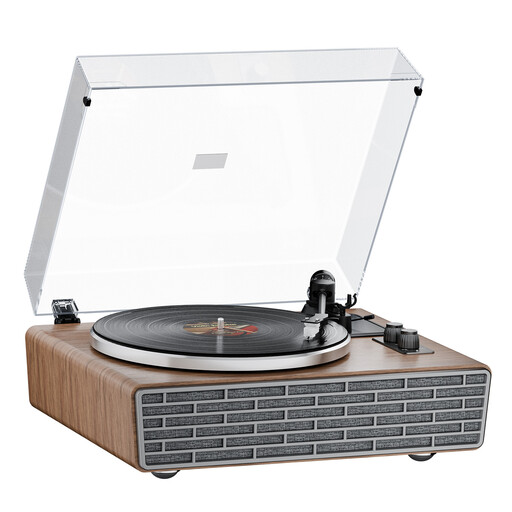 No image available
Could suit you if you’re looking for built-in speakers and a Bluetooth turntable; check that the connections work with your existing setup.
The product name lists four built-in speakers, a transparent dust cover, belt drive and an AT cartridge.
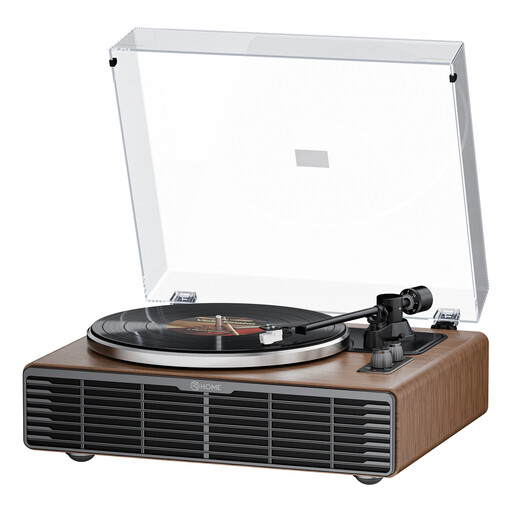 No image available
Could suit you if you’re looking for a model with built-in speakers and want to connect other equipment via RCA; check which input your setup uses.
The product name lists four speakers, belt drive, an AT3600L cartridge and an RCA phono/line output.
No, not if your records are 78 rpm shellac. Check the speed and the material: historic shellac records need a suitable 78 rpm stylus as well as the correct speed, as Audio-Technica explains.
You can with active speakers that have a suitable line input, provided the turntable has a phono preamp switched on and a line output. Passive speakers also need an amplifier; don’t use a phono preamp at the same time as a phono input.
Place the turntable on a level surface, not directly next to the speakers or on the same surface if it vibrates. Follow the speakers’ own manual for the space needed behind them; placement requirements vary by model.
For an online distance purchase from a business, you generally have a 14-day cooling-off period, subject to exceptions explained by the Dutch Government; this doesn’t automatically apply to purchases from a private seller. You’re also entitled to a product that meets legal requirements. The Netherlands has no fixed general statutory warranty period; if there’s a fault, contact the seller.