What should you look for?
First, choose a stable place for your turntable, then check whether your setup needs a phono, line or Bluetooth connection. After that, consider how much you want to operate yourself and which parts can be replaced later.
| What to consider |
What should you check? |
Who is this most important for? |
| Placement and neighbours |
Is there a stable, level spot for the turntable, away from the speakers? Also think about how to set the listening volume for your home. |
If you listen in a flat, you’ll want to place the turntable somewhere stable and not right next to the speakers. Around 29% of consumers prioritise placement and being considerate of neighbours. |
| Sound and LPs |
Check the cartridge, tonearm controls and which replacement stylus is compatible with the exact model. |
If you play your LPs regularly, you’ll want to know how to position the stylus and whether a suitable replacement is available. Around 24% of consumers give sound quality and handling LPs their highest priority. |
| Connection |
Check whether you use active speakers or an amplifier, whether it has a phono input, and whether the turntable can be set to phono or line. |
If you want to connect the turntable to your existing setup, you’ll want to know in advance which input and preamp you need. For around 18% of consumers, connecting to their existing audio setup is the top priority. |
| Controls |
Check whether it starts, stops and returns automatically, and whether you can operate the tonearm yourself. |
When playing an LP, you can choose between keeping things simple and placing the stylus yourself. Around 17% of consumers care most about everyday operation. |
| Maintenance and future purchases |
Check which replacement stylus or drive belt fits the model, and whether you’ll also need an amplifier or phono preamp. |
If you’re completing your setup, you’ll want to know which parts you already have and what can be replaced later. Around 12% of consumers prioritise maintenance and future purchases. |
Joybuy turntables for this listening setup
These are automatic turntables with Bluetooth and a phono/line connection. Check which connection suits your speakers or amplifier, and choose a stable spot at home away from the speakers.
 No image available
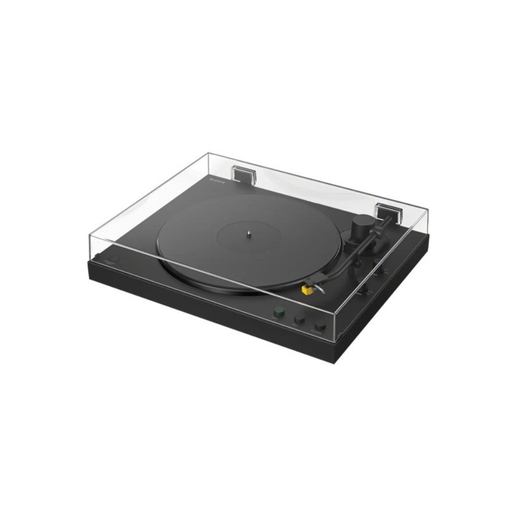
Sony PS-LX5BT Premium Bluetooth turntable
An automatic turntable for anyone who wants to use Bluetooth or a wired connection.
Supports 33⅓ and 45 rpm and, according to the product description, has an MM cartridge, a built-in phono preamp and a PHONO/LINE switch.
Joybuy
 No image available
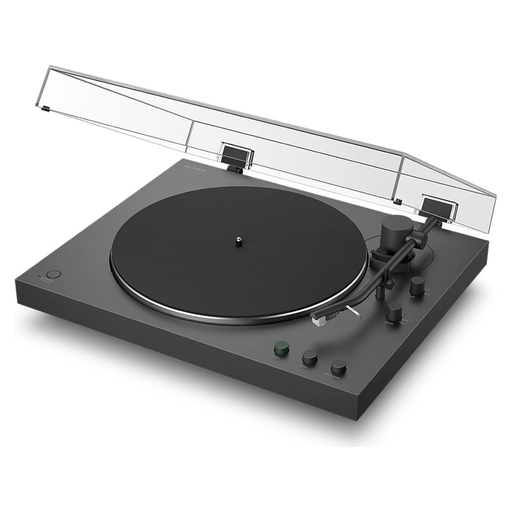
Sony PS-LX3BT Bluetooth turntable
An automatic turntable for anyone who wants to listen wirelessly or via a wired connection.
Supports 33⅓ and 45 rpm and, according to the product description, has an MM cartridge, Bluetooth and a built-in phono preamp with a PHONO/LINE switch.
Joybuy
Frequently asked questions
Can I connect a turntable directly to my speakers?
It depends on your speakers and the turntable’s output. Active speakers have built-in amplification; passive speakers need an amplifier. Also check whether you need a phono preamp and whether the turntable should be set to phono or line.
Where should I put a turntable in an open-plan living room?
Choose a stable, level spot and don’t place speakers right next to the turntable: vibrations from the speakers can affect the stylus. Adjustable feet can help level a model that has them, but they won’t necessarily eliminate vibrations in your home.
Do I need to replace the drive belt?
Follow your model’s manual and check the belt for wear. Pro-Ject recommends replacing the belts on its turntables after around one to two years; this is the manufacturer’s advice, not a universal interval.
Am I legally entitled to exactly two years’ warranty in the Netherlands?
No. According to the Government of the Netherlands, statutory warranty in the country has no fixed duration: you can expect a product to remain in good working order for a reasonable period. If there’s a fault, contact the retailer; normal wear and tear doesn’t automatically entitle you to a free repair.
How can I stop my music disturbing the neighbours?
Set the volume with your home in mind and, where necessary, agree some ground rules with your neighbours. The Government of the Netherlands also lists your landlord, residents’ association and local council as possible points of contact if there’s a nuisance issue; check which rules apply to your home.


