
Listener with limited space for equipment
You want to play folk LPs while keeping your speakers close to the wall. It’s important to find a level spot for your turntable, away from speaker vibrations; assess the bass in your own room.


Don’t choose based only on the distance from the wall. Your turntable needs to sit level and away from speaker vibrations, and you should assess the bass separately in your chosen setup. Then consider the controls and connections: a fully automatic model with a switchable phono preamp could suit you if you want simple operation and a line input; a manually adjustable model needs a suitable MM phono input or a separate phono preamp. According to KEF, a rear-ported speaker isn’t automatically unsuitable close to a wall, but its performance depends on the speaker and the room.
You want to play folk LPs while keeping your speakers close to the wall. It’s important to find a level spot for your turntable, away from speaker vibrations; assess the bass in your own room.
You want to get started easily and check which connections are available, whether your speakers are active and whether you already have a phono preamp.
You care more about replacing the stylus or making adjustments than one-button operation, and are happy to carry out the necessary setup and use a separate phono preamp if needed.
First, decide where your turntable can sit level and securely. Then check whether its connections and controls suit your audio setup. A different model won’t automatically solve vibration problems caused by an unsuitable position.
| What to consider | What should you check? | Who is this important for? |
|---|---|---|
| Vibration and positioning | Is there a level, stable spot away from vibrating speakers? Assess the bass with the speakers in the intended position by the wall. | If I were to put the turntable on the same piece of furniture as the speakers, I’d first want to find a spot with minimal vibration. This is a priority for around 33% of consumers. |
| Connecting to your audio setup | Check which phono or line inputs are available, whether your speakers are active and whether you already have a phono preamp. | I want to know in advance whether the turntable will work with my speakers and amplifier, without discovering later that I’m missing a necessary connection. Compatibility with their setup is a priority for around 27% of consumers. |
| Everyday operation | Check whether the tonearm starts and returns automatically, and whether you also want to listen using a wired connection. | If I want to play LPs easily, fully automatic operation may suit me better than moving the tonearm myself. Easy playback is a priority for around 20% of consumers. |
| Stylus and adjustments | Check which replacement stylus is compatible with the specific cartridge and which adjustment steps the manufacturer recommends. | I want to be able to find out which stylus fits my cartridge and how much adjustment I’m prepared to do myself. Maintenance and adjustability are a priority for around 20% of consumers. |
Audio-Technica recommends placing the AT-LP70XBT on a level surface, away from speakers that cause vibrations. Choosing a different turntable doesn’t remove the need to find a suitable position for it.
First, find a stable place for the turntable, then decide which model suits your connections.
You may need to use a different shelf or rearrange your furniture.
A phono input and a standard line input don’t expect the same signal. Passive speakers also need an amplifier.
Before buying, make a note of the inputs on your amplifier or speakers, and whether your speakers are active or passive. Also check whether you need a phono preamp.
According to KEF, placing a rear-ported speaker close to a wall isn’t automatically off limits. However, the speaker’s position in the room can affect its bass performance.
Follow the guidance for your specific speaker model and listen to the bass where you plan to position your speakers.
According to the Government of the Netherlands, statutory warranty in the Netherlands depends on what you can reasonably expect from the product. If there’s a problem, contact the seller.
When considering an extra warranty, check what it adds to your existing statutory rights.
The AT-LP70XBT is a fully automatic option if you’re looking for Bluetooth and a wired connection with a switchable phono preamp.
The PS-LX3BT combines fully automatic operation with Bluetooth and a built-in phono preamp with a phono/line switch.
The manual Debut EVO 2 is worth considering if you want to make your own adjustments and have a suitable MM phono input or a separate phono preamp.
The DP-300F is another fully automatic option with a switchable phono preamp.
This selection of Joybuy products includes Bluetooth turntables and models with built-in speakers. Before buying, check that the connections suit your existing audio setup and that you have a stable place for the turntable.
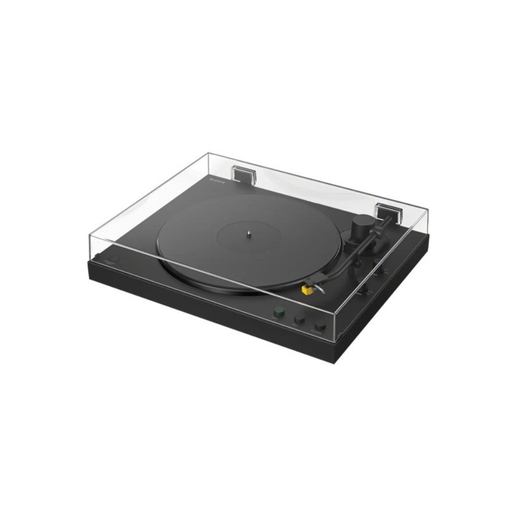 No image available
The product name mentions Bluetooth; check that the connections suit the speakers or amplifier in your setup.
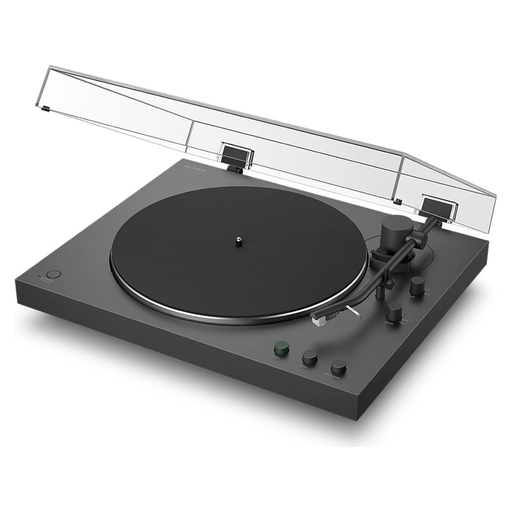 No image available
Fully automatic operation and a phono/line switch could suit you if you want easy playback through a wired input.
Sony specifies 33⅓ and 45 rpm, Bluetooth and a built-in phono preamp. The model has a fixed RCA cable; Sony doesn’t list a removable headshell.
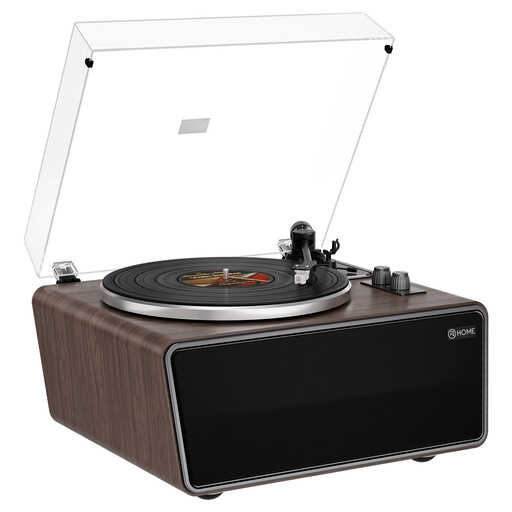 No image available
The product name describes an all-in-one model with four built-in speakers. Check whether it suits your plan to listen through separate speakers.
The product name also mentions an AT-3600L (MM) cartridge and a phono preamp.
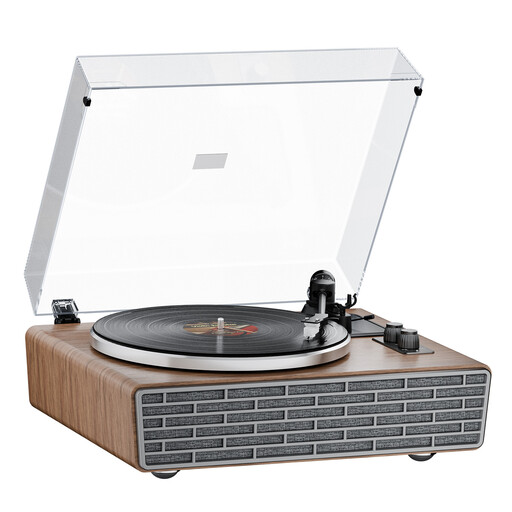 No image available
The product name mentions Bluetooth and four built-in speakers; check that the available connections suit your listening setup.
The product name also mentions a belt drive, a dust cover and an AT cartridge.
Assess the turntable’s position separately from how close the speakers are to the wall. Audio-Technica recommends placing the AT-LP70XBT level and away from speakers that cause vibrations. According to KEF, a rear-ported speaker isn’t automatically unsuitable close to a wall; listen to the bass in your own room and follow your speakers’ instructions.
Active speakers have their own amplifier. A standard line input needs a phono-pre-amplified signal; for example, use the LINE setting on a turntable that has one. Passive speakers need a separate amplifier.
Before buying, check whether your audio setup needs a separate phono preamp or amplifier, and whether you might want to use a compatible replacement stylus later. According to the Government of the Netherlands, statutory warranty in the Netherlands depends on what you can reasonably expect from the product; if there’s a problem, contact the seller.
For a standard online purchase, ACM ConsuWijzer says you usually have 14 days to change your mind after delivery. Check the applicable terms; the statutory cooling-off period is separate from any additional returns offered by a shop.
The Government of the Netherlands says that products sold in the EU must have a CE mark if they are electronic devices for which CE marking is required. Check the mark on the actual device; a mention on a webshop isn’t, by itself, a check of the product.