
Loft dweller with a sensitive set-up location
You want to play records somewhere the furniture, floor or speakers could cause vibrations. Audio-Technica recommends placing the AT-LP3XBT on a level surface and not next to speakers.


Start by checking the speeds your records need, the inputs on your amplifier or speakers, and whether you have a sturdy, level spot away from speakers. Then choose between automatic operation, a manual turntable with extra adjustment options, or a model with Bluetooth or USB. These connection and control options do not, in themselves, indicate a ranking in sound quality.
You want to play records somewhere the furniture, floor or speakers could cause vibrations. Audio-Technica recommends placing the AT-LP3XBT on a level surface and not next to speakers.
You have active speakers or an amplifier and want to know whether to use a phono or line input. According to Audio-Technica, models such as the AT-LP60X have a switchable phono preamp.
You’re weighing up automatic operation against manual adjustment, wireless listening or digitising your records. Check which playback speeds your collection needs too; Audio-Technica stresses that they must suit your records.
First, check where you’ll put the turntable and what audio equipment you already have. Then compare the controls, the playback speeds you need and whether you want to make digital recordings.
| What to consider | What should you check? | Who is this important for? |
|---|---|---|
| Stable location | Check that the surface is level and sturdy, and that the turntable won’t be placed right next to speakers. | I want to set up my turntable in my loft without vibrations from furniture or speakers affecting it. Around 36% of consumers in this choice context prioritise the set-up. |
| Connecting to existing equipment | Check whether your amplifier or active speakers have a phono or line input, and whether the turntable has a switchable phono preamp. | I want to connect my existing amplifier or speakers without choosing the wrong input. Around 29% of consumers in this choice context focus mainly on connections. |
| Controls and speeds | Check whether your records need 33⅓, 45 and, where applicable, 78 rpm, and whether you want automatic or manual operation. | If I play records regularly, I want the controls to suit my collection and the amount of manual adjustment I’m comfortable with. Around 21% of consumers in this choice context prioritise controls and record formats. |
| Digitising | Check whether you need USB recording and whether the exact model has this connection. | I also want to record my vinyl on a computer, so I check for USB on the model I’m considering. Around 14% of consumers in this choice context prioritise digitising. |
An uneven surface or a spot next to speakers can affect playback. As a result, the set-up may be less suitable than the available space first suggests.
Before you buy, decide where the turntable will go and check that the spot is level and sturdy, away from the immediate speaker set-up.
The Consumentenbond reports that all-in-one turntables often sound less good than standard turntables. A separate turntable may require additional audio equipment.
Choose built-in speakers if simplicity is your priority. If you want to use your existing equipment, check which connections you’ll need.
A separate turntable may require separate speakers and an amplifier.
Models differ in their phono and line connections, and in whether they have USB. For example, Sony lists no USB connection for the PS-LX3BT, while Audio-Technica lists USB for the AT-LP120XUSB.
Compare your equipment’s inputs with the connections on the full model number before you order.
The models discussed range from automatic operation to a manual turntable with USB.
According to Sony Netherlands, the PS-LX3BT is an automatic turntable with Bluetooth and wired connection options.
According to Lenco, the Lenco LS-50 is an all-in-one option with built-in speakers.
According to Denon, the DP-300F is a fully automatic, wired turntable with a switchable phono preamp.
Pro-Ject describes the E1 Phono as an entry-level turntable with a built-in phono preamp.
This selection includes Sony Bluetooth turntables and XJ-HOME models with built-in speakers. Compare each model’s controls, speeds and connections with your collection and audio set-up.
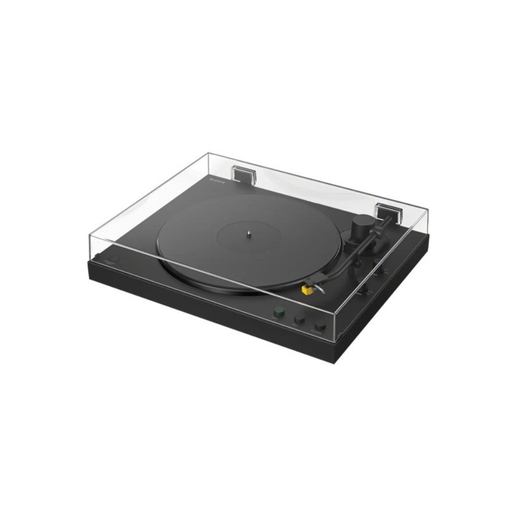 No image available
An option to consider if you’re looking at a Sony Bluetooth turntable; check that its connection options suit your existing equipment.
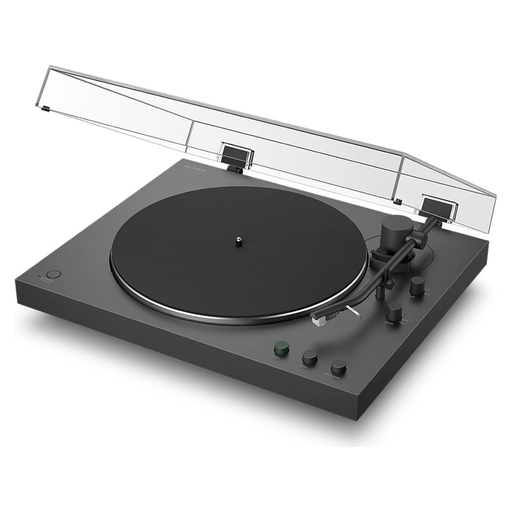 No image available
A good fit if you’re looking for automatic operation and Bluetooth. Sony Netherlands lists 33⅓ and 45 rpm, RCA and no USB connection for this model.
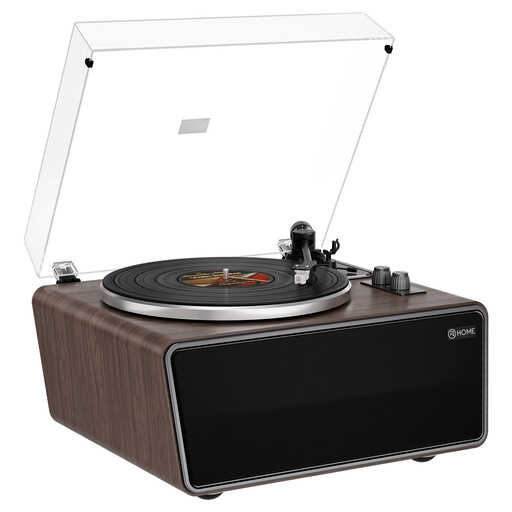 No image available
An option if you want built-in speakers. The product name lists four speakers, a phono preamp and an AT-3600L (MM) cartridge.
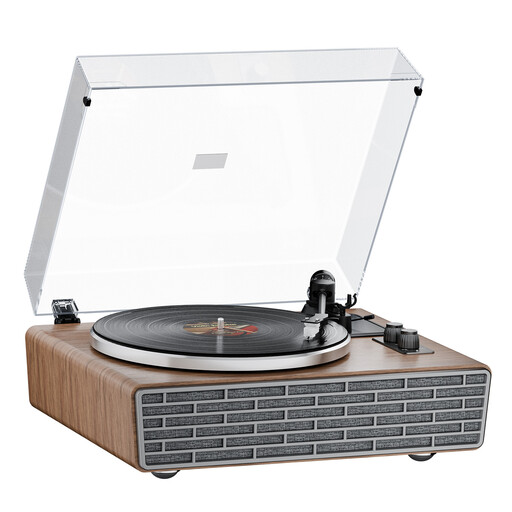 No image available
For anyone looking for Bluetooth and built-in speakers in one turntable. The product name lists four speakers, a transparent dust cover, belt drive and an AT cartridge.
For the AT-LP3XBT, Audio-Technica recommends a level surface and advises against placing it next to speakers because of vibration and acoustic pressure. Use this as a practical check for your own set-up; it’s the manufacturer’s advice for that installation, not a general placement rule.
Choose the setting that matches the input you’re connecting the turntable to. Audio-Technica lists a phono output and a line output via the built-in preamp for the AT-LP120XUSB; check your amplifier’s input before setting the switch.
According to Audio-Technica, the stylus on the AT-LP60X is replaceable, while the cartridge is integrated into the headshell. Before buying, check which replacement stylus is compatible with this exact model, and don’t assume the cartridge is universally interchangeable.
According to the Dutch government, distance purchases generally come with a 14-day cooling-off period; an online purchase from a private individual does not count as a distance purchase in the sense described. If a new, second-hand or vintage product breaks down within the first year, the seller must prove that the consumer is at fault. If they can’t, you’re entitled to a free repair or replacement.
Electrical appliances placed on the market in the EU must carry a CE mark. The Dutch government gives electronic devices as an example; check the mark on the specific item, as general model information doesn’t confirm that the product you receive carries it.