
Careful with sports fabrics
You don’t want to expose sportswear that the care label says is safe to tumble dry to an unsuitable programme. Check the garment’s care label and the model’s programme descriptions.


Start with the care label and only choose a programme that matches the permitted tumble-drying instructions. If you often dry small loads, also check whether the model has a dedicated small-load setting or a suitable short programme. Weigh these features against the current energy label, drying time and maintenance requirements.
You don’t want to expose sportswear that the care label says is safe to tumble dry to an unsuitable programme. Check the garment’s care label and the model’s programme descriptions.
You often dry just a few garments and want to know whether the dryer has a suitable small-load setting or a suitable short programme.
You use your dryer regularly and want to take the energy label’s figures into account, without assuming that a half-load uses the same energy per kilogram as a full drum.
Start with your clothes’ drying instructions, then compare the programmes, energy use, available space and maintenance requirements.
| What to consider | What to look for | Who is this most important for? |
|---|---|---|
| Suitable drying method | Check the tumble-drying symbol and temperature guidance; see whether the exact model has a suitable sportswear or synthetics programme. | I want to know first whether the programme matches my sportswear’s drying instructions; around 36% of this group prioritise fabric care. |
| Small loads | Check the conditions for using a half-load option, moisture sensor and any short programme, including the permitted load size and fabrics. | If I often dry just a few garments, I want to know which settings are genuinely designed for this; around 29% prioritise small loads. |
| Energy use | Compare the current energy label class and the consumption in kWh per 100 drying cycles using the eco programme. | If I dry clothes regularly, I want to take energy use into account without treating the label as a prediction for my small load; around 21% prioritise energy use. |
| Installation and maintenance | Measure the available space and check the drainage options and instructions for the lint filter and condensate collection. | I want to know in advance whether the dryer will fit in my utility room and what regular maintenance it needs; around 14% prioritise installation and maintenance. |
The garment’s care label tells you whether it can be tumble dried; the name of a dryer programme doesn’t change those instructions.
Check each care label first, then choose a programme that the manual says is suitable for the garment.
A small-load function alone won’t tell you how much energy your sportswear load will use. According to the Consumentenbond, two half-full drying cycles cost almost twice as much as one full cycle.
If you can wait, combine items that can safely be dried together, and don’t treat the energy label as an exact measure of the energy used for a small sportswear load.
The European Commission says the A–G scale for tumble dryers has applied since 1 July 2025, so older A+++ ratings aren’t directly comparable with the current label classes.
Compare models by their current label class and stated energy use per 100 drying cycles using the eco programme.
A drain connection needs a suitable outlet and some models may require an additional hose. The lint filter also needs regular maintenance.
Measure the space and read the installation and maintenance instructions for the exact model before buying.
The Bosch WQG233D0NL is a heat pump model worth comparing for sportswear and small loads.
The AEG TR7ROSTOCK is a heat pump model worth comparing if you’re also considering mixed loads.
The Beko BM3T3722W is a heat pump model with a maximum drying capacity of 7 kg, worth comparing with other models.
The Samsung DV90DG52A0ABEN is a 9 kg heat pump model worth comparing if you dry larger loads as well as sportswear.
These heat pump dryers have programmes or features worth considering when comparing models for tumble-dryer-safe sportswear and small loads. Check the programme conditions for each model and your clothes’ drying instructions.
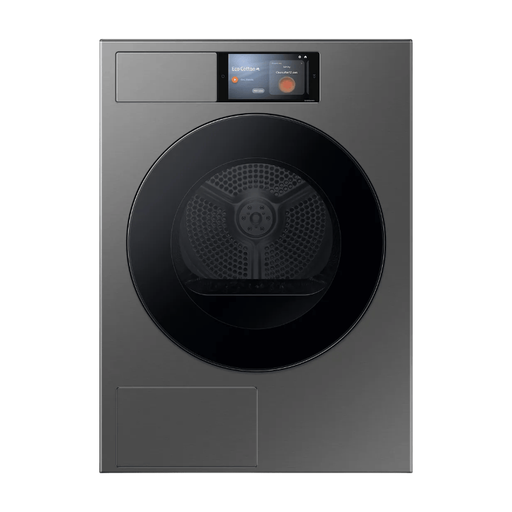 No image available
The product description mentions a Super Speed 35' cycle for small loads; check the conditions for using it with your laundry.
The title states 9 kg and energy label A. AI Dry+ with moisture detection is also mentioned. According to the user instructions, the condensate tank should be emptied after every cycle.
 No image available
The listed programmes include Sportswear and Synthetics; check that their conditions match your clothes’ drying instructions.
The title states 9 kg and energy label B. The product description also mentions Extra Quick 40' and Auto Dry. According to the user instructions, the lint filter should be cleaned after every use.
 No image available
The product description mentions Sportswear and Synthetics; check the programme instructions for your sportswear.
The title states 9 kg and energy label B. Auto Dry and Extra Quick 40' are also mentioned. According to the user instructions, the lint filter should be cleaned after every use.
 No image available
The product description mentions a Synthetics programme; check that its instructions are suitable for your clothes.
The title states 8 kg and energy label E. Sensor drying based on moisture detection is also mentioned. According to the user instructions, the filter and water tank should be dealt with after every use.
 No image available
The product description mentions Gentle Dry for delicate fabrics; check the usage conditions for your sportswear.
The title states 8 kg and energy label E. The description mentions Auto Dry and a 30-minute Quick Dry cycle.
No. Check the care label on each garment: the tumble-drying symbol and temperature guidance determine how it can be dried. A sportswear programme doesn’t override a ban on tumble drying.
Not automatically. Bosch describes SuperKort 40' on the WQG233D0NL as suitable for a small amount of synthetic and lightweight fabric. For other models, check their specific programme and load conditions.
According to the European Commission, the A–G scale has applied to tumble dryers since 1 July 2025. Also compare the stated energy use per 100 drying cycles using the eco programme; older A+++ ratings aren’t directly comparable with the current label classes.
Clean the lint filter after every drying cycle. If no drain is connected, follow the model’s instructions for emptying the condensate tank and maintaining the condenser.
No. A suitable condenser or heat pump dryer can collect water in a condensate tank. Connecting a drain is a practical option if the model and your utility room are suitable for it.