What to look for in a tumble dryer for school uniform
Start by deciding whether you want to dry a few items or a typical family load. Then check which fabrics and load sizes are allowed for each cycle, and compare suitable models by energy use and installation requirements.
| What to consider |
What to look for |
Who it matters most to |
| Quick drying time |
Check the cycle duration, permitted fabrics and maximum load; a quick cycle isn’t automatically suitable for every item of clothing. |
If I only need a few school uniform items before Monday morning, I look at both the duration and permitted load size of the quick cycle. Around 29% of consumers put drying time first. |
| Load capacity |
Compare your usual tumble-dryer load with the capacity; the maximum drum capacity doesn’t necessarily apply to every cycle. |
For regular family washing, I want to fit my usual tumble-dryer load into a suitable cycle. Around 23% of consumers prioritise load capacity. |
| Energy use |
Compare the current energy label and kWh per 100 eco cycles for models with a suitable capacity too; these figures don’t predict the energy use of a quick cycle. |
If the dryer is used often, I want to be able to compare energy use on a like-for-like label basis. Around 18% of consumers prioritise energy use for regular drying. |
| Fabric suitability |
Check the care label first, then see which fabrics and load sizes are allowed for the cycle you’ve chosen. |
When a load contains different fabrics, I want to know which items can go in the dryer together according to their care labels and the cycle instructions. Around 18% of consumers put clothing suitability first. |
| Installation and maintenance |
Measure the available space and check the installation instructions, drainage options and access for maintenance. |
In a small laundry room, I want to know in advance whether the appliance will fit and how to manage condensate and maintenance. Around 12% of consumers prioritise installation and maintenance. |
Tumble dryers on Joybuy for this use case
These product picks are intended for comparing models for regular family loads and situations where you’d like a quick drying cycle. Check which fabrics and load sizes are permitted for each model’s cycles.
 No image available
Candy BR 8N3BX-S heat pump tumble dryer, 8 kg, energy class C
The stated 8 kg capacity makes this model worth comparing for regular family loads; it doesn’t, on its own, tell you how long a quick cycle takes.
Specifications: heat pump tumble dryer, 8 kg, energy class C, AI Smart Move and Wi-Fi (hOn).
View on Joybuy
 No image available
Bosch WQH246DPFG Serie 6 heat pump tumble dryer, 9 kg
With its stated 9 kg capacity, this model is worth comparing for larger regular loads; capacity doesn’t guarantee how quickly a particular load will dry.
Specifications: heat pump tumble dryer, 9 kg, energy class B and control panel in NL/FR.
View on Joybuy
 No image available
SHARP KDNHA8S6PWEBX heat pump tumble dryer, 8 kg
The stated 8 kg capacity is a useful point of comparison for regular loads; if you need a quick emergency cycle, check the available cycle information separately.
Specifications: heat pump tumble dryer, 8 kg, energy class E, white.
View on Joybuy
 No image available
TCL DP4408WE1NL heat pump tumble dryer, 8 kg
The stated 8 kg capacity makes this model worth comparing for regular loads; for a quick cycle, check which fabrics and load sizes are permitted.
Specifications: heat pump tumble dryer, 8 kg, energy class E, 3D Drying and 3-in-1 filter.
View on Joybuy
 No image available
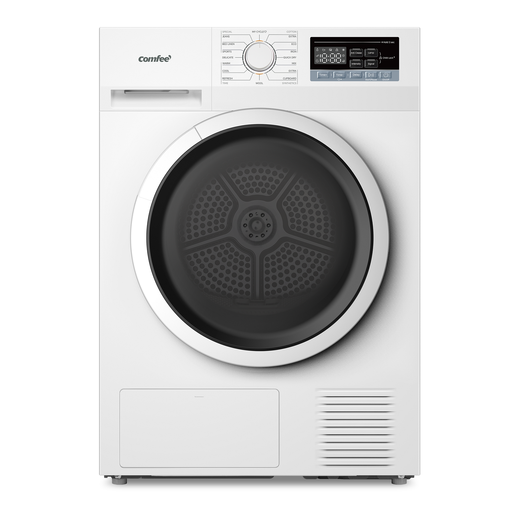
Comfee CFP01EH80W-JD tumble dryer, 8 kg
If you’re looking to dry a mixed load, this model is worth comparing, but check the cycle requirements for each item of clothing.
Specifications: 8 kg and low-temperature drying.
The product information lists flammable refrigerant R290. According to the stated safety instructions, the appliance must be used in a well-ventilated room of at least 4 m² and plugged into an earthed socket without an extension lead.
View on Joybuy
Frequently asked questions
Is Bosch’s 40-minute SuperQuick cycle suitable for all school uniform items?
No. Bosch says the SuperQuick cycle on the WQG233DENL is suitable for a small load of synthetic or lightweight fabrics. Check the care labels too, and don’t plan to dry a full load of cotton based on that cycle time.
What does the energy label tell me about a quick drying cycle?
The label includes information such as energy use in kWh per 100 eco cycles and the duration of the eco cycle. Energielabel.nl recommends taking energy use per 100 eco cycles into account when comparing models; these figures don’t predict the duration or energy use of every quick cycle.
What should I consider when installing a tumble dryer?
Measure the space and follow the installation instructions for stable positioning and heat dissipation. The Consumers’ Association recommends placing the appliance on a stable surface; also check how condensate is drained and make sure filters and other maintenance points remain accessible.
Does statutory protection in the Netherlands apply in addition to a manufacturer’s guarantee?
Yes. ACM ConsuWijzer explains that a product must meet what you could reasonably expect when used normally. If it doesn’t, the seller is responsible for providing an appropriate remedy free of charge. There isn’t automatically one fixed two-year statutory period for tumble dryers.
Do I have a cooling-off period when I buy a tumble dryer online?
For a standard online consumer purchase, you generally have a statutory cooling-off period of up to 14 days after delivery, according to ACM ConsuWijzer. Check the applicable terms for returning a large appliance.


