Choose a heat pump tumble dryer with a capacity that suits the towel loads you usually share, then compare each model’s energy use, drying results and noise levels. If you often run loads one after another, having enough capacity matters. If the dryer is near living or sleeping areas, also check its noise level and condensation efficiency. Agree who will clean the fluff filter after each cycle and, if there’s no drain connection, empty the water tank.
Who is this relevant to?
Housemates with lots of towels to wash
If you regularly use the dryer for consecutive loads, look for a capacity that suits the amount you usually wash and compare how evenly it dries thick towels. The Consumentenbond points out that some items may still be damp while others are already dry.
Housemates who share electricity costs
If you use the dryer regularly, it’s worth comparing the energy label and stated consumption for each specific model. Milieu Centraal recommends considering capacity if you dry clothes frequently; compare consumption using the current A–G label scale.
Housemates with a laundry room next to a living space
If the dryer is near a living room, home office or bedroom, check its stated noise level and the room’s ventilation. The Consumentenbond notes that a low noise level alone does not indicate how well a dryer performs.
What should you look for when buying?
Start with the usual amount of towels you dry in each load. Then compare energy use and programme duration, and check that the noise level, drainage and maintenance requirements suit where you plan to put the dryer.
| What to consider |
What to look for when buying |
Who should pay particular attention? |
| Capacity and drying results |
Compare the capacity for cotton in kg, the available dryness settings and information on even drying and programme duration. Check the towels’ care labels. |
If thick towels regularly go in the dryer with other washing, I want to know whether our usual load will fit and dry properly. Around 33% of consumers prioritise load capacity and drying results. |
| Energy consumption |
Compare the energy label and stated consumption using the same labelling scale. Milieu Centraal says heat pump tumble dryers generally use less electricity than older types without a heat pump. |
If we run lots of drying cycles and share the electricity bill, I want to be able to factor in energy use. The final cost also depends on our electricity tariff and how we use the dryer. Around 27% of consumers say energy consumption is their top priority. |
| Noise |
Compare the stated noise level in dB(A) and consider where the dryer will be placed. Independent noise and drying performance data can provide useful additional context. |
If the laundry room is next to a room where housemates live, work or sleep, I want to take noise into account without treating it as a measure of drying performance. Around 20% of consumers prioritise peace and quiet at home. |
| Installation and maintenance |
Measure the available space and check the drainage, condensation efficiency, installation instructions and access to the fluff filter. You may need a hose to connect the dryer to a drain. |
If ventilation is limited or we share maintenance tasks, I want to know in advance where the condensed water goes and who will clean the filter. Around 20% of consumers prioritise practical installation and clearly defined maintenance tasks. |
Common buying mistakes
-
Relying on the words ‘self-cleaning’ alone
A self-cleaning condenser doesn’t mean you can forget about the fluff filter after each use. The Consumentenbond recommends cleaning the filter after every drying cycle.
Check which parts the specific model cleans itself, and agree with your housemates who will clean the filter.
-
Assuming a quick programme means a quick load of towels
The short cycle Bosch describes for the WQG133DBNL is designed for a small load of synthetic and lightweight fabrics. That doesn’t tell you how long a full load of cotton towels will take.
Compare the duration and drying results of the cotton programme using a load similar to the ones you usually dry.
-
Forgetting about condensed water and the space around the dryer
If there’s no suitable drain, you’ll need to empty the water tank. Condensation efficiency also matters in a poorly ventilated room.
Before buying, check whether there’s a drain, what parts you’ll need and how the dryer should be installed according to the manual.
You may need a suitable drain hose if both the dryer and the room can be connected to a fixed drain.
Brands to consider
Beko
The BM3T3824W is an 8 kg heat pump tumble dryer worth comparing if its capacity suits your usual loads.
- Beko lists an energy label C rating and a noise level of 64 dBA for this model, and mentions its OptiSense drying sensor.
- These specifications alone don’t tell you how quickly or evenly it will dry towels in your home.
LG
The LG RHX1009NWK is a 9 kg heat pump tumble dryer to consider if you need to dry larger loads.
- LG mentions Sensor Dry, a double fluff filter and a self-cleaning condenser.
- The maintenance and drying benefits described by LG are manufacturer claims; the fluff filter still needs cleaning.
AEG
The AEG TR869T4C is a 9 kg model worth comparing if energy consumption, condensation and noise are important to you.
- AEG lists energy class B, 92 kWh per 100 eco cycles, condensation efficiency class A and a noise level of 61 dB.
- AEG’s AbsoluteCare information is a manufacturer claim and doesn’t by itself prove that towels will dry faster.
Bosch
The Bosch WQG133DBNL is an 8 kg heat pump tumble dryer worth comparing if the available installation space is a factor.
- Bosch lists Auto Dry, a noise level of 63 dB(A) and dimensions of 842 × 598 × 613 mm.
- According to Bosch, this model doesn’t have a self-cleaning condenser; the drying benefits described are manufacturer claims.
Samsung
The Samsung DV90DG52A0ABEN is a 9 kg model worth comparing if a reversible door would make it easier to position.
- Samsung lists energy label C and a reversible door.
- The hygiene performance described applies to Samsung’s programme and its specific test conditions; it isn’t a general guarantee for every load of towels.
Tumble dryers at Joybuy
These Joybuy products are heat pump tumble dryers for shared loads of towels. Compare their capacity, programmes and maintenance requirements with your space and how you’ll use them.
 No image available
Candy BR 8N3BX-S, 8 kg
The 8 kg capacity is worth comparing with the loads of towels you usually share.
The product information lists energy label C, 62 dB(A), a humidity sensor and a self-cleaning condenser.
View at Joybuy
 No image available
Bosch WQB245B40 Series 8, 9 kg
The 9 kg capacity and the stated towel programme make this model worth comparing with your loads.
The product information lists AutoDry and a cotton programme lasting 195 minutes at full load. The energy label B rating refers to the German label.
View at Joybuy
 No image available
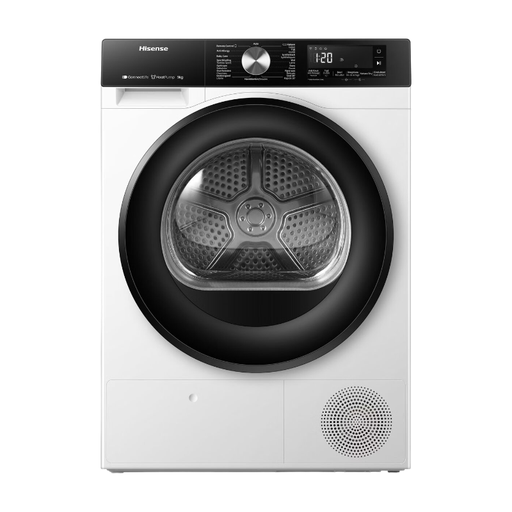
Hisense DH3S902BW3, 9 kg
The stated 9 kg capacity is worth considering if you regularly share larger loads.
The product information lists an automatic programme and a reversible door.
View at Joybuy
 No image available
Midea MD205H80WB/W-NL, 8 kg
The 8 kg capacity can be compared with the amount of towels your housemates usually dry together.
The product information lists energy label C, sensor control and 14 programmes. According to the product information, the fluff filter and condenser must be cleaned after every drying cycle.
View at Joybuy
 No image available
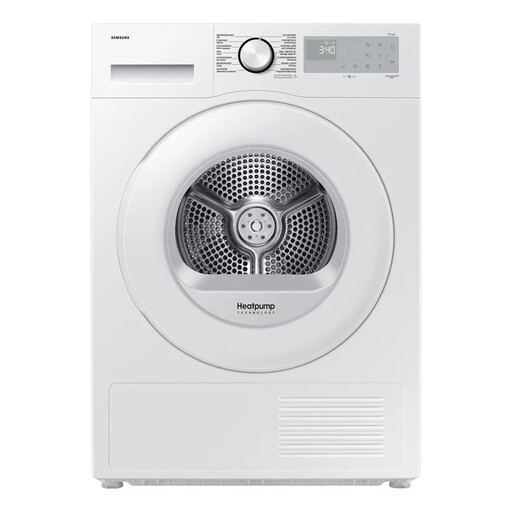
Samsung DV9UDG52A0THEN, 9 kg
The 9 kg capacity is a useful comparison point for housemates who share larger loads of towels.
The product information lists energy label C, condensation efficiency class B and 105 kWh per 100 cycles. The fluff filter must be cleaned after every drying cycle, and the condenser should be checked and cleaned.
View at Joybuy
Frequently asked questions
Which programme should you use for towels that are suitable for tumble drying?
First check the care label, then compare the model’s cotton programmes and dryness settings. When assessing tumble dryers, the Consumentenbond looks at factors including whether cotton dries evenly and whether the results match the selected dryness setting.
What should housemates do after a drying cycle?
Clean the fluff filter after every cycle and empty the water tank if you’re using one. If the dryer is connected to a suitable water drain, you won’t need to empty the tank. Follow the model’s manual for any other cleaning.
Can you put a tumble dryer in a small, shared laundry room?
It depends on the available space and the installation instructions for the model you choose. Check the access route too, and if ventilation is limited, look at the condensation efficiency. The Consumentenbond warns that moisture escaping into a poorly ventilated room can cause problems.
Who should you contact if the tumble dryer turns out to be faulty?
For a consumer purchase in the Netherlands, the seller is your point of contact if a product is faulty. According to the Dutch government, the seller can’t simply refer you to the manufacturer; an applicable manufacturer’s guarantee doesn’t replace your statutory rights.
Which energy label must a newly sold tumble dryer display in the Netherlands?
Since 1 July 2025, household tumble dryers sold in shops and online in the EU must display the revised A–G energy label. So don’t compare an older A+++ rating directly with a current letter rating.


