
Anyone caring for sportswear
You regularly tumble-dry sportswear and want to choose a programme that suits the fabric and care symbols. GINETEX makes clear that the care label determines whether a garment can go in the tumble dryer.


Start with the care label and choose a heat pump dryer with a programme suitable for your tumble-dryer-safe sportswear. If you live in an upstairs flat, also compare the stated noise level, condensation efficiency and installation options. The energy use shown for the eco programme won’t tell you exactly how much a sportswear programme uses.
You regularly tumble-dry sportswear and want to choose a programme that suits the fabric and care symbols. GINETEX makes clear that the care label determines whether a garment can go in the tumble dryer.
You’re mindful of the stated noise level, stable positioning and how moisture is collected. The Consumers’ Association recommends placing a tumble dryer level on a stable surface to help reduce vibration and noise.
You compare the energy use of the eco programme with the programmes you actually use. Energielabel.nl explains that the figure on the label is based on 100 drying cycles using the eco programme.
Compare the care labels on your sportswear with the programme instructions, then check that the noise level, moisture collection and installation options suit the room upstairs.
| What to consider | What should you check? | Who is this important for? |
|---|---|---|
| Sportswear and programmes | Check the drying symbol, instructions and load limit for the programme you’ve chosen. | If I’m drying sportswear, I want the treatment to suit both the care label and the fabric. Around 30% of consumers put textile care first. |
| Noise and moisture collection | Compare the noise level and condensation efficiency on the same label basis; check that the floor is stable and level. | If the dryer is close to a living or sleeping area, I want to take noise and moisture in the room into account. Around 30% of consumers prioritise a quiet, dry living space. |
| Energy use | Compare the current A–G energy label scale and the energy use per 100 eco drying cycles. | If I dry clothes regularly, I want to be able to compare the eco programme and consider the programmes I use separately. Around 20% of consumers prioritise running costs. |
| Installation and maintenance | Measure the space, including the doorway, and check the drainage, filter access and user manual. | If the dryer is going upstairs, I want to be able to install, use and maintain it without the space getting in the way. Around 20% of consumers prioritise installation and everyday convenience. |
A programme name doesn’t change what the care label allows. The wrong treatment can damage clothing.
First check the drying symbol on each garment, then compare the permitted treatment with the programme instructions.
The energy label doesn’t tell you on its own how well a dryer collects moisture. Lower condensation efficiency can mean more moisture in the room.
Also compare condensation efficiency and assess the ventilation in the space where the dryer will go.
The maximum capacity doesn’t tell you how much laundry will fit in a specific sportswear or synthetics programme. On some appliances, moisture sensors may be less effective with very small loads.
Check the programme table and match the permitted load to the laundry you typically dry.
You also need to consider the route to the installation space, the doorway, the stability of the floor and room for maintenance.
Measure the entire route and the space itself. Check what installation involves and whether you’ll need a drainage connection or an extra hose.
The WRB247C9NL is worth considering if the stated noise level and energy figures are key priorities.
The TR738C4B is a heat pump dryer to compare if you’re looking for sensor drying and programmes for different loads.
The WQ33G1DENL is worth considering if you also have tumble-dryer-safe outdoor or water-repellent clothing.
The BM3T3722B is a heat pump model to compare if a lower maximum load is enough for you.
The TEL695WP is worth considering if a sportswear programme suits the items you actually dry.
These heat pump dryers are options to compare for tumble-dryer-safe sportswear. Check the user manual for each model and the care label on your garment. Having a particular programme doesn’t guarantee that every item can go in it.
 No image available
A Sportswear programme makes this model worth comparing for sportswear. Always follow the care label and programme instructions.
Sportswear programme, AutoDry, Sensitive Drying and self-cleaning condenser.
 No image available
Compare this model if you’re looking for programmes for synthetics or delicate fabrics, and check that the instructions suit your clothes.
Sensor drying, Synthetics and Delicates programmes, and a stainless steel drum.
 No image available
The Gentle Dry mode makes this model worth comparing for fabrics that can be given a gentler treatment. Check the care label.
Gentle Dry, Auto Dry, 3D Drying and a 3-in-1 filter.
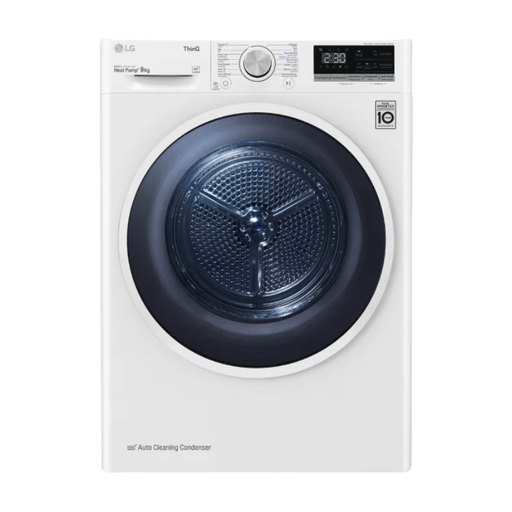 No image available
According to the product information, sensor drying adjusts the drying time to the moisture level. Check for yourself whether the programme is suitable for your sportswear.
Eco Hybrid and a self-cleaning condenser.
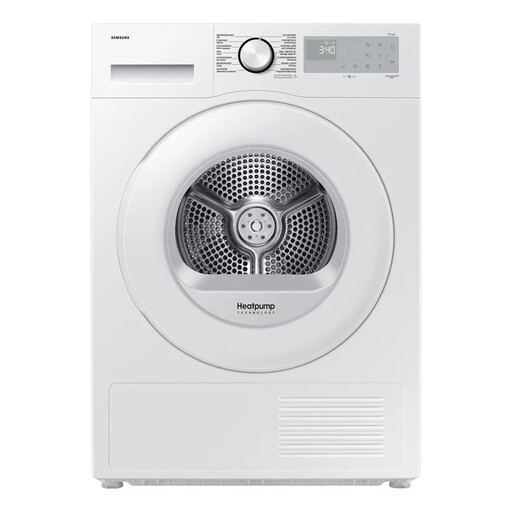 No image available
Compare this model if capacity and condensation efficiency are important to you. The stated features don’t tell you how much energy a sportswear programme will use.
Optimal Dry and condensation efficiency class B.
No. Check the drying symbol on each garment and follow the permitted treatment. A programme name doesn’t override a ban on tumble drying.
Compare the energy use of the eco programme, the stated noise level and condensation efficiency. These figures don’t directly predict how much vibration will travel through your floor or how much energy a sportswear programme will use.
Place the dryer level on a stable surface and leave enough clearance around it. Clean the lint filter after every drying cycle and follow the user manual for maintaining the heat exchanger.
The European Commission states that, since 1 July 2025, tumble dryers have carried an energy label on a scale from A to G. Don’t compare older A+++-style ratings as if they used the same scale.