
Sports enthusiasts with small loads
You want to dry small loads of sportswear regularly. Check the care label on each item first; a suitable programme for synthetics or small loads matters more than the maximum drum capacity alone.


Start by checking the care labels on your sportswear and the space where the tumble dryer will go: a sports programme doesn’t make garments marked ‘do not tumble dry’ suitable for the drum. Then compare suitable heat pump tumble dryers based on programmes for small or synthetic loads, dimensions, noise and condensate drainage. For energy comparisons, use the current A–G label; the European Commission has used this scale for household tumble dryers since 1 July 2025.
You want to dry small loads of sportswear regularly. Check the care label on each item first; a suitable programme for synthetics or small loads matters more than the maximum drum capacity alone.
Start with the available space, the doorway, condensate drainage and the risk of damp in a poorly ventilated room. A freestanding tumble dryer involves different considerations from a washer-dryer.
You’ll want to know how much noise a drying cycle can make. Compare the noise figures for the exact models you’re considering, and don’t mistake a quiet end-of-cycle signal for a quieter drying cycle.
Start with the care label and the space available. Then compare the programmes and practical features that suit your laundry routine.
| What to consider | What should you check? | Who is this important for? |
|---|---|---|
| Sportswear and small loads | Follow the care labels and check the permitted load for each programme. Look for a suitable setting for synthetics, sportswear or small loads. | If I regularly dry a small load of sportswear, I want to know whether both the care label and the programme allow tumble drying. Around 33% of consumers prioritise suitable fabric care and small loads. |
| Space and damp | Measure the available space and access route, and check the installation requirements, ventilation and condensate drainage options. | In a small flat, I want to be sure the machine will fit and that the space will still be practical to use. Around 27% of consumers focus mainly on installation and moisture management. |
| Noise near living areas | Compare the noise figures for the exact models and check the conditions under which they were measured. | If the tumble dryer is close to my living or sleeping area, noise during a drying cycle matters. Around 20% of consumers consider noise one of their main concerns when buying. |
| Energy use and maintenance | Compare the current A–G label and energy use on a like-for-like basis; also check the model-specific instructions for the filters and condenser. | If I use the tumble dryer regularly, I want to know in advance what maintenance it will need and how to compare models for energy use. Around 20% of consumers focus mainly on running costs and maintenance. |
A programme doesn’t change the care instructions for a garment. Items marked ‘do not tumble dry’ are still unsuitable for the drum, even if the tumble dryer has a sports programme.
Sort your laundry by care label, then check the programme instructions. Nike Netherlands also advises following the care label on a jersey.
A tumble dryer might fit on paper but be impractical if the door can’t open properly or the drainage and ventilation aren’t suitable for the space.
Measure both the installation space and the access route. Check the installation manual, condensate drainage options and the model’s condensation efficiency.
A function that switches off notification sounds doesn’t tell you how much noise the machine makes while drying.
Compare the stated operating noise for the exact models and check the conditions under which it was measured.
The current European energy label scale for household tumble dryers runs from A to G. An old A+++ rating can’t be compared directly with a current label class. A self-cleaning condenser also doesn’t eliminate the need to maintain all the filters.
Compare current product information on a like-for-like basis and follow the filter instructions for the model you choose. The Netherlands Fire Service stresses the importance of keeping filters clean.
The VDW8020W is worth considering if you’re looking for a heat pump tumble dryer with a dedicated sports programme.
The WQG133DBNL is worth a look for small loads; the WQH246DPFG is a separate 9 kg model that may be relevant if noise is a consideration.
The TEA528WP 8kg Active is worth considering if installation options and fabric-care programmes are important to you.
The BM3T3923W is a heat pump tumble dryer worth considering if you sometimes have larger everyday loads as well as small sportswear loads.
This selection includes heat pump tumble dryers for clothes whose care labels allow tumble drying. Compare capacity and energy label with the space available and your drying routine.
 No image available
Check that the drying programmes are suitable for your sportswear, and always follow the care label.
Capacity: 8 kg. Energy label: C.
 No image available
Check that the programmes and permitted load are right for the clothes you want to dry.
Capacity: 8 kg. Energy label: E.
 No image available
Check that the drying settings are suitable for the fabrics and small loads you want to dry.
Capacity: 8 kg. Energy label: E.
 No image available
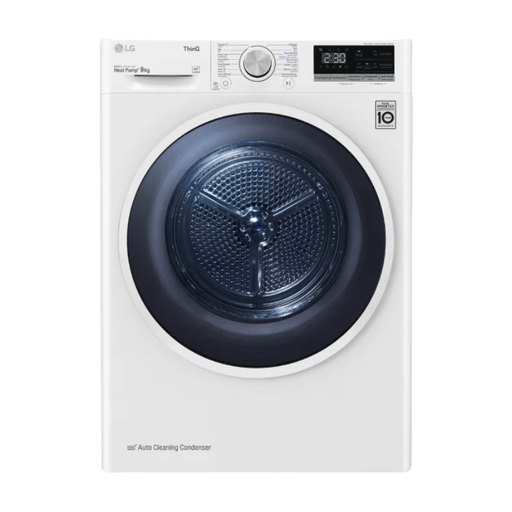
If you dry small sportswear loads, check that the programme load is suitable; the stated capacity is 9 kg.
Capacity: 9 kg. The product name specifies a self-cleaning condenser.
 No image available
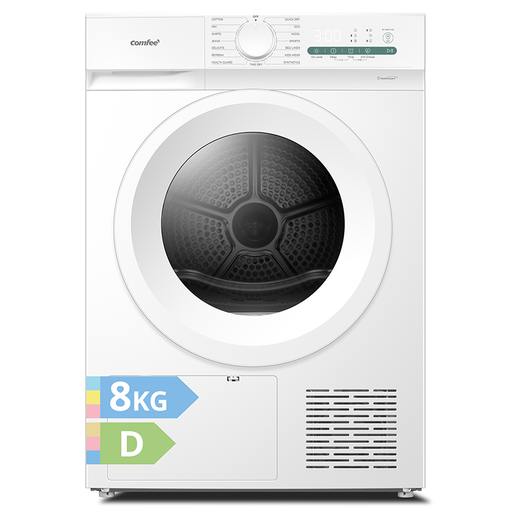
If the care label allows tumble drying, the listed sportswear setting may be suitable. Follow the garment’s care label when using this programme too.
Capacity: 8 kg. Energy label: D.
No. Always check the care label on each item first. Nike Netherlands advises avoiding the tumble dryer for some printed jerseys; the name of a machine programme doesn’t change the garment’s care instructions.
No. A heat pump tumble dryer collects moisture in a reservoir or, if the model and connection allow, drains it through a water outlet. Also consider the condensation efficiency and ventilation in the room where it will be installed.
Follow the model’s instructions and clean the filters thoroughly. The Netherlands Fire Service stresses the importance of cleaning filters to reduce fire risk; a self-cleaning condenser doesn’t mean the fluff filter no longer needs attention.
Since 1 July 2025, household tumble dryers have used the European Commission’s revised A–G scale. Don’t compare an old A+++ rating directly with a current label class.