
Drying sportswear with care
You want to avoid treating tumble-dryer-safe clothes at a higher temperature than the care label allows. GINETEX explains what the care symbols mean; also check the programme instructions for the model you choose.


First, check that the dryer will fit in both homes, then choose a programme that matches the care symbols on your sportswear. A heat pump dryer can use less energy by drying at a lower temperature, but a cycle may take longer. A short programme is only suitable for the load and fabrics specified by the manufacturer.
You want to avoid treating tumble-dryer-safe clothes at a higher temperature than the care label allows. GINETEX explains what the care symbols mean; also check the programme instructions for the model you choose.
You have a deadline before your move and want to know whether a programme is suitable for your small load. Bosch Netherlands describes the WQG233DENL’s 40-minute programme as suitable for a small amount of synthetic material and lightweight fabrics.
You need to consider the dimensions, access routes, installation and condensate drainage at both your current and next address. Consumentenbond also recommends placing the dryer on a stable, level surface to reduce vibration and noise.
Start with the care symbols on your clothes and the space available. Then compare drying times and energy use for the programmes you’ll actually use.
| What to consider | What to look for | Who should pay particular attention? |
|---|---|---|
| Programme and temperature | Check the drying symbol on each garment and compare it with the instructions for the specific programme. | If I want to dry sportswear safely according to its care label, I first check the permitted tumble-drying treatment. Around 33% of consumers put fabric care first. |
| Dry before you leave | Check which fabrics and load size a short programme is designed for; also allow time for sorting and unloading. | If I need a small load ready on time, I check the programme requirements rather than relying on its name or duration alone. Around 27% of consumers prioritise meeting a deadline. |
| Space at both addresses | Measure the dryer, access routes and installation space; check the required clearance and condensate drainage options. | If I need to move the appliance and install it in a small room, I want to know in advance whether it will fit and can be connected. Around 20% of consumers start by considering where to put it. |
| Energy use over time | Compare the current A–G label and stated energy use on a like-for-like basis; the label’s energy-use figure relates to the eco programme. | If I’ll continue drying clothes regularly after the move, I factor in electricity use as well as the programmes I use. Around 20% of consumers prioritise running costs. |
Milieu Centraal notes that heat pump dryers can cost more to buy, but may work out cheaper over time because they use less electricity. Bear in mind that drying times vary by programme and load.
According to Bosch Netherlands, the Bosch WQG233DENL’s quick cycle is designed for a small amount of synthetic material and lightweight fabrics. A different load may take longer than your schedule allows before you leave.
Check your laundry against the programme requirements, and don’t plan around the duration alone.
An extra drying cycle could delay your plans before you leave.
A clothing category doesn’t determine what temperature a fabric can withstand; the care label tells you what tumble-drying treatment is permitted.
Sort clothes by their drying symbols and choose a suitable programme for each load.
Doors, access routes, clearance around the appliance and the way condensate is drained can all affect where it can be installed. Consumentenbond recommends a stable, level installation.
Measure both addresses and check the manual for installation requirements and any parts you may need.
You may need a suitable drain hose or stacking kit, depending on the model and installation.
The European Commission states that, since 1 July 2025, tumble dryers sold in shops and online have used the A–G scale. This means an old label cannot be directly compared with a letter on the current scale.
Compare current labels and stated energy use on a like-for-like basis; also consider the programme you’ll actually use.
The WQG233DENL is an 8 kg heat pump dryer to compare when looking at programmes for sportswear and small synthetic loads.
The BM3T3722W is a 7 kg heat pump option to consider if you usually expect to dry smaller loads.
The 8000 AbsoluteCare TR86CBC87 is an 8 kg heat pump option to explore if you also need to dry suitable outdoor clothing.
The DV90DG6845LKU3 is a 9 kg heat pump option to compare if you expect to dry larger loads after your move.
This selection of Joybuy products includes heat pump dryers with stated sportswear or sensor-controlled drying features, as well as models with larger drum capacities.
 Image unavailable
The listed Sportswear cycle makes this model worth considering if the care label says your sportswear can be tumble-dried.
The product name lists 9 kg, AutoDry, Sensitive Drying and a B energy label (German control panel).
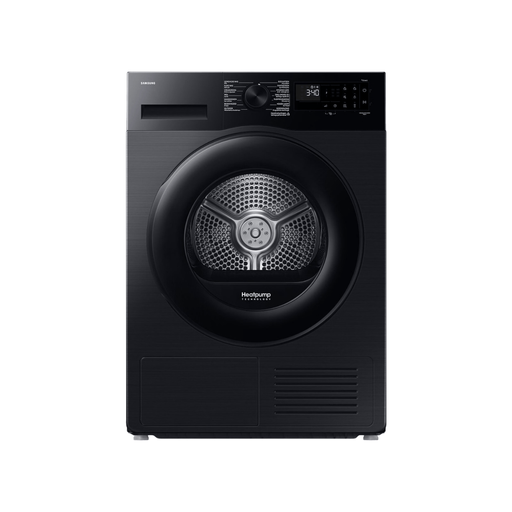 Image unavailable
The product information lists OptimalDry, which measures moisture and temperature; check whether the programme instructions are suitable for your clothes.
The product name lists a 9 kg capacity, C energy label, 1400 rpm and 64 dB.
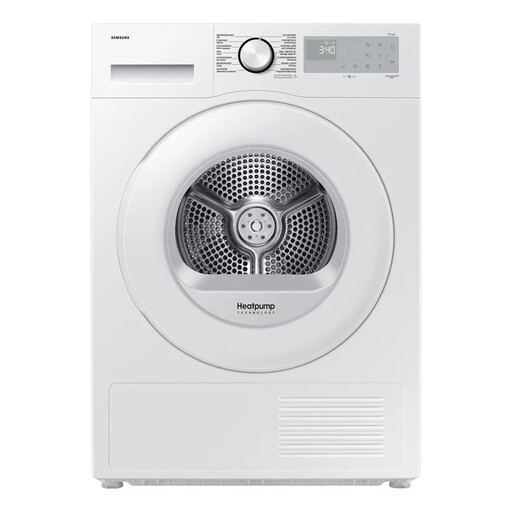 Image unavailable
The product information lists an Optimal Dry system; check the programme instructions to see whether they’re suitable for your sportswear.
The stated capacity is 9 kg and the energy label is C. The stated energy use is 105 kWh per 100 cycles; the dimensions are 85 × 60 × 60 cm. The product information says that adequate ventilation is required.
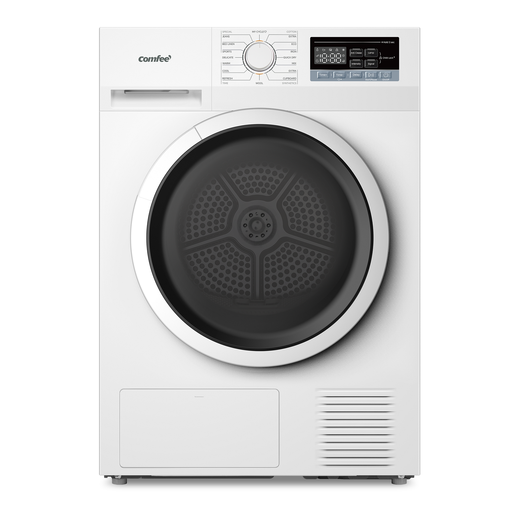 Image unavailable
The product information lists a Sports programme and low-temperature drying; compare these details with your clothes’ care labels.
The product name lists 8 kg and a D energy label. The safety information specifies installation in a well-ventilated room of at least 4 m² and connection to an earthed 220–240 V socket.
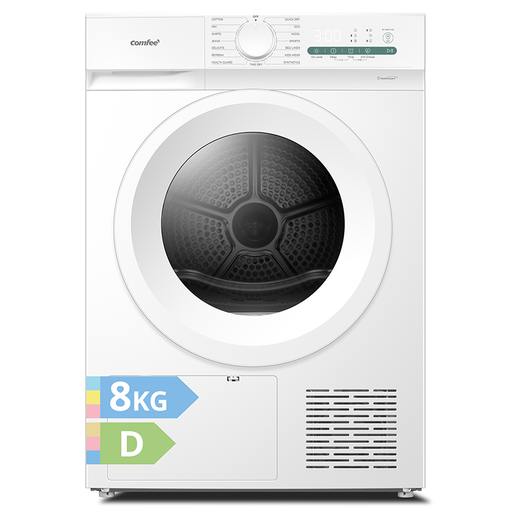 Image unavailable
The listed Sports cycle, low-temperature drying and Quick Dry function may be useful if you check the programme requirements against your clothes and schedule.
The product name lists an 8 kg capacity and a D energy label. The product information also lists sensor-controlled drying.
No. A tumble-drying symbol doesn’t mean that every temperature is suitable. According to GINETEX, the dots indicate the permitted temperature; a crossed-out symbol means the garment must not be tumble-dried. Choose a programme to suit each item.
Check the model’s dimensions and access routes, and make sure you have a stable, level installation space with enough clearance. Consumentenbond also recommends checking the condensate drain; consult the manual if you want to use a hose.
Following Consumentenbond’s usage advice, clean the fluff filter after every cycle and empty the condensate tank if there’s no drain hose connected. Follow the manual for the exact model for instructions on other filters and parts.
Since 1 July 2025, tumble dryers sold in shops and online have displayed the A–G label, according to the European Commission. So don’t compare a current rating directly with an old plus-rated label. The stated energy use on the label is also based on the eco programme.
No. The Dutch government states that the Netherlands has no fixed statutory guarantee period. You’re entitled to expect a product to meet what you could reasonably expect of it; if a product is faulty, contact the retailer. A manufacturer’s guarantee is in addition to this.