
Families with occasional small loads
You often dry a few items of clothing between washes and want to know whether a sensor or small-load function would be useful for your laundry.


If you alternate small loads with towels or bedding, compare standard heat pump tumble dryers by capacity, sensor drying and whether they have a dedicated small-load function. A mini dryer is mainly an option if your loads stay within its maximum capacity of 3 kg. Also compare the energy label information and check that a short programme is suitable for the fabrics in question.
You often dry a few items of clothing between washes and want to know whether a sensor or small-load function would be useful for your laundry.
You sometimes dry small loads but also want room for towels or bedding. So, consider both the capacity and the programmes available for the fabrics you dry.
Your choice depends on the space available, the options for draining condensation and safe installation, including if you want to stack the dryer.
First decide which small and larger loads you want to dry. Then compare energy use on the same label basis and check the installation options.
| What to consider | What should you check? | Who is this important for? |
|---|---|---|
| Small loads | Look for a moisture sensor or a dedicated function for small or half loads. Also check which fabrics are suitable for a short programme. | If I often dry just a few items of clothing, I want to know whether the programme suits that amount of laundry and those fabrics. Around 36% of consumers give small loads top priority. |
| Energy use | Compare the current A–G label and energy use in kWh per 100 drying cycles on the eco programme. | If I use the dryer regularly, energy use matters alongside the purchase price. Around 29% of consumers put energy use top of their list. |
| Varying load sizes | Compare the maximum drying load with your usual laundry and the larger loads you sometimes dry. Check which programmes are suitable for the fabrics. | I want to dry small loads without losing the space for towels or bedding. Around 21% of consumers particularly value this flexibility. |
| Installation and maintenance | Measure the available space and check the manual for installation, drainage and any stacking compatibility. Remember to clean the fluff filter. | If laundry space is limited, the dimensions and connections need to suit the space at home. Around 14% of consumers give installation and everyday use top priority. |
A compact size alone does not tell you how much energy a model uses per drying cycle. A load that does not fit in one go may also require extra cycles.
Compare the capacity and stated energy use of the exact model with the loads you actually dry.
Bosch lists a 40-minute programme for the WQG233DLNL for a small amount of synthetic and lightweight fabrics. This is not a general drying time for other fabrics or loads.
Check the programme instructions and clothing labels. For other fabrics, choose a suitable programme.
External dimensions alone do not tell you whether the installation will fit or whether a dryer can be safely placed on top of a washing machine.
Check the manual, the space needed for use and maintenance, the drainage and the compatibility of any stacking kit.
The WQG233DLNL is a heat pump tumble dryer to consider if you alternate small and larger loads.
The TR73CB86 is an 8kg heat pump tumble dryer with features worth comparing if your small loads include different suitable fabrics.
The BM3T3824W is an 8kg heat pump tumble dryer with an OptiSense drying sensor.
The TEC648WP is an 8kg heat pump tumble dryer with DirectSensor and control via Miele@home.
This selection includes heat pump tumble dryers with different capacities for family loads. For each model, check whether the programmes and specifications suit both small loads and the larger loads you want to dry.
 No image available
Worth comparing if you alternate small and larger family loads: the product information lists a humidity sensor and six quick programmes. The title describes an 8 kg heat pump tumble dryer with energy class C.
 No image available
Worth considering if you also dry larger family loads; the product information lists AutoDry and a programme for partial loads. The title states 9 kg and energy class B (German panel); the description lists 15 programmes.
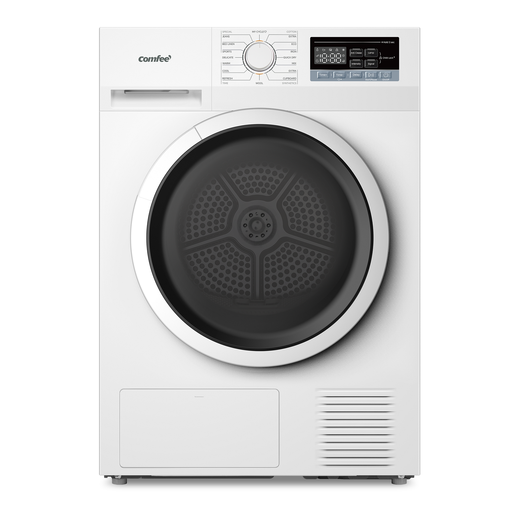 No image available
Worth comparing if you want to explore different drying levels and programmes for varying load sizes. The title states that it is an 8 kg heat pump tumble dryer; the product information lists three drying levels and 16 programmes. For the R290 model, the description specifies a well-ventilated room of at least 4 m²; follow the manual.
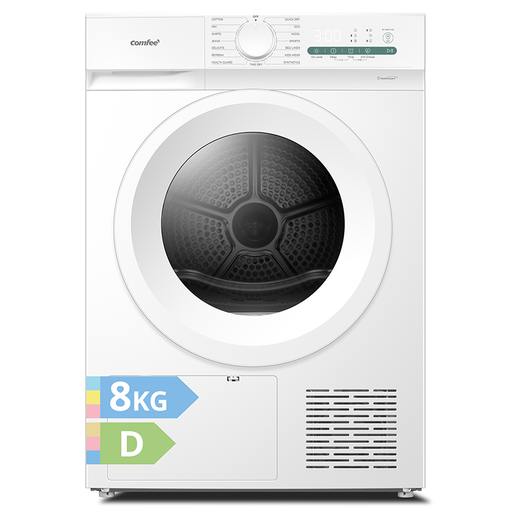 No image available
Worth comparing if you are looking for a heat pump tumble dryer for family loads and want to explore different settings. The title states 8 kg and energy class D; the product information lists three drying levels and special programmes.
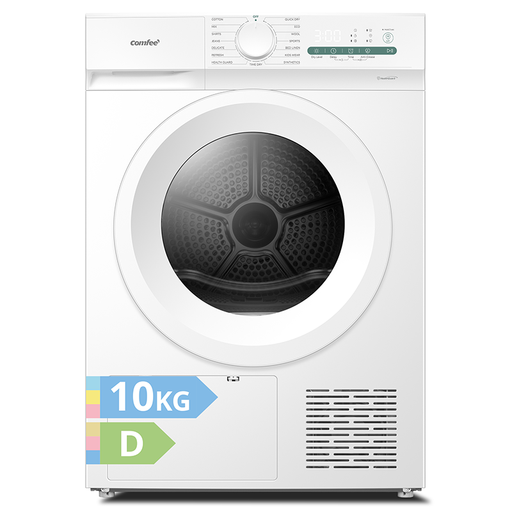 No image available
Worth comparing if you want to dry larger loads as well as small ones. The title describes a 10 kg heat pump tumble dryer with energy class D; the product information lists three drying levels and several programmes.
No. Do not compare label letters from different rating systems as if they were equivalent. Energielabel.nl states that the A–G scale for tumble dryers has applied since 1 July 2025. For models using this scale, also check the energy use in kWh per 100 drying cycles on the eco programme.
Check the permitted load size and fabrics for the programme on each model. For example, Bosch lists a 40-minute programme for the WQG233DLNL for a small amount of synthetic and lightweight fabrics, not for every load.
Compare the maximum drying load with both your small loads and the larger loads you sometimes dry. Milieu Centraal suggests 8 or 9 kg as an option for a large family or for those who use the dryer more often; your own usage will determine the right capacity.
Not if your chosen model has a condensation tank that you can empty by hand. Connecting it to a drain can save you from having to empty the tank; Bosch recommends checking whether this is possible and what is required for the exact model.
Remove fluff from the filter after every use and follow the maintenance instructions in the manual. The Fire Service recommends cleaning the filter after each use; also follow the manufacturer's installation and ventilation instructions.