
People who often dry small loads
You regularly dry small amounts of laundry and want to know whether a half-load setting or moisture sensor would suit your needs. Also check that the capacity can accommodate the loads you dry at other times.


If you regularly dry small loads, compare dryers with a dedicated small-load setting or moisture-sensing programmes, and also consider capacity and the energy label. If you only use a dryer occasionally, your usage habits and clothing care labels matter just as much: a special programme does not make clothes suitable for tumble drying if their care label says they should not be tumble dried.
You regularly dry small amounts of laundry and want to know whether a half-load setting or moisture sensor would suit your needs. Also check that the capacity can accommodate the loads you dry at other times.
You mainly use a dryer around the change of seasons and want to weigh up its capacity and stated energy consumption against how often you actually use it. Milieu Centraal recommends a capacity of 6 or 7 kg for people who live alone or rarely use a dryer.
You want to care for different garments without overlooking their care instructions. GINETEX care symbols show whether tumble drying is allowed and which type of treatment is suitable.
Start with the feature that suits how you use the dryer: load sensing for regular small loads, followed by capacity, energy-label consumption, clothing programmes and the practical requirements for installation and maintenance.
| What to consider | What should you check? | Who is this important for? |
|---|---|---|
| Small loads and capacity | Look for a dedicated half-load setting or moisture-sensing feature. Choose a capacity that also suits the loads you want to dry at other times. | If I mainly dry small seasonal loads, I want to know whether the settings are designed for them. Around 36% of consumers say small-load performance is their main consideration when choosing. |
| Energy consumption | Compare the energy class and kWh per 100 eco cycles on the current label. Since 1 July 2025, tumble dryer energy labels have run from A to G, according to Energielabel.nl. | If I only dry a few loads, I want to compare the stated consumption with how I use the dryer. Around 29% of consumers mainly consider the balance between energy consumption and how often they use it. |
| Different types of clothing | First check the care label on each garment, then compare the programmes permitted for it. GINETEX explains what the care symbols mean. | When I put away or bring out clothes with different care instructions, I want to know whether each item can be tumble dried. Around 21% of consumers put clothing care first. |
| Installation and maintenance | Check the external dimensions, the space required and the model’s installation instructions. Also find out how to maintain the filter, drain hose or condensate tank. | If space is limited, I want to know in advance whether the dryer will fit and what needs to be done after each drying cycle. Around 14% of consumers give installation and maintenance top priority. |
Since 1 July 2025, tumble dryer labels have used the A–G scale. A rating on the older scale is therefore not directly comparable with a new label, according to the European Commission.
Compare current product information for the exact model you are considering, including its consumption per 100 eco cycles.
A programme does not change a garment’s care instructions. Clothes whose labels prohibit tumble drying are not made suitable by a programme named after a fabric.
First sort clothes by their care labels, then choose a suitable programme only for garments that can be tumble dried.
A large drum alone does not tell you how a dryer adjusts its settings for a small load.
Check whether your chosen machine has a dedicated small-load setting or moisture-sensing feature, and consider what capacity you will need outside the change of seasons too.
Bosch Netherlands lists a half-load option for the WQG133DANL, designed to adjust the settings for small loads.
The Beko BM3T3722W is a heat pump tumble dryer with a stated capacity of 7 kg.
AEG lists the TR72CBZ86 as an 8 kg heat pump tumble dryer with a MixDry programme for mixed loads.
LG lists the RHX1008NWH as an 8 kg heat pump tumble dryer with Sensor Dry.
This selection includes heat pump tumble dryers with different capacities and drying features. Compare the specifications listed with how you dry small loads, your clothing care instructions and the space available.
 No image available
Could suit anyone looking for moisture-controlled drying; AutoDry is listed in the product name.
The product name also mentions Sensitive Drying and energy class B (German panel). Follow the safety instructions: use an earthed socket and do not dry items that have been treated with flammable substances.
 No image available
An option to compare if you are looking for a heat pump tumble dryer with sensor control and a short programme for small loads.
The product name lists energy class C, sensor drying and a 30-minute programme. According to the product information, the filter and condenser should be cleaned after every drying cycle; check the clothing labels too.
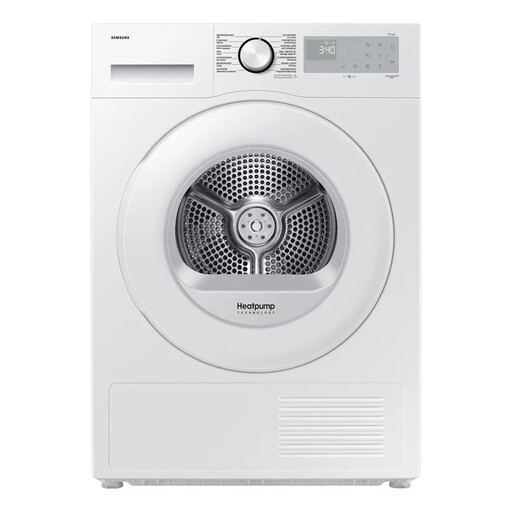 No image available
Could suit anyone looking to compare a heat pump tumble dryer with the Optimal Dry system mentioned in the product name.
The product name lists a freestanding model with a capacity of 9 kg. The product information says to clean the lint filter after every drying cycle and warns against drying items that have been treated with flammable substances.
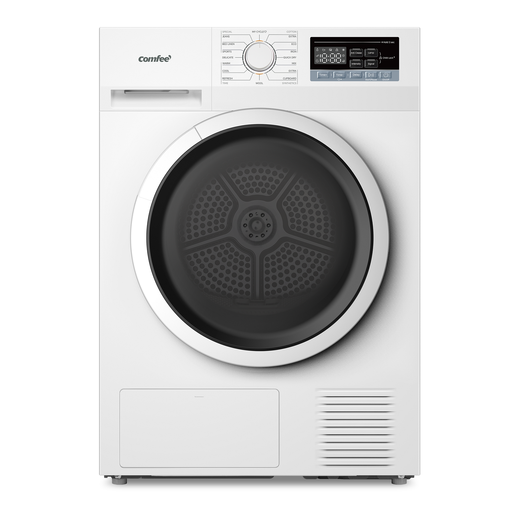 No image available
An option to compare if small loads and automatic drying control matter to you.
The product name lists an 8 kg heat pump tumble dryer with energy class D. The safety information specifies R290: the dryer must be installed in a well-ventilated room of at least 4 m², with an earthed 220–240 V socket and no extension lead. Clean the lint filter after every cycle.
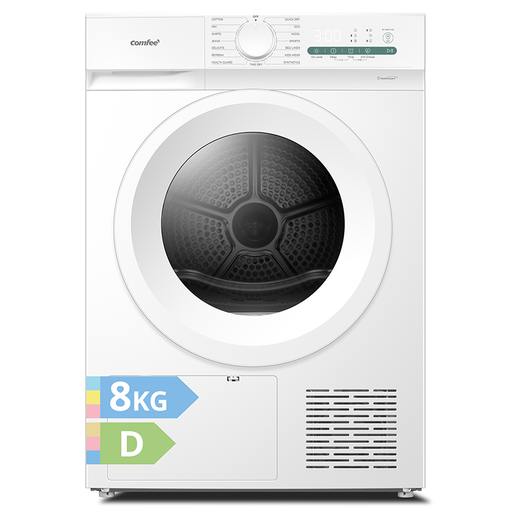 No image available
Worth comparing if you are looking for a heat pump tumble dryer with a capacity of 8 kg.
The product name lists energy class D. Check the permitted drying treatment for your clothes and the programme instructions for this model.
No, the size alone does not determine whether a mini tumble dryer suits your needs. Compare the drying technology and energy consumption with your clothing care instructions and the loads you may want to dry in future.
Only if the care label allows tumble drying. Follow the instructions on the label and in the model’s manual; a programme named after a fabric does not override a ban on the care label.
Follow the model’s manual and clean the lint filter as often as instructed. Instructions for the condenser and condensate tank vary by dryer; also check the installation and ventilation requirements.
Since 1 July 2025, tumble dryer energy labels have run from A to G, according to the European Commission. An old A+++ rating does not use the same scale; compare the current product information sheet and consumption per 100 eco cycles.
For a standard online consumer purchase in the Netherlands, you generally have a statutory 14-day cooling-off period from delivery, according to ACM ConsuWijzer. Your statutory rights if a product is faulty or not as described are separate from the cooling-off period; the statutory guarantee depends on what you can reasonably expect from the product.